

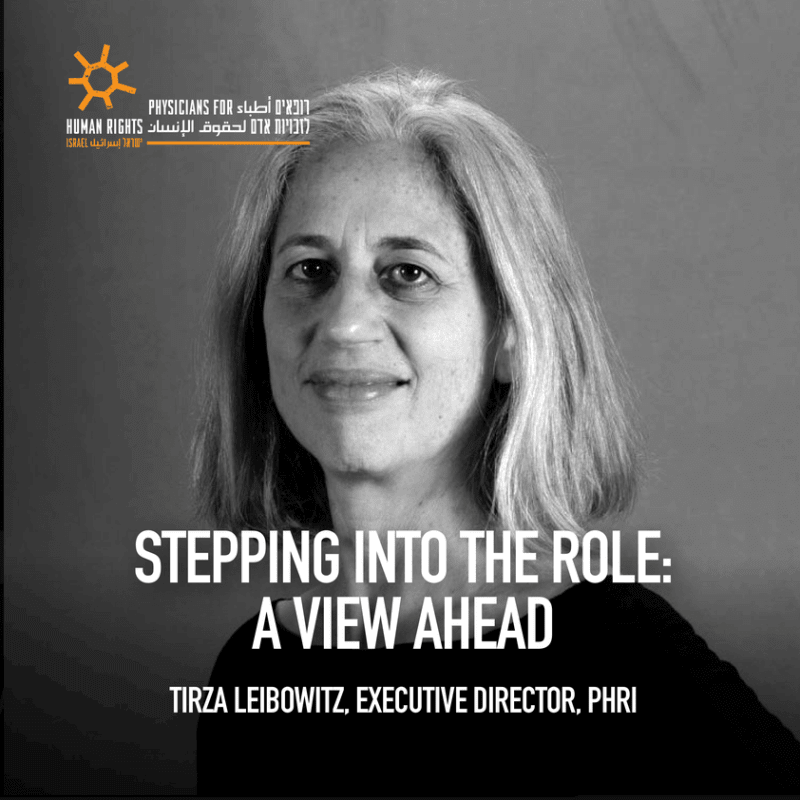
Tirza Leibowitz. Executive director of Physicians for Human Rights Israel. Directora de Médicos for los Derechos Humanos en Israel. ENG ESP

ENGLISH
By Por Tirza Leibowitz
My first month as executive director of Physicians for Human Rights Israel—and the preceding year and a half as Deputy Director of Programs—taught me about the broken and the whole, the fracture and the healing, in our work.
We operate in a state whose military and civil arms are invested in oppressing the Palestinian people, while much of Jewish society actively participates, condones it, or looks away. Against this backdrop lies a futile effort to carve out a 'democratic' sphere—where rights and equality can supposedly be debated—distinct from a sphere ruled by the logic of destruction and genocide.
Fragmentation runs deep. It is evident in the shattering of Palestinian space and the fracturing of their healthcare system, devastating a population that needs and is entitled to its medical institutions. It also manifests in the proliferation of legal "statuses" imposed on Palestinians, enabling the incarceration of thousands, including healthcare workers, without charge, while normalizing torture camps.
Fractures are widening within Israel proper as well. The state’s retreat from providing health insurance to all children without status builds a wall between kids in the very same preschool—some granted coverage and others stripped of that basic right based solely on their parents' origin. And under the same healthcare system, residents of neighboring towns receive starkly unequal medical care, both in quantity and quality, driven by structural disparities related to nationality and socioeconomic status.
The broken is in spatial fragmentation and in divide-and-conquer strategies that isolate issues and communities from one another. And PHRI’s mission is to restore the whole. It begins with recognizing that what happens anywhere in this space impacts the space as a whole. It means bridging the gap between a child with status and one without, and resisting the endless splintering of the Palestinian health system. Ultimately, our mission lies in insisting on a unified, continuous, and connected existence that fosters true solidarity and mutual responsibility. I could not have wished for a finer community to lead alongside—from our staff and board, to volunteers from across the health sector and beyond, to supporters who make our work possible.
Together, we hold the complete picture, of the broken and the whole. Striving for wholeness also means extending grace to one another across the PHRI community. Such grace allows us to navigate the devastating chasm between today's brokenness and a glimmer of wholeness and hold fast to its possibility—a reality in which supremacy is dismantled, justice is served, full individual and collective equality is practiced, and historical injustice is righted.
ESPAÑOL
Por Tirza Leibowitz
Mi primer mes como directora ejecutiva de Physicians for Human Rights Israel —y el año y medio anterior como directora adjunta de Programas— me enseñó sobre lo roto y lo entero, la fractura y la sanación, en nuestro trabajo.
Operamos en un Estado cuyos brazos militar y civil están invertidos en oprimir al pueblo palestino, mientras gran parte de la sociedad judía participa activamente, lo aprueba o mira para otro lado. Contra este telón de fondo yace un esfuerzo fútil por tallar una esfera "democrática" —donde supuestamente se pueden debatir derechos e igualdad— distinta de una esfera regida por la lógica de la destrucción y el genocidio. La fragmentación corre profunda.
Es evidente en la pulverización del espacio palestino y la fractura de su sistema de salud, devastando a una población que necesita y tiene derecho a sus instituciones médicas. También se manifiesta en la proliferación de "estatus" legales impuestos a los palestinos, que permiten la encarcelación de miles, incluidos trabajadores de la salud, sin cargos, mientras se normalizan campos de tortura.
Las fracturas también se ensanchan dentro de Israel propiamente dicho. El retroceso del Estado en proveer seguro de salud a todos los niños sin estatus construye un muro entre niños en el mismo jardín de infantes —a algunos se les otorga cobertura y a otros se les despoja de ese derecho básico únicamente por el origen de sus padres—.
Y bajo el mismo sistema de salud, residentes de pueblos vecinos reciben atención médica marcadamente desigual, tanto en cantidad como en calidad, impulsada por disparidades estructurales relacionadas con la nacionalidad y el estatus socioeconómico.
Lo roto está en la fragmentación espacial y en estrategias de dividir y conquistar que aíslan temas y comunidades unos de otros. Y la misión de PHRI es restaurar lo entero.
Comienza reconociendo que lo que sucede en cualquier lugar de este espacio impacta al espacio en su totalidad. Significa tender puentes entre un niño con estatus y uno sin él, y resistir la interminable astilladura del sistema de salud palestino.
En última instancia, nuestra misión radica en insistir en una existencia unificada, continua y conectada que fomente una verdadera solidaridad y responsabilidad mutua. No podría haber deseado una comunidad más fina para liderar junto a ella —desde nuestro personal y junta directiva, hasta voluntarios de todo el sector de la salud y más allá, hasta los partidarios que hacen posible nuestro trabajo—.
Juntos, sostenemos la imagen completa, de lo roto y lo entero. Luchar por la integridad también significa extender gracia unos a otros a través de la comunidad PHRI. Tal gracia nos permite navegar el devastador abismo entre la rotura de hoy y un destello de integridad, y aferrarnos firmemente a su posibilidad —una realidad en la que el supremacismo se desmantela, se sirve justicia, se practica la plena igualdad individual y colectiva, y se rectifica la injusticia histórica—.

The GazaIndex. GazaDatos
Publicado el 11 de septiembre.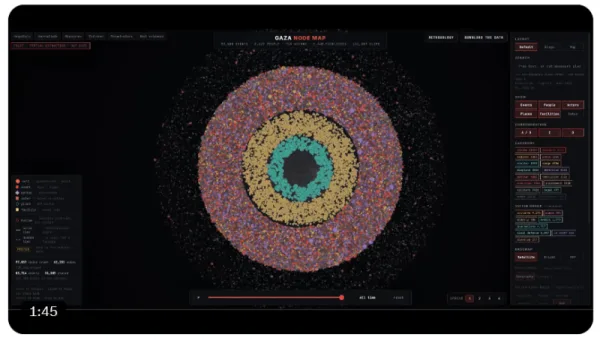
Gaza Node Map. Mapa de Nodos de Gaza.
Publicado el 7 de septiembre.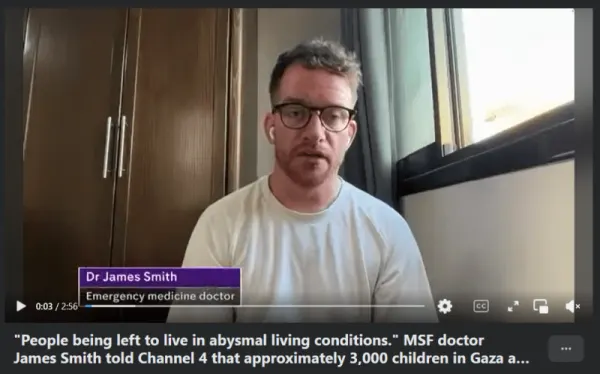
Gaza "People being left to live in abysmal living conditions." "Condiciones de vida infrahumanas"
Publicado el 3 de septiembre.![Poor response from the Israeli Medical Association [expulsion of the World Medical Association]. ENG ESP](https://res.cloudinary.com/dohlie6or/image/upload/f_webp,q_auto,w_600/v1787675081/c0ue4z5k3kut05cduwyg.png)
Poor response from the Israeli Medical Association [expulsion of the World Medical Association]. ENG ESP
Publicado el 25 de agosto.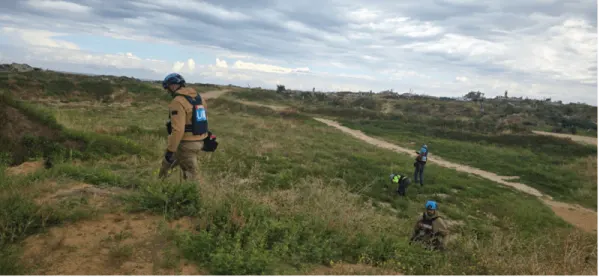
Humanitarian Situation Report | 7 August 2026. Informe sobre la situación humanitaria, actualizado al 7 de agosto de 2026. ENG ESP
Publicado el 10 de agosto.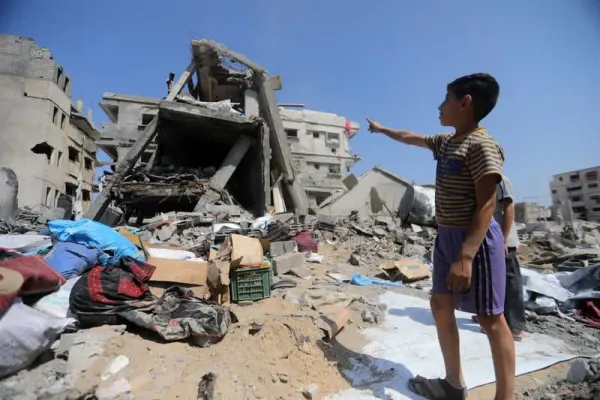
Israel kills without ceasing in Palestine and expands extermination zone in Gaza. Israel asesina sin cesar en Palestina, y expande la zona de destrucción en Gaza. ESP ENG
Publicado el 3 de agosto.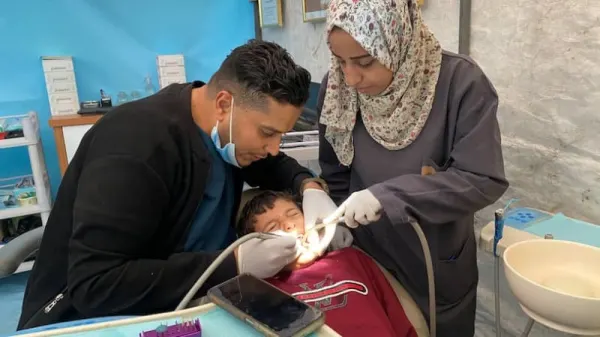
Dental care in Gaza. Atención dental en Gaza. ENG ESP
Publicado el 15 de julio.Ver más / See more
