

Personal sanitario y salud en Palestina
Información específica sobre daños a infraestructuras, personal, las consecuencias del asedio, el hambre, el impacto de la destrucción del sistema sanitario. Apartado para seguir y estar al día del impacto de la barbarie de Israel en la salud de personas, familias y comunidades de Gaza-Palestina-Líbano.
The GazaIndex. GazaDatos

ENGLISH
The GazaIndex, a program of the Gaza Genocide Center.
It provides daily live updates on the humanitarian situation in Gaza, including key data points on casualties, displacement, food, water, and health. Every figure is verified.
If you need a number on Gaza that you can defend, it should be here. That is the whole purpose of GazaIndex: a sourced, continuous record of the genocide, the killed, the destroyed, the displaced, the price of bread, the trucks that made it through.
The numbers have always existed. UN agencies count trucks. Satellites photograph rubble. Health workers register the dead under conditions that would stop most systems from functioning at all. But the figures live scattered across situation reports, spreadsheets, and dashboards that expire, in formats that change, behind links that rot. Scattered records are easier to dispute and easier to erase. A number that cannot be traced is a number that can be denied.
GazaIndex gathers these figures from their primary sources, structures them into one consistent format, and keeps them in one place. Every indicator carries the source it came from, the date it was recorded, and the cadence at which it updates. Where sources are constrained, and in Gaza they are severely constrained, by restricted access, cut communications, and areas unreached for months, the limits are stated on the figure itself. Death counts are floors, not totals. Damage assessments wait on satellite passes. What the record cannot yet confirm, it does not claim.
GazaIndex does not author a narrative. It makes the data show it.
Where GazaIndex came from
GazaIndex began as an independent project by Mohammed Mourtaja, a Palestinian researcher from Gaza City, built to answer a simple problem: the numbers existed, but scattered, inconsistently cited, and easy to dismiss. In 2026 it became a program of the Gaza Genocide Center, where it now serves as the Center's living data record alongside the Genocide Log, Lives and Legacies, and the Information Hub.
Where it is going
The Gaza Genocide Center is building a permanent record of the genocide in Gaza, designed to resist erasure and outlast the news cycle. Within that record, GazaIndex holds the numbers: continuous, sourced, and public, for journalists, researchers, legal teams, educators, and anyone seeking the truth of what has been done.
Example:
ESPAÑOL
GazaIndex, un programa del Centro para el Genocidio de Gaza, ofrece actualizaciones diarias en tiempo real sobre la situación humanitaria en Gaza, incluyendo datos clave sobre víctimas, desplazamientos, alimentos, agua y salud. Cada cifra está verificada.Si necesita datos sobre Gaza que pueda respaldar, debería encontrarlos aquí. Ese es el propósito de GazaIndex: un registro continuo y documentado del genocidio, los muertos, los destruidos, los desplazados, el precio del pan y los camiones que lograron llegar a su destino.Las cifras siempre han existido. Las agencias de la ONU contabilizan los camiones. Los satélites fotografían los escombros. Los trabajadores sanitarios registran los fallecidos en condiciones que impedirían el funcionamiento de la mayoría de los sistemas. Sin embargo, las cifras se encuentran dispersas en informes de situación, hojas de cálculo y paneles de control que caducan, en formatos cambiantes y con enlaces que se corrompen.Los registros dispersos son más fáciles de refutar y de borrar. Una cifra que no se puede rastrear es una cifra que se puede negar. GazaIndex recopila estas cifras de sus fuentes primarias, las estructura en un formato coherente y las mantiene centralizadas. Cada indicador incluye su fuente, la fecha de registro y la frecuencia de actualización.Cuando las fuentes son limitadas, y en Gaza lo son considerablemente debido al acceso restringido, la interrupción de las comunicaciones y las zonas inaccesibles durante meses, las limitaciones se indican en la propia cifra. Los recuentos de fallecidos son mínimos, no totales. Las evaluaciones de daños dependen de las imágenes satelitales. Lo que el registro aún no puede confirmar, no lo afirma.GazaIndex no crea una narrativa; simplemente hace que los datos la muestren.Origen de GazaIndexGazaIndex comenzó como un proyecto independiente de Mohammed Mourtaja, un investigador palestino de la ciudad de Gaza, creado para dar respuesta a un problema sencillo: las cifras existían, pero estaban dispersas, citadas de forma inconsistente y eran fáciles de descartar. En 2026 se convirtió en un programa del Centro para el Genocidio de Gaza, donde ahora sirve como registro de datos en constante actualización, junto con el Registro del Genocidio, Vidas y Legados y el Centro de Información.Hacia dónde se dirigeEl Centro para el Genocidio de Gaza está creando un registro permanente del genocidio en Gaza, diseñado para resistir el olvido y perdurar más allá del ciclo informativo. Dentro de ese registro, GazaIndex contiene datos: continuos, con fuentes verificadas y de acceso público, para periodistas, investigadores, equipos legales, educadores y cualquier persona que busque la verdad sobre lo sucedido.Leer completo...Gaza Node Map. Mapa de Nodos de Gaza.
ENGLISH
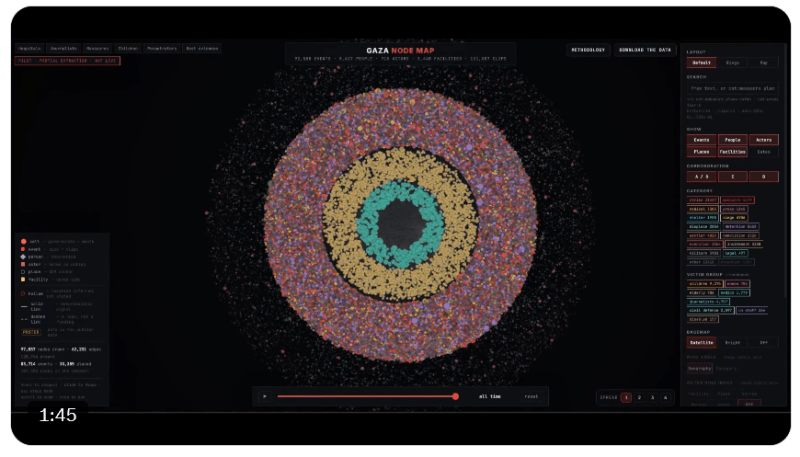
Israel Exposed @xIsraelExposedx We have released the Gaza Node Map: every event, location, person, video, soldier, strike, victim, journalist, etc - are mapped out as a nodes, and each node linked with it's related nodes for researchers.
It includes:
92,588 events
159,520 links
3,440 fascilities
715 Actors/IDF units
21,427 strikes
Fully searchable index
Downloadable database
Dossier per node with related events & source links
Generate report button per node & node groupsIt can be accessed here: https://archivegenocide.com/lab/
Please re-share & quote tweet to help it break out of the algorithm.This is a slice of the data, we are uploading the rest of it as fast as possible.
If you want to submit footage or give feedback / report a bug, join our telegram (linked in bio). Thanks to everyone invovled in this project.
This is a beta so expect bugs & errors, especially on mobile devices - we suggest you use a PC.
ESPAÑOL
Israel Exposde @xIsraelExposedx Hemos publicado el Mapa de Nodos de Gaza: cada evento, ubicación, persona, vídeo, soldado, ataque, víctima, periodista, etc., está representado como un nodo, y cada nodo está vinculado con sus nodos relacionados para facilitar la investigación.Incluye:92.588 eventos159.520 enlaces3.440 instalaciones715 actores/unidades del ejército de Israel21.427 ataquesÍndice con función de búsqueda completaBase de datos descargableDossier por nodo con eventos relacionados y enlaces a fuentes Botón para generar informes por nodo y grupos de nodosPuedes acceder aquí: https://archivegenocide.com/lab/Por favor, comparte y cita este tuit para ayudar a que el algoritmo lo detecte. Esta es solo una muestra de los datos; estamos subiendo el resto lo antes posible.Si quieres enviar material audiovisual, dar tu opinión o informar de un error, únete a nuestro grupo de Telegram (enlace en la biografía).Gracias a todos los que participan en este proyecto. Se trata de una versión beta, por lo que es posible que encuentre errores, especialmente en dispositivos móviles. Le recomendamos que utilice un ordenador.Leer completo...Gaza "People being left to live in abysmal living conditions." "Condiciones de vida infrahumanas"
ENGLISH
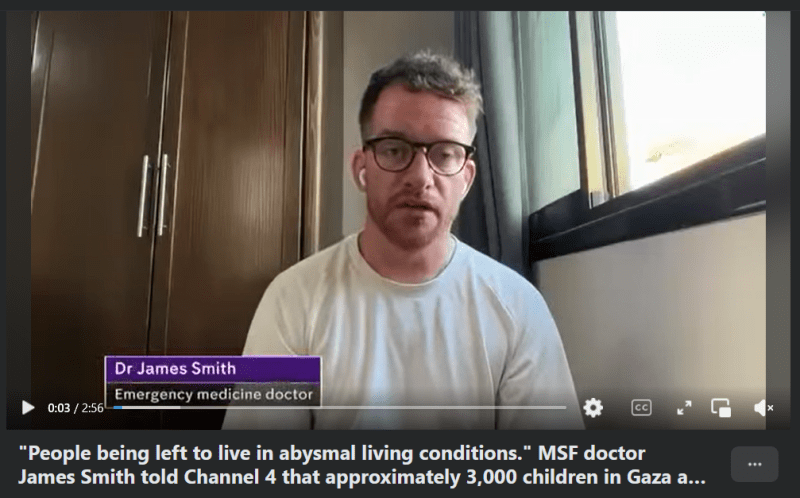
Video "People being left to live in abysmal living conditions."
August 10, 2026
MSF doctor James Smith told Channel 4 that approximately 3,000 children in Gaza are still being admitted to acute malnutrition programs every month, describing the situation as the cumulative result of manufactured deprivation over nearly three years.Speaking from Gaza, Smith said around 1 million people urgently need emergency shelter, while sanitation systems have largely collapsed and sewage is spreading across the Strip.
He estimated that around 200,000 Palestinians have been wounded since the war began and said Gaza now has more child amputees than any other territory in the world.
Smith also said monitors are recording roughly 200 security incidents each week across Gaza, almost all involving Israeli military activity.ESPAÑOL
10 agosto 2026
«La gente vive en condiciones infrahumanas».El doctor James Smith, de Médicos Sin Fronteras (MSF), declaró a Channel 4 que aproximadamente 3.000 niños en Gaza siguen ingresando cada mes en programas de tratamiento de la desnutrición aguda, describiendo la situación como el resultado acumulativo de la privación artificial sufrida durante casi tres años.Desde Gaza, Smith afirmó que alrededor de un millón de personas necesitan urgentemente refugio de emergencia, mientras que los sistemas de saneamiento han colapsado en gran medida y las aguas residuales se extienden por toda la Franja.Estimó que unos 200.000 palestinos han resultado heridos desde el inicio de la guerra y afirmó que Gaza tiene ahora más niños amputados que cualquier otro territorio del mundo.Smith también indicó que los observadores registran aproximadamente 200 incidentes de seguridad semanales en Gaza, casi todos relacionados con la actividad militar israelí.Leer completo...Poor response from the Israeli Medical Association [expulsion of the World Medical Association]. ENG ESP
ENGLISH
Correspondence
Volume 408, Issue 10555p604August 15, 2026
Poor response from the Israeli Medical Association [expulsion of the World Medical Association]
Wim De Ceukelairea Send email to wim.deceukelaire@proton.me
Affiliations & NotesI read with interest the World Report1 covering the campaign urging the World Medical Association (WMA) to suspend the Israeli Medical Association (IMA). The People's Health Movement was among the organisations that initiated this campaign.
The World Report is especially valuable for giving the IMA an opportunity to respond—a chance they have demonstrably squandered. Their defence is, in fact, self-incriminating. They allege that “the petition ignores any role of Hamas in the destruction of Gaza's health-care system, such as their deliberate strategy of hiding beneath and within hospitals and using hospitals for military command centers and ammunition storage, in violation of Article 19 of the Fourth Geneva Convention”.1
With this statement, the IMA essentially repeats the Israeli military's justification for targeting health infrastructure in Gaza—despite the lack of evidence2 and UN human rights experts “accusing Israel of deliberately attacking and starving healthcare workers, paramedics and hospitals to wipe out medical care in the besieged enclave”.3 This stance only reinforces the argument that expulsion from the WMA is urgent and necessary. The WMA, as part of the global health community, cannot tolerate an affiliate that actively justifies the deliberate targeting and killing of its colleagues.Interests
WDC is Co-Chairperson of the People's Health Movement.
Editorial note: The Lancet Group takes a neutral position with respect to territorial claims in published text and institutional affiliations.References
1.
Samarasekera, U
Petition calls for boycott of Israeli Medical Association
Lancet. 2026; 407, 2359
Full Text
Full Text (PDF)
Google Scholar
2.
UN
Security Council debates Israeli attacks on hospitals allegedly misused by Hamas, as UN rights chief urges independent probes
https://www.un.org/unispal/document/security-council-debates-israeli-attacks-on-hospitals-allegedly-misused-by-hamas-as-un-rights-chief-urges-independent-probes-press-release/
Date: Jan 3, 2025
Date accessed: June 26, 2026
Google Scholar
3.
UN
UN experts appalled by relentless Israeli attacks on Gaza's healthcare system
https://www.ohchr.org/en/press-releases/2025/08/un-experts-appalled-relentless-israeli-attacks-gazas-healthcare-system
Date: Aug 13, 2025
Date accessed: June 26, 2026
Google ScholarESPAÑOL
Correspondencia Volumen 408, Número 10555, pág. 604, 15 de agosto de 2026Respuesta deficiente de la Asociación Médica IsraelíWim De Ceukelairea. Enviar correo electrónico a wim.deceukelaire@proton.me Afiliaciones y notasLeí con interés el Informe Mundial¹ sobre la campaña que instaba a la Asociación Médica Mundial (AMM) a suspender a la Asociación Médica Israelí (AMI). El Movimiento por la Salud del Pueblo fue una de las organizaciones que inició esta campaña.El Informe Mundial es especialmente valioso porque le brinda a la AMI la oportunidad de responder, una oportunidad que, evidentemente, han desaprovechado. Su defensa, de hecho, resulta contraproducente.Alegan que “la petición ignora cualquier papel de Hamás en la destrucción del sistema de salud de Gaza, como su estrategia deliberada de esconderse debajo y dentro de los hospitales y utilizarlos como centros de mando militar y depósitos de municiones, en violación del Artículo 19 del Cuarto Convenio de Ginebra”.¹Con esta declaración, la IMA repite esencialmente la justificación del ejército israelí para atacar la infraestructura sanitaria en Gaza, a pesar de la falta de pruebas² y de que expertos en derechos humanos de la ONU “acusan a Israel de atacar y privar de alimentos deliberadamente a trabajadores sanitarios, paramédicos y hospitales para aniquilar la atención médica en el enclave asediado”.³ Esta postura solo refuerza el argumento de que la expulsión de la AMM es urgente y necesaria.La AMM, como parte de la comunidad sanitaria mundial, no puede tolerar a una filial que justifique activamente el ataque deliberado y el asesinato de sus colegas.Intereses WDC es copresidenta del Movimiento por la Salud de los Pueblos.Nota editorial: The Lancet Group adopta una posición neutral con respecto a las reivindicaciones territoriales en los textos publicados y las afiliaciones institucionales.Referencias1. Samarasekera, U. Petición que pide boicot a la Asociación Médica Israelí Lancet. 2026; 407, 2359 Texto completo Texto completo (PDF) Google Académico2. ONU El Consejo de Seguridad debate los ataques israelíes contra hospitales presuntamente utilizados indebidamente por Hamás, mientras que el Alto Comisionado de las Naciones Unidas para los Derechos Humanos insta a realizar investigaciones independientes https://www.un.org/unispal/document/security-council-debates-israeli-attacks-on-hospitals-allegedly-misused-by-hamas-as-un-rights-chief-urges-independent-probes-press-release/ Fecha: 3 de enero de 2025 Fecha de acceso: 26 de junio de 2026 Google Académico3. ONU Expertos de la ONU consternados por los incesantes ataques israelíes contra la sanidad en Gaza sistema https://www.ohchr.org/en/press-releases/2025/08/un-experts-appalled-relentless-israeli-attacks-gazas-healthcare-system Fecha: 13 de agosto de 2025 Fecha de acceso: 26 de junio de 2026 Google AcadémicoLeer completo...Tirza Leibowitz. Executive director of Physicians for Human Rights Israel. Directora de Médicos for los Derechos Humanos en Israel. ENG ESP
ENGLISH
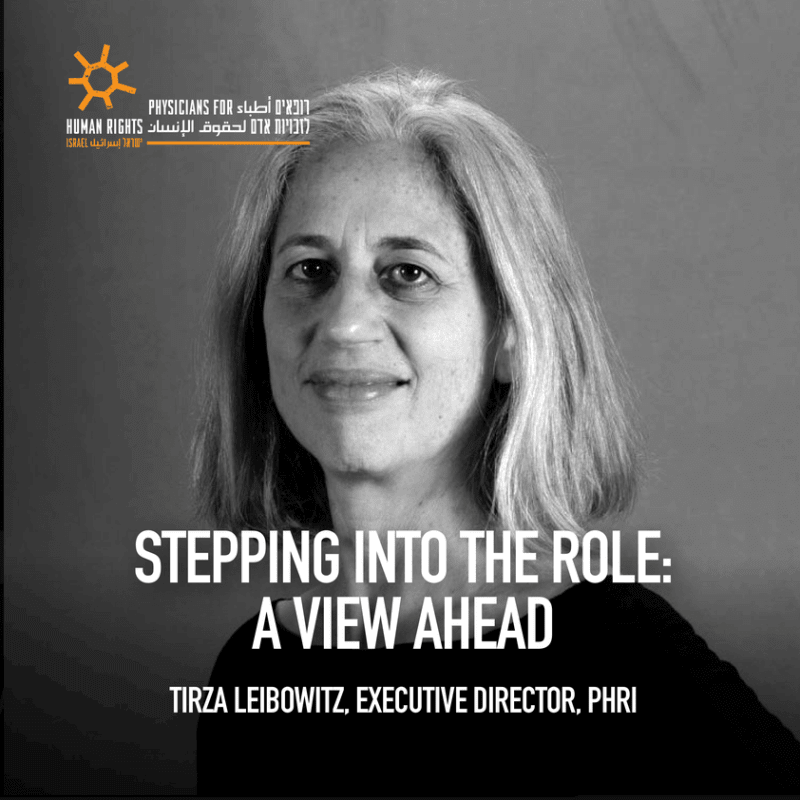
By Por Tirza Leibowitz
My first month as executive director of Physicians for Human Rights Israel—and the preceding year and a half as Deputy Director of Programs—taught me about the broken and the whole, the fracture and the healing, in our work.
We operate in a state whose military and civil arms are invested in oppressing the Palestinian people, while much of Jewish society actively participates, condones it, or looks away. Against this backdrop lies a futile effort to carve out a 'democratic' sphere—where rights and equality can supposedly be debated—distinct from a sphere ruled by the logic of destruction and genocide.
Fragmentation runs deep. It is evident in the shattering of Palestinian space and the fracturing of their healthcare system, devastating a population that needs and is entitled to its medical institutions. It also manifests in the proliferation of legal "statuses" imposed on Palestinians, enabling the incarceration of thousands, including healthcare workers, without charge, while normalizing torture camps.
Fractures are widening within Israel proper as well. The state’s retreat from providing health insurance to all children without status builds a wall between kids in the very same preschool—some granted coverage and others stripped of that basic right based solely on their parents' origin. And under the same healthcare system, residents of neighboring towns receive starkly unequal medical care, both in quantity and quality, driven by structural disparities related to nationality and socioeconomic status.
The broken is in spatial fragmentation and in divide-and-conquer strategies that isolate issues and communities from one another. And PHRI’s mission is to restore the whole. It begins with recognizing that what happens anywhere in this space impacts the space as a whole. It means bridging the gap between a child with status and one without, and resisting the endless splintering of the Palestinian health system. Ultimately, our mission lies in insisting on a unified, continuous, and connected existence that fosters true solidarity and mutual responsibility. I could not have wished for a finer community to lead alongside—from our staff and board, to volunteers from across the health sector and beyond, to supporters who make our work possible.
Together, we hold the complete picture, of the broken and the whole. Striving for wholeness also means extending grace to one another across the PHRI community. Such grace allows us to navigate the devastating chasm between today's brokenness and a glimmer of wholeness and hold fast to its possibility—a reality in which supremacy is dismantled, justice is served, full individual and collective equality is practiced, and historical injustice is righted.
ESPAÑOL
Por Tirza Leibowitz
Mi primer mes como directora ejecutiva de Physicians for Human Rights Israel —y el año y medio anterior como directora adjunta de Programas— me enseñó sobre lo roto y lo entero, la fractura y la sanación, en nuestro trabajo.
Operamos en un Estado cuyos brazos militar y civil están invertidos en oprimir al pueblo palestino, mientras gran parte de la sociedad judía participa activamente, lo aprueba o mira para otro lado. Contra este telón de fondo yace un esfuerzo fútil por tallar una esfera "democrática" —donde supuestamente se pueden debatir derechos e igualdad— distinta de una esfera regida por la lógica de la destrucción y el genocidio. La fragmentación corre profunda.
Es evidente en la pulverización del espacio palestino y la fractura de su sistema de salud, devastando a una población que necesita y tiene derecho a sus instituciones médicas. También se manifiesta en la proliferación de "estatus" legales impuestos a los palestinos, que permiten la encarcelación de miles, incluidos trabajadores de la salud, sin cargos, mientras se normalizan campos de tortura.
Las fracturas también se ensanchan dentro de Israel propiamente dicho. El retroceso del Estado en proveer seguro de salud a todos los niños sin estatus construye un muro entre niños en el mismo jardín de infantes —a algunos se les otorga cobertura y a otros se les despoja de ese derecho básico únicamente por el origen de sus padres—.
Y bajo el mismo sistema de salud, residentes de pueblos vecinos reciben atención médica marcadamente desigual, tanto en cantidad como en calidad, impulsada por disparidades estructurales relacionadas con la nacionalidad y el estatus socioeconómico.
Lo roto está en la fragmentación espacial y en estrategias de dividir y conquistar que aíslan temas y comunidades unos de otros. Y la misión de PHRI es restaurar lo entero.
Comienza reconociendo que lo que sucede en cualquier lugar de este espacio impacta al espacio en su totalidad. Significa tender puentes entre un niño con estatus y uno sin él, y resistir la interminable astilladura del sistema de salud palestino.
En última instancia, nuestra misión radica en insistir en una existencia unificada, continua y conectada que fomente una verdadera solidaridad y responsabilidad mutua. No podría haber deseado una comunidad más fina para liderar junto a ella —desde nuestro personal y junta directiva, hasta voluntarios de todo el sector de la salud y más allá, hasta los partidarios que hacen posible nuestro trabajo—.
Juntos, sostenemos la imagen completa, de lo roto y lo entero. Luchar por la integridad también significa extender gracia unos a otros a través de la comunidad PHRI. Tal gracia nos permite navegar el devastador abismo entre la rotura de hoy y un destello de integridad, y aferrarnos firmemente a su posibilidad —una realidad en la que el supremacismo se desmantela, se sirve justicia, se practica la plena igualdad individual y colectiva, y se rectifica la injusticia histórica—.
Leer completo...Humanitarian Situation Report | 7 August 2026. Informe sobre la situación humanitaria, actualizado al 7 de agosto de 2026. ENG ESP
ENGLISH
Humanitarian Situation Report | 7 August 2026
Highlights
In the West Bank, demolitions displaced 22 people and affected over 100 others in one week. Since 2024, the monthly average of structures demolished in Area C and East Jerusalem has been at least twice the average recorded over the preceding 15 years.
Demolition proceedings affecting four schools in Area C, including the demolition of three school structures in Masafer Yatta, highlight broader risks to education. Overall, 84 schools serving nearly 13,000 students are subject to demolition orders.
The Israeli military issued orders extending movement restrictions in Jenin, Tulkarm and Nur Shams refugee camps until 20 August and 30 September, while more than 33,000 displaced Palestine refugees remain unable to return to their homes.
In Gaza, the humanitarian situation remains critical, amid intense military activity causing civilian casualties and hitting health and education infrastructure; overall structural damage continues to rise, a new assessment shows.
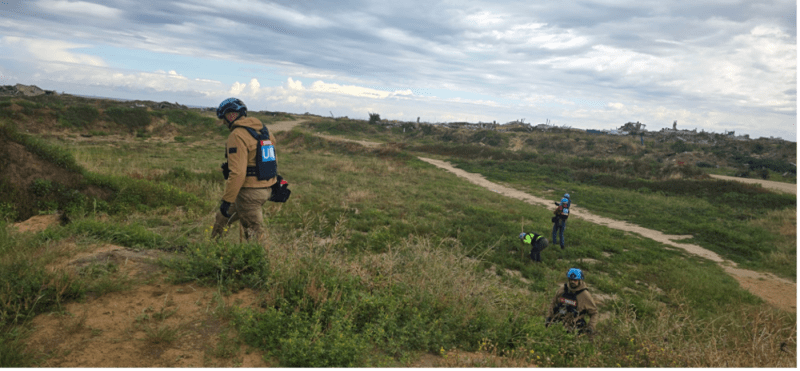
Since October 2023, partners have conducted 3,199 assessment missions across Gaza to identify and mark explosive hazards, while constantly informing civilians about the risks. Yet, they still lack authorization to move or safely dispose of these hazardous items.
A new nutrition survey finds maternal malnutrition, persistent stunting, and poor-quality diets among children.Overview
Humanitarian needs across the Occupied Palestinian Territory remained severe. In Gaza, military activities, displacement, and damage to civilian infrastructure continued to deepen humanitarian needs. In the West Bank, operations by Israeli forces, settler attacks, demolitions and movement restrictions continued to drive displacement, undermine livelihoods and restrict access to essential services.
Across the Occupied Palestinian Territory, civilians continued to face heightened protection risks, repeated displacement, damage to civilian infrastructure, and disruptions to essential services, including health care, education and water supply. Humanitarian partners continued to deliver life-saving assistance despite insecurity, movement restrictions and funding constraints, responding to growing needs through food, health, water, sanitation and hygiene (WASH), shelter, protection, education and other essential services.
More here
Photo Explosive ordnance disposal officers inspecting an agricultural field in Sheikh Ajleen area for potential hazards. Photo by UNMAS
ESPAÑOL
Informe sobre la situación humanitaria | 7 de agosto de 2026Aspectos destacadosEn Cisjordania, las demoliciones desplazaron a 22 personas y afectaron a más de 100 en una semana.Desde 2024, el promedio mensual de estructuras demolidas en la Zona C y Jerusalén Este ha sido al menos el doble del promedio registrado en los 15 años anteriores.Los procesos de demolición que afectan a cuatro escuelas en la Zona C, incluyendo la demolición de tres edificios escolares en Masafer Yatta, ponen de manifiesto los riesgos más amplios para la educación. En total, 84 escuelas que atienden a casi 13.000 estudiantes están sujetas a órdenes de demolición.El ejército israelí emitió órdenes que extienden las restricciones de movimiento en los campamentos de refugiados de Jenin, Tulkarm y Nur Shams hasta el 20 de agosto y el 30 de septiembre, respectivamente, mientras que más de 33.000 refugiados palestinos desplazados siguen sin poder regresar a sus hogares.En Gaza, la situación humanitaria sigue siendo crítica, en medio de una intensa actividad militar que causa bajas civiles y afecta a la infraestructura sanitaria y educativa; los daños estructurales generales continúan aumentando, según muestra una nueva evaluación.Desde octubre de 2023, los socios han realizado 3199 misiones de evaluación en Gaza para identificar y marcar los riesgos de explosión, informando constantemente a la población civil sobre dichos riesgos. Sin embargo, aún carecen de autorización para trasladar o desechar de forma segura estos materiales peligrosos.Una nueva encuesta nutricional revela desnutrición materna, retraso persistente del crecimiento y una alimentación deficiente entre los niños.ResumenLas necesidades humanitarias en todo el Territorio Palestino Ocupado siguen siendo graves.En Gaza, las actividades militares, los desplazamientos y los daños a la infraestructura civil continúan agravando las necesidades humanitarias.En Cisjordania, las operaciones de las fuerzas israelíes, los ataques de los colonos, las demoliciones y las restricciones a la circulación siguen provocando desplazamientos, socavando los medios de subsistencia y restringiendo el acceso a servicios esenciales.En todo el Territorio Palestino Ocupado, la población civil continúa enfrentándose a mayores riesgos de protección, desplazamientos repetidos, daños a la infraestructura civil e interrupciones en los servicios esenciales, como la atención médica, la educación y el suministro de agua.Los socios humanitarios continuaron prestando asistencia vital a pesar de la inseguridad, las restricciones de movimiento y las limitaciones de financiación, respondiendo a las crecientes necesidades a través de alimentos, salud, agua, saneamiento e higiene (WASH), refugio, protección, educación y otros servicios esenciales.Más, aquí (en inglés)Fotografía: Foto: Agentes de desactivación de explosivos inspeccionan un campo agrícola en la zona de Sheikh Ajleen. Foto de UNMAS.Leer completo...Israel kills without ceasing in Palestine and expands extermination zone in Gaza. Israel asesina sin cesar en Palestina, y expande la zona de destrucción en Gaza. ESP ENG
ENGLISH
Israel expands extermination zone in Gaza. Israel kills without ceasing in Palestine.
Nora Barrows-Friedman 31 July 2026
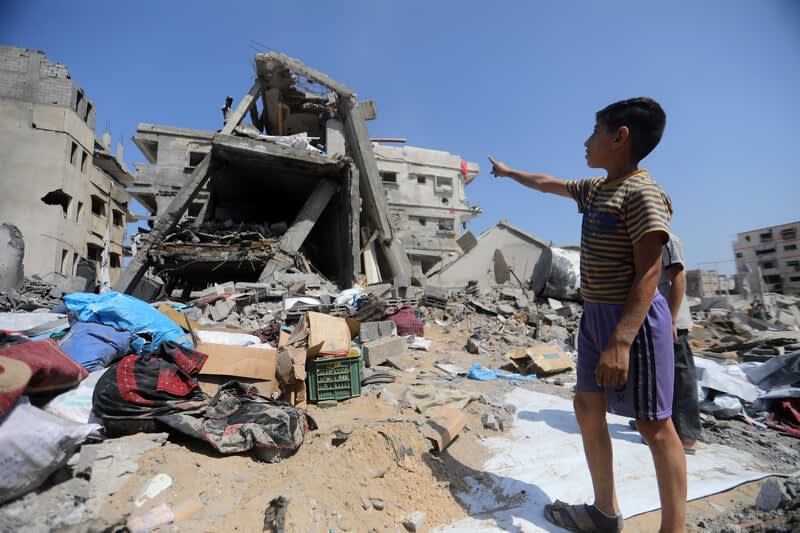
Photo: Two Israeli airstrikes targeted homes in the Beach refugee camp, west of Gaza City on 30 July, causing extensive damage to nearby houses and displacement tent shelters. Bilal Osama APA images
Israel is continuing to expand its extermination zone in Gaza, as reporters and field researchers documented the so-called yellow line moving further westward yet again this week.
Israel is escalating its attacks on Palestinians as the so-called yellow line pushes west, expanding the death zone in Gaza; and as Israeli lynch mobs and soldiers enact pogroms in the occupied West Bank with impunity.
Israeli warplanes struck a tent sheltering displaced people in the al-Mawasi area of Khan Younis earlier in the morning on 30 July, according to local reports.
Two Palestinians, one of them a child, and several wounded individuals arrived at Al-Aqsa Martyrs Hospital, medical sources told the Wafa news agency.
In a separate strike, Israel killed a child and wounded several others in an attack on a residential apartment in central Gaza. The victims were also transferred to Al-Aqsa Martyrs Hospital in Deir al-Balah.
Sources said that six Palestinians were wounded, one critically, when Israeli warplanes targeted an apartment building near al-Mamouniya School in the al-Rimal neighborhood, west of Gaza City.
On Wednesday evening, Israel killed two Palestinians in separate drone strikes, according to Wafa.
An Israeli drone targeted an intersection in the al-Rimal neighborhood of Gaza City, killing one and injuring several others, and medical sources at Nasser Medical Complex in Khan Younis confirmed that one person was killed and others were injured in an Israeli drone strike in the al-Mawasi area.
Israel also carried out a strike on the Beach refugee camp west of Gaza City, destroying residential buildings. The Cradle posted a video of the enormous explosion on a family’s home.
At least one Palestinian was killed and 22 were wounded in an Israeli attack on a phone charging point in the middle of the Balata market in the Nuseirat refugee camp in central Gaza on 28 July.
Israeli soldiers shot a man in the back in the northern city of Beit Lahiya, in an area close to the yellow line. Reporter Mahmoud Sobeh filmed paramedics attending to the victim and loading him into the ambulance.
The Anadolu news agency reported that Israeli military vehicles opened fire on a camp for displaced people east of Deir al-Balah in central Gaza, injuring three Palestinians. Five others were injured by Israeli military gunfire targeting a separate displacement camp west of Khan Younis.
Also on 28 July, Israel targeted the Dar al-Muttaqin mosque in Gaza City. Filmmaker Osama Al Ashi recorded the moment of the attack.
A correspondent for Anadolu reported that Israeli fighter jets struck the mosque, located near the YMCA in central Gaza City, completely destroying the building.
The strike also destroyed tents housing displaced families and caused extensive damage to nearby homes and civilian property.
According to Anadolu, hundreds of Palestinians were left without shelter following the attack, amid widespread destruction in the area.
Gaza’s Ministry of Endowments stated that almost all of Gaza’s 1,275 mosques have been either completely destroyed or damaged in the last nearly three years of Israel’s genocide.
On 27 July, Israel killed a Palestinian in a drone strike near the Hira mosque in the northern city of Jabaliya, and another person, identified as Muhammad Isleem, was killed south of Deir al-Balah in central Gaza in a separate strike.
Israel assassinated high-ranking civil police and security personnel over the weekend.
On 26 July, in a so-called double tap airstrike, Israel targeted the Director of the Internal Security Service in Gaza’s Central Governorate, 44-year-old Colonel Wael Mousa al-Ladawi, along with Major Ramez Tawfiq Abu Zureiq, 49, while they were driving in a car in Deir al-Balah.
This came just a day after Israel assassinated the police chief in the north Gaza governorate. Brigadier General Abdul Nasser Muhammad Al-Maqadma, 54, was killed in a targeted airstrike in Gaza.
ESPAÑOL
Israel amplía la zona de exterminio en Gaza. Israel asesina sin cesar en Palestina.Nora Barrows-Friedman, 31 de julio de 2026Israel intensifica sus ataques contra los palestinos a medida que la llamada Línea Amarilla avanza hacia el oeste, expandiendo la zona de muerte en Gaza; y mientras turbas y soldados israelíes perpetran pogromos con impunidad en la Cisjordania ocupada.Aviones de guerra israelíes atacaron una tienda de campaña que albergaba a personas desplazadas en la zona de al-Mawasi, en Khan Younis, la madrugada del 30 de julio, según informes locales. Dos palestinos, uno de ellos un niño, y varios heridos llegaron al Hospital de los Mártires de Al-Aqsa, según informaron fuentes médicas a la agencia de noticias Wafa.En otro ataque, Israel mató a un niño e hirió a varios más en un ataque contra un edificio de apartamentos en el centro de Gaza. Las víctimas también fueron trasladadas al Hospital de los Mártires de Al-Aqsa en Deir al-Balah.Según fuentes, seis palestinos resultaron heridos, uno de ellos de gravedad, cuando aviones de guerra israelíes atacaron un edificio de apartamentos cerca de la escuela al-Mamouniya, en el barrio de al-Rimal, al oeste de la ciudad de Gaza.El miércoles por la noche, Israel mató a dos palestinos en ataques con drones, según Wafa. Un dron israelí atacó una intersección en el barrio de al-Rimal, en la ciudad de Gaza, causando la muerte de una persona e hiriendo a varias más. Fuentes médicas del Complejo Médico Nasser en Khan Younis confirmaron que una persona murió y otras resultaron heridas en un ataque con dron israelí en la zona de al-Mawasi.Israel también atacó el campamento de refugiados de La Playa, al oeste de la ciudad de Gaza, destruyendo edificios residenciales. El medio The Cradle publicó un video de la enorme explosión en la casa de una familia.Al menos un palestino murió y 22 resultaron heridos en un ataque israelí contra un punto de carga de teléfonos en el centro del mercado de Balata, en el campamento de refugiados de Nuseirat, en el centro de Gaza, el 28 de julio.Soldados israelíes dispararon por la espalda a un hombre en la ciudad norteña de Beit Lahiya, en una zona cercana a la línea amarilla. El reportero Mahmoud Sobeh filmó a los paramédicos atendiendo a la víctima y subiéndola a la ambulancia.La agencia de noticias Anadolu informó que vehículos militares israelíes abrieron fuego contra un campamento para desplazados al este de Deir al-Balah, en el centro de Gaza, hiriendo a tres palestinos. Otros cinco resultaron heridos por disparos del ejército israelí contra otro campamento de desplazados al oeste de Khan Younis.También el 28 de julio, Israel atacó la mezquita Dar al-Muttaqin en la ciudad de Gaza. El cineasta Osama Al Ashi grabó el momento del ataque. Un corresponsal de Anadolu informó que aviones de combate israelíes atacaron la mezquita, ubicada cerca de la YMCA en el centro de la ciudad de Gaza, destruyendo completamente el edificio. El ataque también destruyó tiendas de campaña que albergaban a familias desplazadas y causó daños extensos a viviendas y propiedades civiles cercanas.Según Anadolu, cientos de palestinos quedaron sin hogar tras el ataque, en medio de una destrucción generalizada en la zona. El Ministerio de Asuntos Religiosos de Gaza declaró que casi todas las 1275 mezquitas de Gaza han sido destruidas o dañadas por completo durante los casi tres años de genocidio israelí.El 27 de julio, Israel mató a un palestino en un ataque con dron cerca de la mezquita Hira, en la ciudad norteña de Jabaliya, y otra persona, identificada como Muhammad Isleem, murió al sur de Deir al-Balah, en el centro de Gaza, en un ataque separado. Israel asesinó a altos mandos de la policía civil y de seguridad durante el fin de semana.El 26 de julio, en un ataque aéreo conocido como "doble impacto", Israel atacó al director del Servicio de Seguridad Interna de la Gobernación Central de Gaza, el coronel Wael Mousa al-Ladawi, de 44 años, junto con el mayor Ramez Tawfiq Abu Zureiq, de 49 años, mientras viajaban en un automóvil en Deir al-Balah. Israel llevó a cabo un ataque aéreo doble contra un automóvil en el centro de Gaza. El Ministerio del Interior afirma que el jefe de seguridad interna de Gaza y un oficial murieron.Esto ocurrió apenas un día después de que Israel asesinara al jefe de policía de la gobernación del norte de Gaza. El general de brigada Abdul Nasser Muhammad Al-Maqadma, de 54 años, murió en un ataque aéreo selectivo en Gaza.Leer completo...Dental care in Gaza. Atención dental en Gaza. ENG ESP
ENGLISH
Gaza's dentists and patients suffer as Israel restricts flow of painkilling drugs
Palliatives, antibiotics, hand tools and batteries for instruments are confiscated under dual-use bans in communities bombed into poverty
Nagham Mohanna
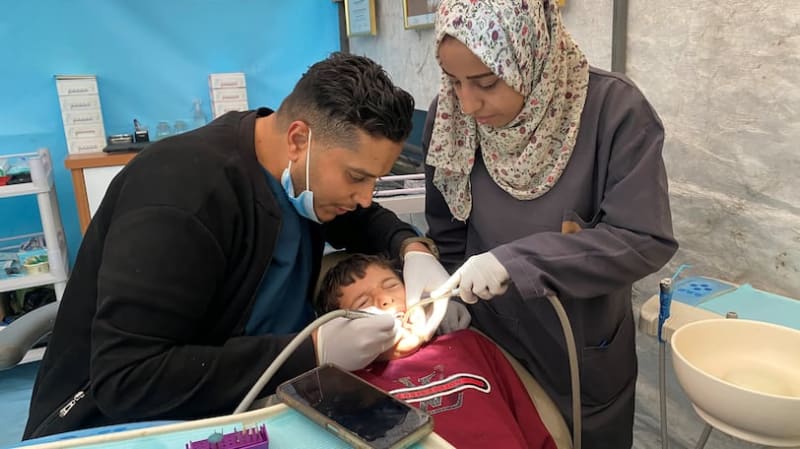
April 15, 2026In a small clinic in central Gaza, Amani Abu Badawi sat in a dentist’s chair, bracing herself for treatment without anaesthesia.
“I was forced to endure it,” she told The National, recalling how her decayed molars were treated without medication. “The pain is something no one can bear.”
Ms Abu Badawi, from Deir Al Balah, has lived with severe toothache for months, visiting clinic after clinic in search of relief. But dentists could offer only short-term fixes, such as painkillers.
Across Gaza, dental care is collapsing despite six months of ceasefire after two years of war in which much of the territory was devastated by Israeli bombardment.
“The profession is facing very serious challenges,” Dr Arafat Ashtaywi, head of the Dentists’ Syndicate in Gaza, told The National.
Clinics are running out of anaesthesia, fillings and materials needed for root canal procedures, limiting the treatment they can offer.
“We are forced to extract teeth that could have been saved,” Dr Ashtaywi said.
In some cases, dentists’ equipment is not properly sterilised because of fuel and electricity shortages.
The result is that even minor dental problems can quickly escalate into irreversible damage.
For patients, the crisis is not only about the availability of proper treatment but also affordability.
Before the war, a simple filling cost about 100 shekels ($33). Today, it can exceed 400 shekels, if materials are available at all.
For families struggling to survive, these costs are out of reach.
“Many people are living in tents and have lost everything,” said Osama Al Shanti, a dentist who has continued his practice despite the challenges. “They cannot afford treatment, so they stay in pain until they lose their teeth.”
The problem begins long before patients reach the dentist’s chair.
Dr Ahmed Sardah, who now operates a small lab after his clinic was destroyed, says the crisis in a lack of raw materials.
“The occupation prevents the entry of essential supplies under the pretext of dual-use,” he said, referring to Israel's policy of banning items that it deems could be repurposed for military use.
Materials such as acrylic, zircon, wax and gypsum, necessary for fillings and prosthetics, are either unavailable or prohibitively expensive.
Prices for supplies have increased fivefold, while attempts to produce materials locally have failed due to lack of equipment.
Electricity shortages have made matters worse.
“Dental labs need power to function,” Dr Sardah said. “But electricity is rarely available.”
He said hundreds of clinics were destroyed during the war, while others have closed due to a lack of equipment and supplies.
“Our work could stop at any moment,” Dr Al Shanti said. “We are continuing with great difficulty.”
Meanwhile, poor nutrition, lack of hygiene, and harsh living conditions in displacement camps have led to a surge in dental diseases.
“People are resorting to primitive methods to relieve pain,” Dr Ashtaywi says. “But these methods often make things worse.”
Ms Abu Badawi said she was still in pain, waiting for a solution that may not come soon.
“I am still suffering,” she said. “I am just waiting for things to improve, for supplies to be allowed in.”
She paused, then added: “The right to treatment is a basic right. But no one is holding anyone accountable.”
ESPAÑOL
Dentistas y pacientes de Gaza sufren las restricciones israelíes al suministro de analgésicos. Confiscan medicamentos paliativos, antibióticos, instrumental y baterías para instrumentos con la excusa de doble uso en comunidades sumidas en la pobreza por los bombardeos.Nagham Mohanna 15 de abril de 2026En una pequeña clínica en el centro de Gaza, Amani Abu Badawi se sentaba en el sillón del dentista, preparándose para un tratamiento sin anestesia. «Me vi obligada a soportarlo», declaró a The National, recordando cómo le trataron las muelas cariadas sin medicamentos. «El dolor es insoportable».La Sra. Abu Badawi, originaria de Deir Al Balah, ha sufrido un fuerte dolor de muelas durante meses, visitando clínica tras clínica en busca de alivio. Sin embargo, los dentistas solo podían ofrecerle soluciones temporales, como analgésicos.En toda Gaza, la atención dental se está desmoronando a pesar de seis meses de alto el fuego tras dos años de guerra en los que gran parte del territorio fue devastado por los bombardeos israelíes.“La profesión se enfrenta a desafíos muy serios”, declaró el Dr. Arafat Ashtaywi, presidente del Sindicato de Dentistas de Gaza, al periódico The National. Las clínicas se están quedando sin anestesia, empastes y materiales necesarios para los tratamientos de conducto, lo que limita los tratamientos que pueden ofrecer. “Nos vemos obligados a extraer dientes que podrían haberse salvado”, afirmó el Dr. Ashtaywi.En algunos casos, el instrumental dental no se esteriliza adecuadamente debido a la escasez de combustible y electricidad. Como resultado, incluso los problemas dentales menores pueden agravarse rápidamente y causar daños irreversibles.Para los pacientes, la crisis no solo radica en la disponibilidad de un tratamiento adecuado, sino también en su asequibilidad. Antes de la guerra, un simple empaste costaba unos 100 séqueles (33 dólares). Hoy en día, puede superar los 400 séqueles, si es que hay materiales disponibles. Para las familias que luchan por sobrevivir, estos costos son inalcanzables.“Mucha gente vive en tiendas de campaña y lo ha perdido todo”, dijo Osama Al Shanti, un dentista que ha continuado ejerciendo a pesar de las dificultades. “No pueden costearse el tratamiento, así que sufren dolor hasta que pierden los dientes”. El problema comienza mucho antes de que los pacientes lleguen al sillón del dentista. El Dr. Ahmed Sardah, que ahora dirige un pequeño laboratorio tras la destrucción de su clínica, afirma que la crisis se debe a la escasez de materias primas.“La ocupación impide la entrada de suministros esenciales con el pretexto de doble uso”, dijo, refiriéndose a la política israelí de prohibir artículos que considera que podrían ser reutilizados con fines militares.Materiales como el acrílico, el circonio, la cera y el yeso, necesarios para empastes y prótesis, no están disponibles o son prohibitivamente caros. Los precios de los suministros se han quintuplicado, mientras que los intentos de producir materiales localmente han fracasado por falta de equipo.Los cortes de electricidad han empeorado la situación.“Los laboratorios dentales necesitan electricidad para funcionar”, dijo el Dr. Sardah. “Pero la electricidad rara vez está disponible”. Afirmó que cientos de clínicas fueron destruidas durante la guerra, mientras que otras han cerrado por falta de equipo y suministros.“Nuestro trabajo podría detenerse en cualquier momento”, dijo el Dr. Al Shanti. “Continuamos con gran dificultad”. Mientras tanto, la mala nutrición, la falta de higiene y las duras condiciones de vida en los campos de desplazados han provocado un aumento de las enfermedades dentales. “La gente recurre a métodos primitivos para aliviar el dolor”, dice el Dr. Ashtaywi. “Pero estos métodos a menudo empeoran las cosas”.La Sra. Abu Badawi dijo que aún sentía dolor y que esperaba una solución que quizás no llegue pronto. “Sigo sufriendo”, dijo. “Solo espero que las cosas mejoren, que se permitan los suministros”.Hizo una pausa y luego añadió: “El derecho al tratamiento es un derecho fundamental. Pero nadie exige responsabilidades”.Leer completo...


