

Great Omari Mosque, Gaza: to save a shattered library. Recuperación de una biblioteca destrozada. ENG ESP
ENGLISH
Among the ruins of Gaza's Great Omari Mosque, volunteers race to save a shattered library
11 March, 2026
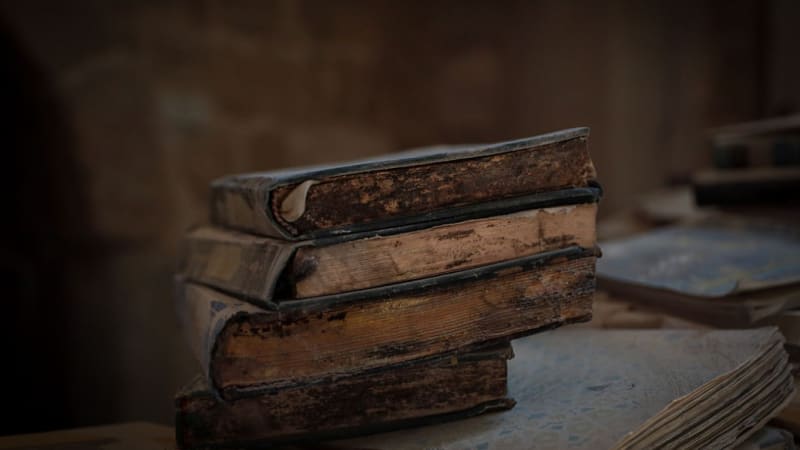
In the dim hall that once housed the historic library of Gaza's Great Omari Mosque, a thin beam of sunlight slips through a jagged hole in the ceiling, illuminating piles of torn pages, burned book covers, and manuscripts buried beneath layers of dust and broken stone.
The room is heavy with the smell of ash and damp paper. Splintered wooden shelves lie scattered across the floor, their contents mixed with debris left behind by explosions that ripped through the centuries-old mosque during Israel's genocidal war on Gaza.
Amid the devastation, a small group of volunteers moves slowly through the wreckage, carefully lifting damaged volumes and brushing dust from fragile pages.
Each rescued book, they say, feels like retrieving a fragment of Gaza's memory.
The volunteers are part of a grassroots initiative launched by heritage activists determined to salvage what remains of the mosque's once-renowned library—one of the city's most important cultural repositories.
Operating under the Gaza-based non-profit group Eyes on Heritage, they spend hours sifting through rubble, cataloguing damaged texts and preparing them for possible restoration.
Before Israel's war, the Omari Mosque library was a quiet refuge for students, historians, and religious scholars. Its shelves held thousands of works spanning literature, Islamic jurisprudence, Arabic language, medicine, and law. Researchers from across Gaza once came here to study rare manuscripts and historic texts.
Today, the same space is almost unrecognisable.
"Thousands of books were either torn apart or completely burned," Haneen al-Amsi, director of Eyes on Heritage and the coordinator of the volunteer effort, told The New Arab. "Some manuscripts were buried under rubble for months. When I first entered the library after the bombing, the destruction was shocking."
A library under rubble
The Great Omari Mosque is the largest and oldest mosque in Gaza and one of the most historically significant religious sites in Palestine. Located in the heart of Gaza's Old City, the sprawling complex covers roughly 4,100 square metres and can accommodate thousands of worshippers in its courtyard and prayer halls.
For generations, its library served as a vital centre of learning.
Before the war, it contained an estimated 20,000 books and manuscripts. Early assessments by volunteers now suggest that only a fraction of that collection—perhaps around 4,000 volumes—may still be recoverable.
"The western section of the library was completely destroyed," al-Amsi said. "Entire shelves collapsed, and thousands of books were lost beyond repair."
The mosque itself was severely damaged when it was bombed on 8 December 2023 during Israel's military campaign in Gaza. Like many of the territory's historic landmarks, it became another casualty in a war that has devastated large parts of the enclave's cultural and urban landscape.
According to data from Gaza's Government Media Office, more than 200 archaeological and historical sites were damaged or destroyed during the war. At least 34 mosques were completely flattened, while around 100 others sustained varying degrees of damage.
For Gaza's heritage activists, the loss is immeasurable.
"Libraries are not just buildings filled with books," al-Amsi said. "They hold the intellectual history of a society. When they are destroyed, part of that memory disappears."
Inside the ruined hall, volunteers work with almost no specialised equipment.
Wearing gloves and simple protective masks, they kneel among piles of rubble, using small brushes, wooden sticks, and their hands to remove dust from fragile paper. The goal is to prevent further damage while carefully separating pages stuck together by moisture and soot.
Occasionally, the team uncovers something remarkable.
During one recent search, a volunteer discovered a manuscript half-buried beneath shattered stones and burned timber. Its pages were pierced by fragments of shrapnel but remained partially intact.
Moments like that, the volunteers say, make the painstaking work worthwhile.
"Each book we recover represents a part of Gaza's history," al-Amsi explained. "Some of these manuscripts date back to the Ottoman era and contain writings on jurisprudence, Arabic language, and medicine. They tell the story of how knowledge circulated in this city over centuries."
The recovered volumes are placed in cardboard boxes and transported to temporary storage facilities where volunteers attempt basic preservation measures while waiting for professional restoration support that has yet to arrive.
Among those participating in the effort is Faten Shukri, a university student specialising in contemporary history. Sitting on the floor of the damaged library, she uses the flashlight on her mobile phone to illuminate the pages of a fragile book as she gently sweeps dust away with a small brush.
"I joined this initiative because I want to protect the heritage of our city," Shukri told TNA. "These books contain knowledge about our history and our people. If we lose them, we lose part of ourselves."
Many of the books she handles have been trapped beneath rubble for more than two years. Exposure to humidity, ash, and dirt has left them brittle and discoloured.
Still, Shukri says, every discovery brings a sense of hope.
"Finding a single book under the debris feels like recovering a piece of our memory," she said.
Nearby, 29-year-old Arabic teacher Mohammed al-Najjar carefully places newly recovered volumes into cardboard boxes. He pauses occasionally to inspect a damaged cover or gently separate stuck pages before sealing the box for transport.
"I grew up visiting this mosque," he said. "The library was always a special place for students and teachers."
Seeing the destruction firsthand was difficult, he added.
"When I came here after the bombing, I felt that we had a responsibility to do something—even if it was small—to save what could still be saved."
Related
The work is slow, exhausting, and often emotionally heavy. Volunteers spend long hours in the dusty ruins, aware that many of the library's most valuable manuscripts may already be lost forever.
Yet the team insists that even partial recovery matters.
"Sometimes we find only fragments of a book," al-Najjar said. "But even fragments can help preserve knowledge or allow historians to reconstruct texts in the future."
For al-Amsi and her colleagues, the project is about more than rescuing damaged pages. It is also an act of cultural resistance in a territory where war has repeatedly threatened to erase physical and historical landmarks.
With limited resources and little outside assistance, the initiative relies almost entirely on volunteer labour and small donations from local supporters.
Still, al-Amsi hopes that international cultural organisations and conservation experts may eventually step in to help restore the salvaged manuscripts.
"Many of these books could still be repaired with proper restoration techniques," she said. "But we currently lack the equipment and expertise needed to do that work."
Until then, the volunteers continue their careful search through the ruins of the Omari Mosque library.
Each page lifted from the dust, they believe, carries a piece of Gaza's past, and perhaps a small measure of hope for its cultural future.
"Saving these books is our way of protecting Gaza's memory," al-Amsi said quietly. "Even in the middle of destruction, we want the world to know that our history is still here."
ESPAÑOL
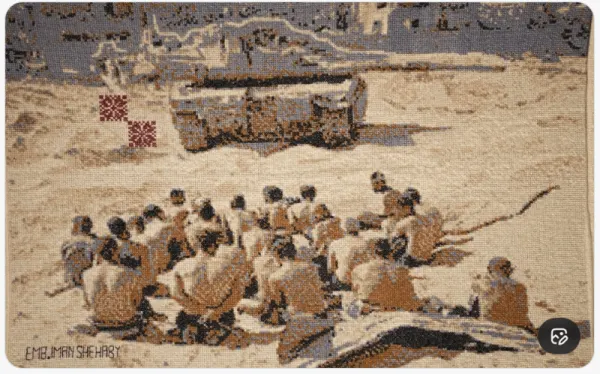
"Gaza. No words" Exhibition Venice. Gaza, sin palabras. Exposición Venecia. ENG ESP
Publicado ayer.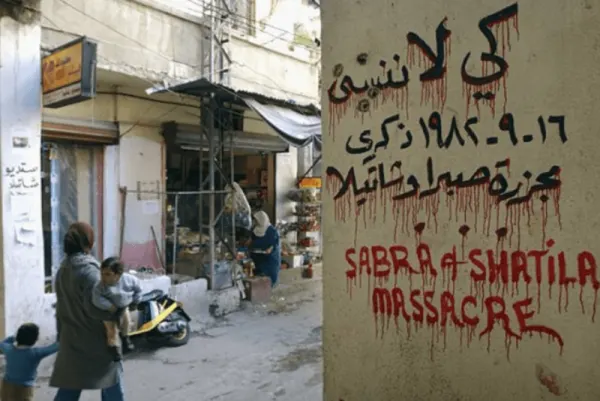
"Moving towards home". June Jordan. 44 years since the Sabra and Sathila massacres. "Camino al hogar"- 44 años desde la masacre de Sabra y Sathila. ENG ESP
Publicado hace 4 días.
Palestine, war of memory. Palestina, memoria de guerra.
Publicado hace 8 días.
Naza ("No other land"), documental, el genocidio de Gaza desde una sala de exterminio con aire acondicionado
Publicado hace 8 días.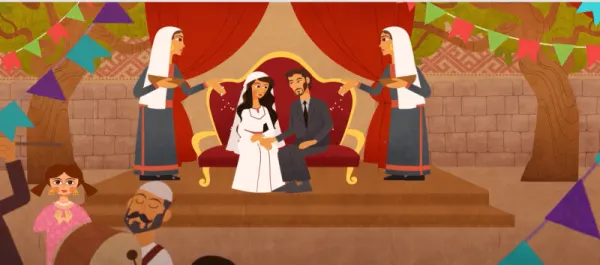
"All we have" Palestinian animation film. "Todo lo que tenemos" dibujos animados palestinos. ENG ESP
Publicado el 3 de septiembre.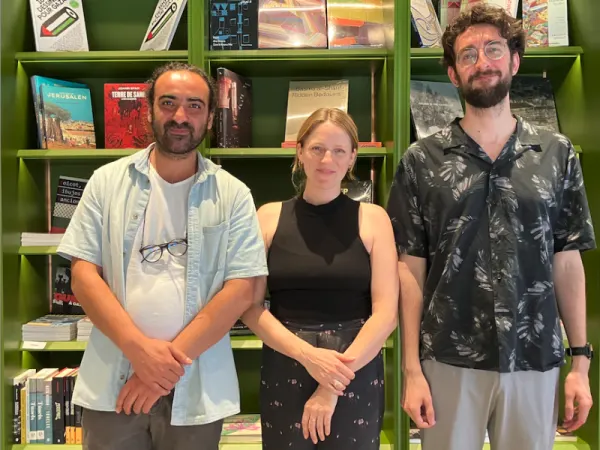
Publishers for Palestine. Cultura de Palestina
Publicado el 25 de agosto.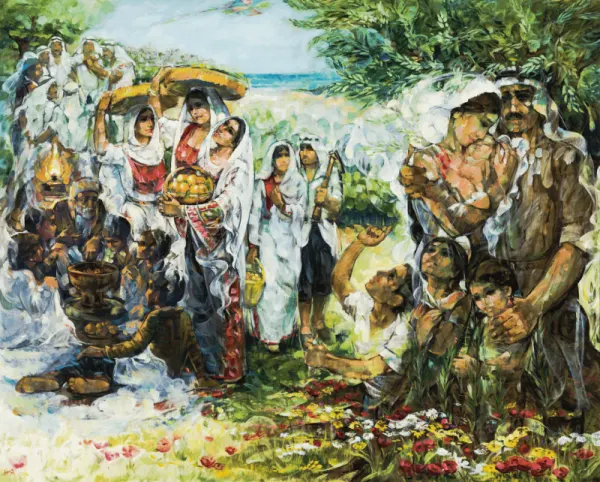
Ismail Shammout, an Ambassador of Palestinian Identity. Ismail Shammout, embajador de la identidad palestina. ENG ESP
Publicado el 24 de agosto.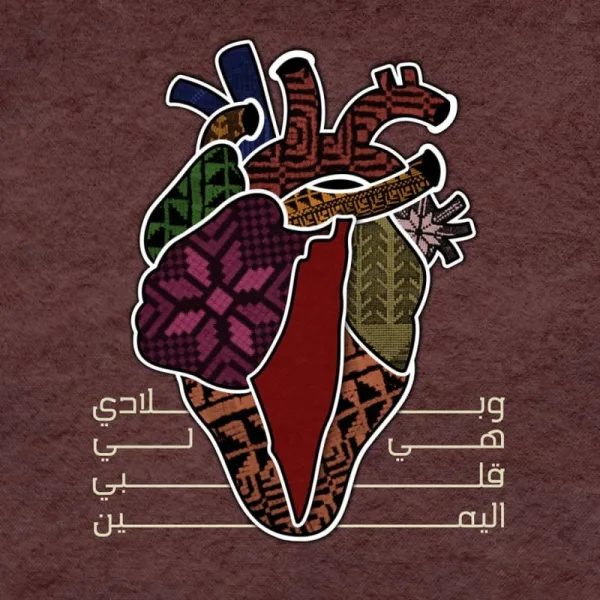
Hiba Walid Yassine. Graphic designer. Diseñadora gráfica. Palestinian Heart. Corazón Palestino. ENG ESP
Publicado el 19 de agosto.Ver más / See more
