

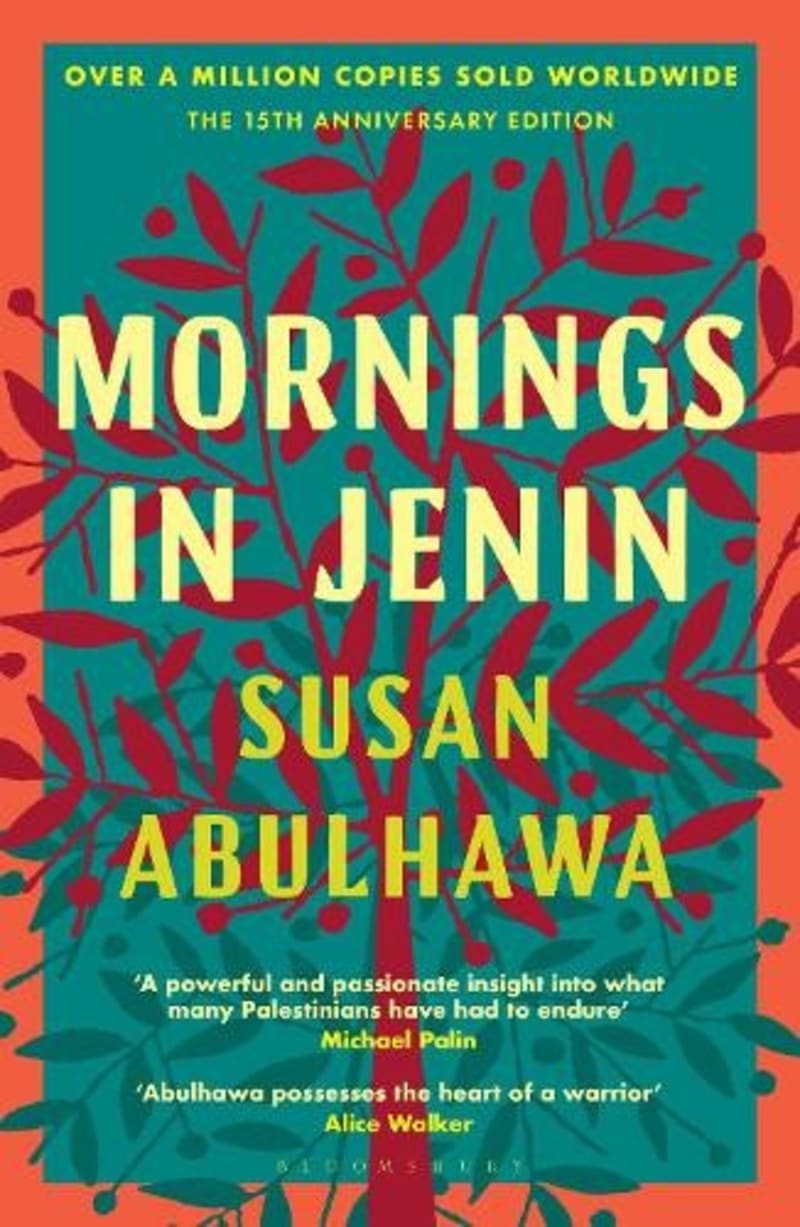
‘Mornings in Jenin’ , novel, by Susan Abulhawa. "Mañanas en Jenin", novela
ENGLISH
‘Mornings in Jenin’: The Strange and Circuitous Path of a Palestinian-American Novel
"Mornings in Jenin" is a multi-generational story about a Palestinian family.
Forcibly removed from the olive-farming village of Ein Hod by the newly formed state of Israel in 1948, the Abulhejas are displaced to live in canvas tents in the Jenin refugee camp. We follow the Abulheja family as they live through a half century of dispossession. Amidst loss, fear, and pain, as their tents are replaced by more forebodingly permanent cinderblock huts, there is always the waiting to return to a lost home.
The novel’s voice is that of Amal, the granddaughter of the village patriarch, a bright, sensitive girl who makes it out of the camps, only to return years later, where she marries and bear a child. Through her eyes, with her evolving vision, we get the story of her brothers, one who is kidnapped to be raised Jewish, one who chooses armed resistance. But of the many interwoven stories, stretching backward and forward in time, none is more important than Amal’s own. Her story is one of love and loss, of childhood and marriage and parenthood, and finally the need to share her history with her daughter, to preserve the greatest love she has.
Set against one of the twentieth century’s most intractable geopolitical issues, Mornings in Jenin is a deeply human novel – a novel of history, identity, friendship, love, terrorism, surrender, courage, and hope. Its power forces us to take a fresh look at one of the defining political moments of our lifetimes.
Interview. April 1, 2012
Photo: Susan Abulhawa with writer-translator Olivia Snaije at this year's Abu Dhabi International Book Fair

From the Egypt Independent:
When Palestinian-American author Susan Abulhawa began writing her popular “Mornings in Jenin,” it was, she said, “to put a Palestinian voice in English literature.”
But although the novel was written in English, it took the long route to an English-language audience. The book began its journey in 2006 as “Scar of David,” when it was published by a small US press. That press promptly went out of business, and only a few copies of the book circulated. But Abulhawa’s book was picked up by a French publisher, translated by Michèle Valencia, and published as “Les Matins de Jenine.” From there, it made its way into several other languages, and was so well-loved that it attracted English-language attention. In 2010, Bloomsbury released a fresh edit with the title “Mornings in Jenin.”
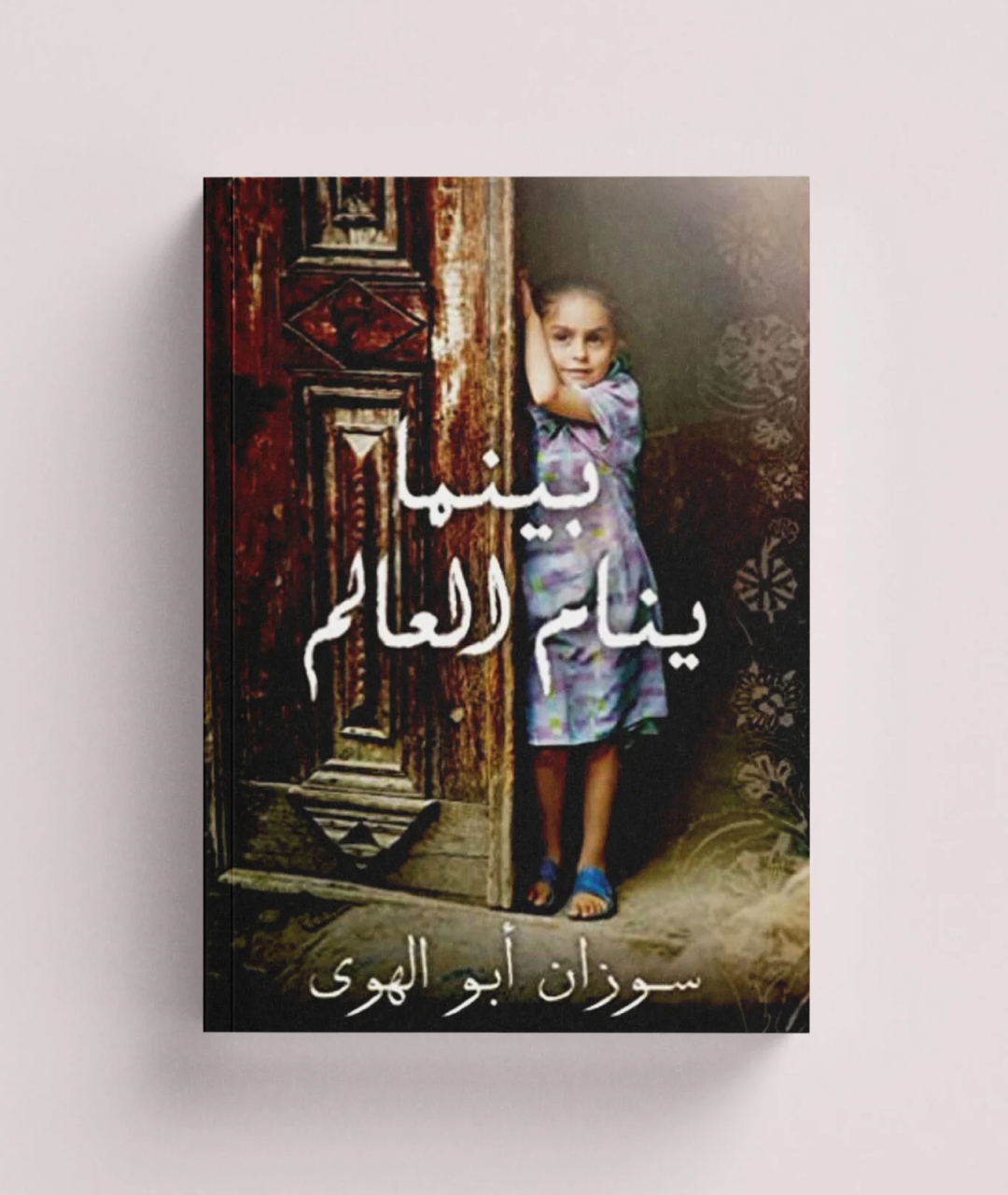
Now, in the spring of 2012, the novel brings Abulhawa’s voice into Arabic, with a translation “Beynama Yenam al-Alam” (“While the World Sleeps”) published by Bloomsbury Qatar.
Abulhawa said that she has “mixed feelings” about the translation. “I mean, I’m so happy that it’s out in Arabic, but on the other hand I worry that it doesn’t have the same soul as the English. So much does get lost in translation.”
“Some parts of it that I read, I felt like, ‘Oh, wow, this is a really good translation of what I meant to say.’ And there were other parts that I felt probably don’t capture the poetry of the English language.” But, she added, “I don’t think my opinion really should be trusted in this matter, because I’m so close to it.”
When Abulhawa began writing the novel, it was as a response to the 2002 Israeli attack on the refugee camp in Jenin. She was one of the first international observers to arrive at the camp, which had been sealed off by Israeli forces during the assault. The scene Abulhawa witnessed spurred her to write. Before sitting down to write “Mornings in Jenin,” she had not thought of herself as a novelist. She had written poetry, she said, in English and in Arabic. But she had not thought to write a novel.
“The truth is that I probably started writing this novel as an activist. But the minute that the characters appeared to me and sort of took shape and form, that part of me was completely gone.”
Abulhawa remains an activist. She is part of the Boycott, Divestment, and Sanctions (BDS) movement and the founder of the “Playgrounds for Palestine” group, which has built four playgrounds in Gaza, two in refugee camps in Lebanon, and one in a refugee camp in Syria. But she said that her activist self and novelist self are separate. Go on; keep reading.
Outtakes from the interview:
ArabLit: As you wrote the novel, you were speaking to an English-language audience?
Susan Abulhawa: I knew it was going to be, because I was writing it in English … This shouldn’t be such a complicated question, but it is. I made a conscious decision when I was writing, not to think about the audience. I didn’t want to think about the reader at all. Any time that crept in, I cut it out completely. It just wasn’t a part of the story—how the reader was going to react, what they were going to think about that story. However, from the outset, I wrote this novel knowing that I wanted to make a contribution to … I wanted to put a Palestinian voice in English literature.
AL: Ahdaf [Soueif] yesterday had asked you several questions, and one that you didn’t say much about was the intersection of “author and activist.” Do you see yourself as an activist first? Did you ever see the creative process as in any way going in a different direction from your activism?
SA: There’s a great deal of synergy between those two aspects of my writing. The truth is that is that I probably started writing this novel as an activist, but the minute that the characters appeared to me and sort of took shape and form, that part of me was completely gone. And it was then all about the characters; it was all about the story, it was all about literature. And it was all about narrating their story with humanity and with honesty and with poetry. In the early iterations, I would say the activist was a bit more prominent. But that very quickly disappeared, completely, from this project.
It was really as soon as … once the characters really became real to me, it actually was no longer about … The activist in me just wasn’t there any more. I fell in love with the characters. I had a relationship with them. They were my priority, I wanted to tell their story with honesty. And to do that, I think you can’t have a political agenda. You can’t think of how the reader is going to react, you can’t think of what this will look like, you just can’t. Otherwise, I don’t think it would be good writing.
AL: You prefer fiction because…?
SA: To meet new characters,
to explore different ideas through characters that are fictitious. You can’t do that with a memoir. And the other thing is, it’s a lot easier to search and explore the lives of others than it is to do your own. Because I’m too close to it. In a lot of things, I don’t think I would write them in a way that’s appealing to anybody.
AL: The book just came out [in Arabic] within the last couple of days? Are you doing book events around the region?
SA: I did one in Amman just a few days ago. And we literally just discovered — it was very well attended, and it was in Arabic, and it was really nice, and people were saying we haven’t been able to find it in the bookstores, and it should’ve been in the bookstores. We just found out that it’s apparently banned in Amman. Why don’t really know why.
It’s so annoying, because the English is not banned. And there was just a write-up in the Jordan Times about my event there. Editor’s note: Jordanian Journalist Ramsey George says that the book is selling in Amman (in Arabic.)
AL: Why?
SA: If I had to guess, I would say it has to do with a tiny little line that really talks about the collusion between King Abdullah at the time and Golda Meir during 1967, which is actually pretty well documented, and it’s fact. I can’t say that for certain.
AL: You’re going to PalFest this year. What do you have planned? Are you going to talk about the new Arabic translation?
SA: At this point, I think our biggest worry is actually being able to get in. I think there’s going to be a lot of workshops. I suspect Ahdaf’s working hard on that.
AL: Do you consider yourself influenced by Arabic literature?
SA: I think that, actually, in general, I think that my style of writing in English is on some level hugely influenced by Arabic. Even though English literature is what I read mostly. And I think…I’m not sure really how that happens. I ‘m guessing maybe because Arabic is really the first language that I learned to read and write. When I was younger, I used to write a lot of Arabic poetry. And so I’ve never published poetry, but I’ve written far more poetry than I’ve written anything else. None of it is published. I have volumes and volumes. Some of it is lost forever. So I had that influence early on.
And I would say it came through in the English. Which I heard from some people, Western readers only, that they felt at times it was too lofty, too verbose, too flowery.
But I like that style. I kind of like literature that uses a language that’s a little bit elevated. Maybe that comes from in Arabic, you don’t write in the way you speak. So I think that came through in my novel.
AL: Fos7a English?
SA: Well…it’s not necessarily everyday language in some parts. Only because I worked really hard on the prose.
AL: What sort of novels do you love to read?
SA: For some reason, I end up reading a lot of South American authors. Like one of my favorites that I tell people is this: The only book that I’ve read more than once, and I’ve actually read it four times, is 100 Years of Solitude. Nobody’s ever surprised when I say that. I like Isabella Allende. I like Nathaniel Hawthorne, actually. I like that style. And actually, if you look at all of them, they kind of share that thing that I was telling you about. They don’t really adhere to that “show, don’t tell” concept that characterizes a lot of modern Western literature that’s really full of a lot of dialogue and sort of showing and not telling. I guess I’m more of a teller. I think sometimes, a writer can “tell” something in a way that no amount of showing…So, for example, Nathaniel Hawthorne, in The Scarlet Letter, there’s a line in there where he’s talking about the Puritans. And he just says, There’s this one snigle line that he wrote, that describes just what they are. One lines just gets to their essence, and it’s something to the effect of, They accomplished so much because they dreamed and imagined so little. I mean, isn’t that perfect?
If you really try and search for the right words, some authors can really tell something. And again, that goes back to the elevated language.
AL: Do you read poetry?
SA: There’s a whole spectrum. I actually read poets on blogs. Unpublished poets. Of course, Mahmoud Darwish.
AL: Why don’t you publish your poetry?
SA: I guess I never thought about it until I actually met some poets that were published. It didn’t occur to me, for one thing, because up until I wrote this novel, I was a biologist who wrote poetry for herself. And poetry is also very vulnerable, and it’s scary to sort of publish that. But I also don’t even know where to go to publish it.
And maybe I will.
ESPAÑOL
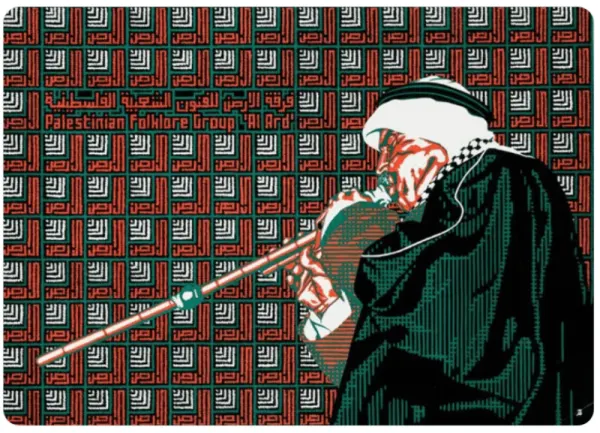
Al Ard — “The Land” — Palestinian folklore group. Al Ard - The Land- La Tierra. Grupo de folklore palestino
Publicado hoy.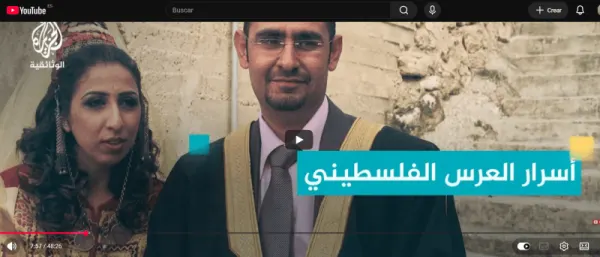
تغاريد عرس فلسطيني.. حكاية تراث لا يموت Preparativos, canciones de boda palestina: Un documental/relato de patrimonio perdurable
Publicado hoy.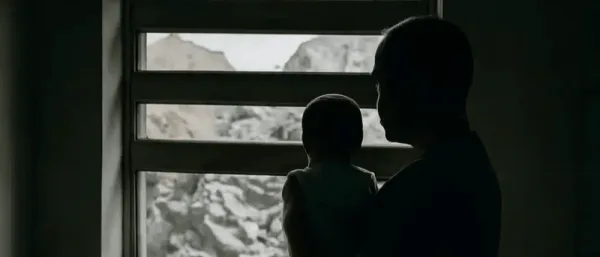
Citizen Osama. Documental
Publicado ayer.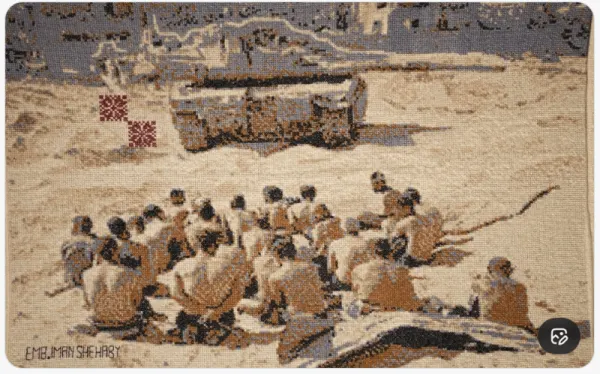
"Gaza. No words" Exhibition Venice. Gaza, sin palabras. Exposición Venecia. ENG ESP
Publicado hace 7 días.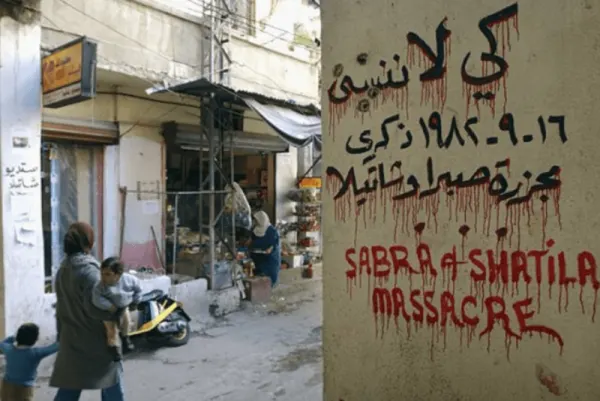
"Moving towards home". June Jordan. 44 years since the Sabra and Sathila massacres. "Camino al hogar"- 44 años desde la masacre de Sabra y Sathila. ENG ESP
Publicado hace 10 días.
Palestine, war of memory. Palestina, memoria de guerra.
Publicado hace 14 días.
Naza ("No other land"), documental, el genocidio de Gaza desde una sala de exterminio con aire acondicionado
Publicado hace 14 días.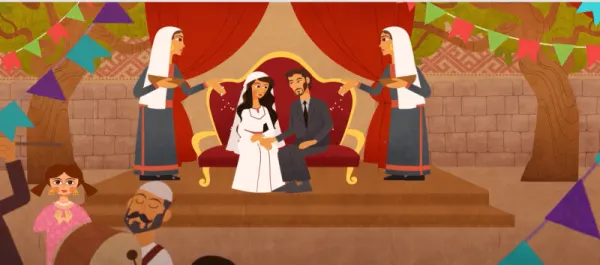
"All we have" Palestinian animation film. "Todo lo que tenemos" dibujos animados palestinos. ENG ESP
Publicado el 3 de septiembre.Ver más / See more
