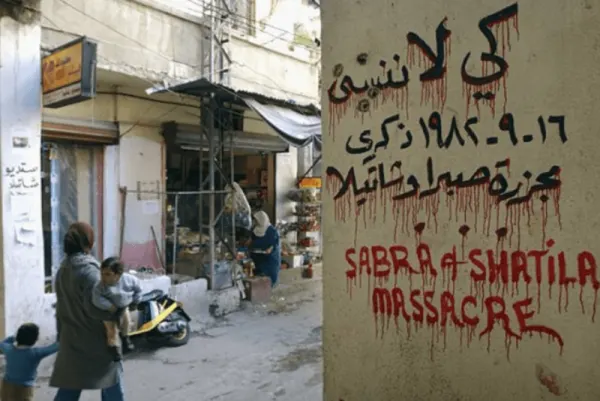

An israeli occupation soldier checks the identification documents of Palestinian farmers in a field near al-Hamra checkpoint in the Jordan Valley in the occupied West Bank on January 28th, 2020
(Photo: Jaafar Ashtiyeh/AFP)
Planting and Resisting: the Palestinian Musical Archive
When Palestinian land is stolen, our villages destroyed, and our belongings looted, culture becomes our last archive and means of survival. From the fields of the fellahin to the concrete walls of the checkpoint, music has not only reflected the Palestinian condition, but has actively shaped it, transforming personal grief into collective resistance. By placing two songs side-by-side, a traditional folk song transformed by revolution and a contemporary rap track born under the shadow of military occupation, we can trace the unbroken thread of the Palestinian struggle. Telling the story of loss, daily confrontation, and the unyielding demand of Palestinian existence.

(Photo by Mati Milstein)
Sage and Soil: A Folk Song Rooted in the Land
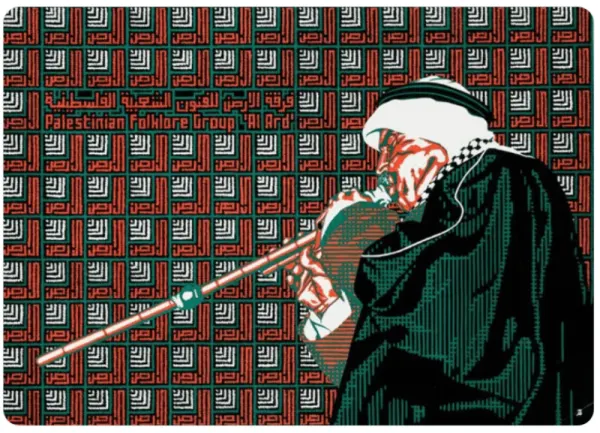
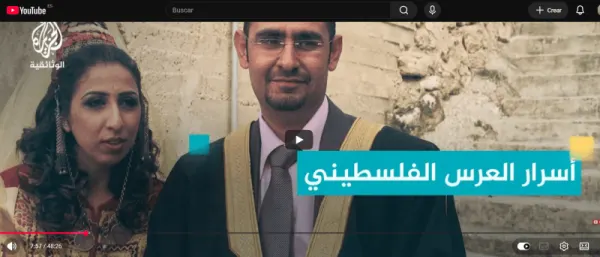
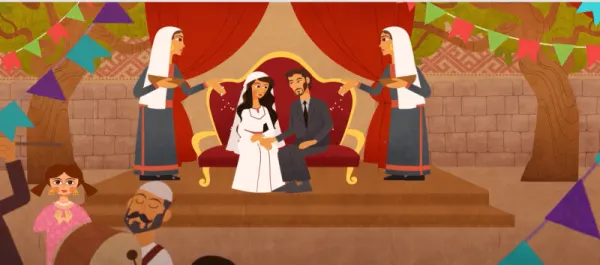
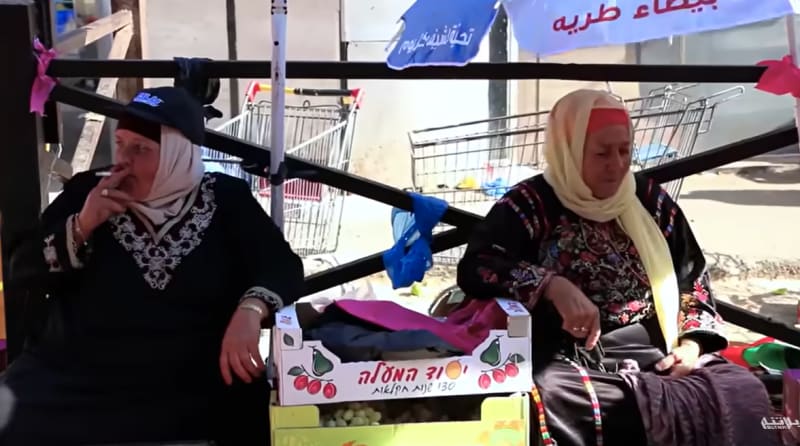
The song “Zara’na al-Maramieh” (We Planted the Sage), has its roots deep in Palestine’s falahi, or farmer, culture. It was originally a women’s folk song, sung at weddings or while working the land. Its early lyrics were a reflection of the fellahin’s life and connection to the land:
“Zara’na il-miramiyeh ‘ala bab id-daar
Zara’na il-miramiyeh fi il-hakureh
Zara’na il-miramiyeh fi il-basateen”
(“We planted sage at the doorstep
We planted sage in the garden plot.
We planted sage in the orchards.”)[1]
A song displaying how intertwined Palestinians are to their land, and how our care for the soil beneath our feet is a core part of our identity.

A Song Transformed: From Falahieh to Fida’ieh
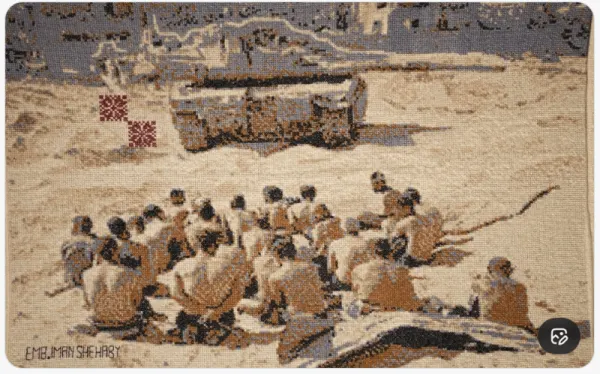
But al-Nakba, the catastrophe of 1948, ruptured this idyll. Palestinian soil, home to over 1.4 million Palestinians, was no longer just a land to care for, it became a land which witnessed the destruction of over 530 Palestinian villages, the expulsion of over 800,000 Palestinians, and a soil which soaked the blood of over 15,000 Palestinians killed at the hands of zionist occupation forces[2]. The song underwent a profound metamorphosis, its lyrics reshaped by the trauma of loss and the fire of armed resistance. The sage remained, but the song became a call to arms. The folk song was transformed into a revolutionary anthem, gaining a character of realism where Palestinians incorporated the tragedy of ethnic cleansing into their traditional folk music.
The new lyrics replaced the simple planting with an urgent plea:
“Zara’na il-miramiyeh ‘a bab il-daar
Falasteen bitnadi ‘ala thuwwaar
Yamma a’tini il-fida’i law bi-balash
Khash il-ard il-muhtalleh bi-’idu rashshash”
(“We planted sage at the doorstep,
Palestine calls out for the revolutionaries.
Mother, give me the freedom fighter, even for our land
He enters the occupied land with a machine gun in his hand”)
This song shifted into a political act. It glorified the fida’i, the freedom fighter, and called upon the youth to resist. Fellahin, caretakers of the land, became active agents in the liberation of their homeland. The shift in lyrics documented a shift in reality. Analyzed in Ghassan Kanafani’s The Revolution of 1936-1939 in Palestine, the British occupation and the waves of land dispossession that followed had created a class of landless peasants[3], expelling them from their orchards and into the heart of the struggle. The song absorbed this history, transforming a folk tune into an archive of culture and a call for resistance.
Qalandia: Shabjdeed and the Rap of Youth
Fast forward to the present, and the frontline of that struggle has manifested at Haajiz Qalandia, the zionist occupation’s checkpoint between the Occupied Northern West Bank and Occupied Jerusalem, fragmenting Palestinian communities and restricting Palestinian movement. In Shabjdeed’s track “Ko7ol w 3atme” (Kohl and Darkness), the fida’i with his machine gun is replaced by the Palestinian youth, who navigates a world where he is presumed guilty simply for existing. The Jerusalem-native rapper does not document a single battle, but rather archives the everyday reality of life under occupation.
Shabjdeed’s lyrics capture the suffocating paranoia and terror endured by a society under constant surveillance and brutality:
“Wa ana nazel ‘a Qalandia wadda’tni
Ana nazel ‘al-ma’bar wadda’tni
Iza bahut ‘idiya fi jeibi fi l-qitaar
Rah yishukk fi ta’neh, nus saa’a il-ta’ni
Taftish ‘al-wa’if, hassas ‘a batni
Sakakeen mish laa’i bas raah ‘a batni”
(“As I was going down to Qalandia, she bid me farewell
As I was going down to the crossing, she bid me farewell
If I put my hand in my pocket on the train
He’ll suspect a stabbing, half an hour to frisk me
A standing pat-down, he felt up my stomach
He didn’t find any knives, but he still punched me in the gut.”)

(Photo: Mamoun Wazwaz/APA Images)
Suspicion and Subjugation: A Generation under Surveillance
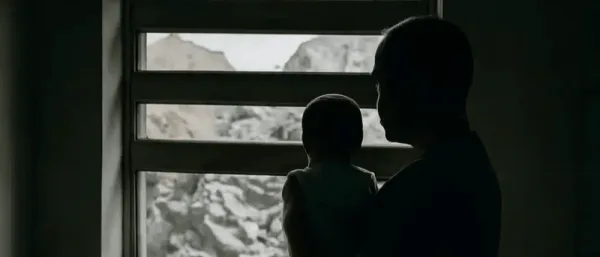
The occupation hasn’t just invaded the orchards, but has become a system of control that invades every aspect of Palestinian life: a train, a checkpoint, and ultimately the Palestinian body itself. The young Palestinian man is presumed a threat, his mere existence grounds for suspicion. The invasive frisk is a violation meant to humiliate, to remind the Palestinian that even his body is not his own.
The rapper spits in defiance:
“Mal’un abu kull jundi ‘alli waqqif
Mal’un abu kull shurti ‘alli waqqif”
(“Cursed be the father of every soldier who told me to stop
Cursed be the father of every cop who told me to stop”).
This curse is a direct response to the dehumanization that defines the Palestinian experience, particularly for its young men and boys. As Palestinian writer and activist from Sheikh Jarrah, Mohammed El-Kurd, articulates in Perfect Victims, this dehumanization has “situated us–ejected us, even–outside of the human condition.” The Palestinian is not seen as a human being with a natural reaction to subjugation, but as an “enigma,” a “big bad wolf” whose “every action invites indictment.” Shabjdeed’s music becomes the voice of those deemed terrorists, the ones who are “rarely offered due diligence, if at all.” He speaks of the boy’s experience who, as El-Kurd writes, is forced into adulthood when “he hears the banging of the gavel or feels the coldness of steel on his small wrists,” the boy who “finds gray in his hair” under the fluorescent lights of an interrogation room.[4]
Big Bad Wolves: On the Dehumanization of Palestinian Youth
The dehumanization of Palestinian youth is reflected in Shabjdeed’s recounts:
“Khaal hathool mish ‘aynayn ‘am tijhar
Hathool naawyeen yisawu ‘amaayil!
Milyaan fazafez hawaleiya
Yom il-i’iyameh il-dinya malyaan fazafez!”
(“Uncle, those aren’t just eyes glaring,
They’re planning a [resistance] operation!
I’m surrounded by settlers right now,
It feels like Judgment Day, the whole world is filled with settlers!”)[5]
The Palestinian youth living under occupation, surrounded by his occupier, becomes an alien on the land in which he is indigenous. Every glance is perceived as a threat and every movement is surveilled. His very existence invites suspicion and fear, his presence interpreted as a prelude to violence.
The consequences of this dehumanization shape not only how the world perceives Palestinians, but how Palestinians perceive themselves. It fills hearts with “a vigilant, rehearsed fear that has turned thunderous declarations into anonymous whispers.”[6] Yet, Shabjdeed’s track declares loudly, that despite it all, he is still standing.
“Is-sa’ab ‘ada, meet jil yitba’ani
Meet jil yitba’ani wa-ana waa’if
Khayyif inta? La la la ana mish khayyif”
(“The hardship passed, a hundred generations follow me
A hundred generations follow me, and I am standing
Are you scared? No, no, no, I’m not scared.”).

Lebanon 1982 – Diaries of the Israeli Invasion, Arab Information Center
The Same Breath: Sumud Across Generations
This is the same sumud, the same steadfastness, that echoes in the falaha’s call for the fida’i. It is an assertion of historical continuity that the occupation cannot break. Citing the late Bassel al-Araj, a Palestinian activist and writer from al-Alaja, near Bethlehem, killed in 2017 by zionist occupation forces, El-Kurd argues that to be an intellectual, and by extension, an artist, is to be mushtabik, engaged in confrontation against oppression. Shabjdeed embodies this engagement not with a rashshash, but with his voice, warbling the Palestinian youth’s experience and his confrontations living under occupation.
From the sage planted by the doorstep to the darkness of the checkpoint, Palestinian music serves as a living archive and an active agent in Palestinian culture. The mother blessing her son to resist and the mother bidding him farewell as he descends to Qalandia are the same woman. The call for the fida’i and the curse on the soldier are from the same breath. Together, these songs challenge the “frightening enigmas” that Palestinians are made out to be. They plow, they mourn, they defy, and they, despite generations of hardship, are still standing.
Written by a Spring 2026 Intern
The views expressed in this article are solely those of the author and do not necessarily reflect the views of The Jerusalem Fund.
References
[1] Muna al-Masdar. “تحوّلات الأغنية الشعبيّة الفلسطينيّة.” Arab48, 5 Mar. 2023
[2] Palestinian Central Bureau of Statistics (PCBS) . Special Statistical Bulletin on the 65th Anniversary of the Palestinian Nakba. 2013.
[3] Kanafani, Ghassan. The Revolution of 1936-39 in Palestine. 15 June 2023
[4,6] El-Kurd, Mohammed. Perfect Victims. Haymarket Books, 11 Feb. 2025
[5] “Shabjdeed – شب جديد – Ko7ol W 3atme – كحل و عتمة.” Genius, 2018, genius.com/Shabjdeed-ko7ol-w-3atme-lyrics
ESPAÑOL