

Al Ard — “The Land” — Palestinian folklore group. Al Ard - The Land- La Tierra. Grupo de folklore palestino
ENGLISH
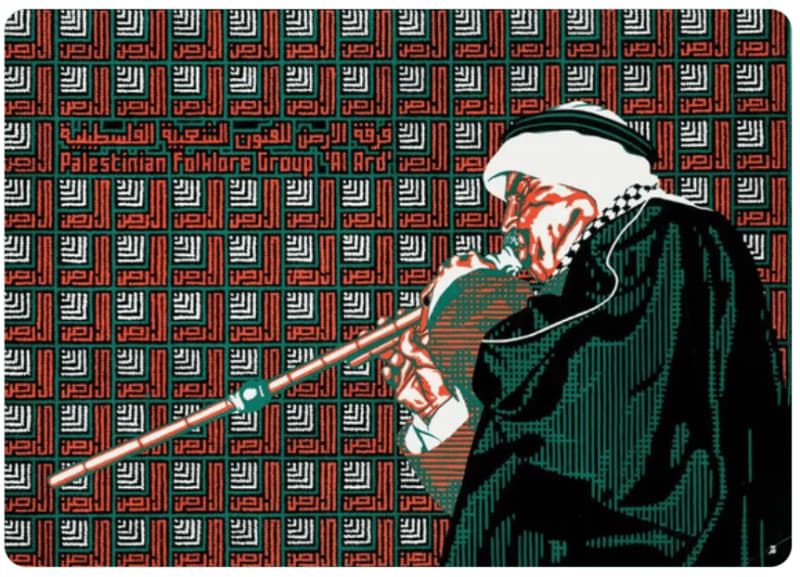
First established in Beirut in the 1970s and later re-formed in Yarmouk refugee camp in Damascus in 1984, Al Ard preserved Palestinian identity through song, dabke, traditional costume, theatre and folklore. Its members understood that for a displaced people, keeping the songs, dialect, dances and memory of the homeland alive was itself a form of cultural resistance.
Their productions included works responding directly to Palestinian history and struggle, among them Hajari Filastini — “Palestinian Stone” (1988) and _Urs al-Intifada — “Wedding of the Intifada” (1989).
Al Ard
Al Ard (The Land) folklore group, based in Yarmouk camp, Damascus, works to perpetuate Palestinian popular culture through music and dance.
The following article is based on interviews with Al Ard’s director, Ali Baiis, and other members of the group.
Not only did the Israeli occupation ‘usurp the land of Palestine; the Zionists have also tried to destroy or steal the Palestinian culture, even claiming some of its elements as their own. Thus, preserving Palestinian culture is an important facet of the Palestinian national liberation struggle. The Palestinian people realize that a people without culture are people without identity. They have thus worked to perpetuate their culture. As a result, many folklore groups have been founded in occupied Palestine and among Palestinian communities in exile.
Al Ard is one of these groups. Through song and dance, it has succeeded in converting folklore into one prong of the fierce struggle against the Zionist and imperialist enemy.
BEGINNINGS IN BEIRUT
Al Ard was originally established in Beirut in 1977, by a number of Palestinian artists and musical performers living outside their homeland, due to the occupation. They realized that one aspect of the aggressive Zionist plan to uproot the Palestinian people as a whole was the elimination of their culture heritage, thus eradicating Palestine’s history.
In Beirut, Al Ard worked mainly to revive Palestinian folklore through song, dance and costume.
However, its work was disrupted by the 1982 Israeli invasion of Lebanon, which targetted a variety of cultural, civilian and social institutions in the attempt to destroy the PLO.
Most of the group’s equipment was destroyed, and several members were martyred.
REORGANIZATION
Two years later, in Damascus, 1984, efforts were made to reestablish the group. Ali Bajis, who had worked with Al Ard in Beirut, was put in charge of reestablishing and managing the group.
Ali Bajis, better known as Abu Imad, is the only professionally trained musician in the group. He studied music in Jerusalem in 1957, and later worked in this field in Amman, Jordan, before joining the Palestinian revolution in 1970.
As well as directing Al Ard, Abu Imad is a member of the executive council of the General Union of Palestinian Expressive (Performing) Artists.
In Damascus, Al Ard’s work was more systematically organized. The organizing committee adopted an internal charter or rules and regulations governing the functioning of the group.
The criteria for membership were specified as being democratic, committed to the national cause and possessing talent relevant to the group’s aims and work.
The search began for qualified young men and women. Abu Imad emphasized that in recruiting to Al Ard, «We focused on the person’s national commitment. Concerning talent, if the person had basic abilities, we knew we could refine and polish these.»
Very few professionally trained artists have joined the group so, especially in the beginning, great efforts and long hours were expended on training the majority.
The background of some of Al Ard’s performers gives an idea of how the group developed. Yasmin, one of the dancers, had been performing with the Ghassan Kanafani youth group since 1979, and was the first female to join AJ Ard after it was reorganized in Damascus. Another of the dancers, Sumayeh, emphasized that she had «one thing in common with everyone else in the group - a great commitment to our cause and strong interest in folklore.» This, she said, had helped her to endure the extensive training in the beginning, but mainly she credited Al Ard itself, which «has really become a school of Palestinian folklore», for enabling her to develop into a professional dancer.
One of Al Ard’s singers is Ahmed, a Palestinian who grew up in Naireb camp in northern Syria. Before joining the group three years ago, he was working in Aleppo, and singing old
Palestinian songs as a hobby at weddings and nationalist celebrations. He learned Al Ard songs from listening to them on tapes. When he finally had the chance to attend one of the group’s performances, he was motivated to join. Abu Imad listened to Ahmed’s voice and thought that, although untrained, he had great potential. Today Ahmed says he learned everything he know.
NOTE
The poster was designed by Swiss revolutionary PFLP fighter and artist, committed Palestine solidarity activist Marc Rudin, who worked under the name Jihad Mansour and produced an extraordinary body of Palestinian resistance graphics during the 1980s.
ESPAÑOL

تغاريد عرس فلسطيني.. حكاية تراث لا يموت Preparativos, canciones de boda palestina: Un documental/relato de patrimonio perdurable
Publicado hoy.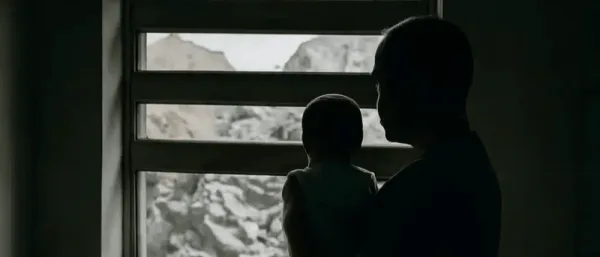
Citizen Osama. Documental
Publicado ayer.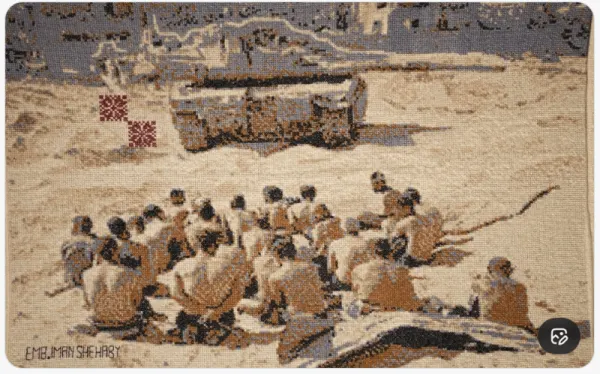
"Gaza. No words" Exhibition Venice. Gaza, sin palabras. Exposición Venecia. ENG ESP
Publicado hace 7 días.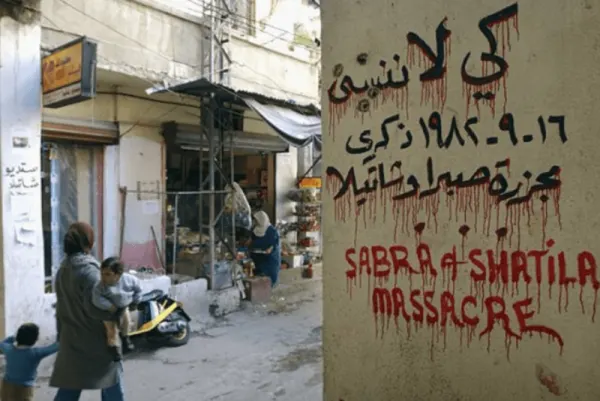
"Moving towards home". June Jordan. 44 years since the Sabra and Sathila massacres. "Camino al hogar"- 44 años desde la masacre de Sabra y Sathila. ENG ESP
Publicado hace 10 días.
Palestine, war of memory. Palestina, memoria de guerra.
Publicado hace 14 días.
Naza ("No other land"), documental, el genocidio de Gaza desde una sala de exterminio con aire acondicionado
Publicado hace 14 días.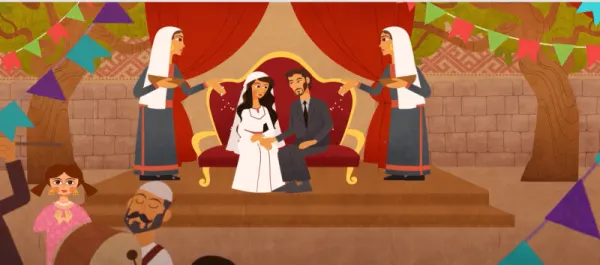
"All we have" Palestinian animation film. "Todo lo que tenemos" dibujos animados palestinos. ENG ESP
Publicado el 3 de septiembre.Ver más / See more
