By Tawfiq Al-Ghussein & Rania Hammad
‘Gaza – No Words – See Exhibit’ is not an exhibition that evokes suffering from a safe distance. It is an exhibition that demands a direct gaze.
Faisal Saleh is the founder of the Palestine Museum US, the first museum in the Americas dedicated to Palestinian history, art, and culture. Founded in April 2018 in Woodbridge, Connecticut, the museum is not simply a cultural institution — it is an act. An act that builds a field of meaning in which practices, memories and languages can be read as part of a single historical and political structure.
The museum’s mission is clear: to give Palestine and Palestinians a space in which their own history can be told, preserved and understood — in an international context in which that history is often silenced, distorted or ignored. This is not simply about making content visible, but about building the conditions in which that content can be perceived, understood, and situated.
This work has not remained confined to the United States. On May 17, 2026, the first European museum dedicated to contemporary Palestinian art opened in Edinburgh — a permanent space, run entirely by volunteers, created to offer Palestinian artists a place to tell their own story and counter dehumanizing narratives.
These initiatives are narrative infrastructures. Built in the places where Palestinian representation is most marginalized, they find their most important expression in the great international spaces of art.
Venice: Presence Without a Pavilion
At the Venice Biennale, Palestine has no national pavilion. This is not a cultural matter. It is a political one.
The mechanism is specific. Under the Biennale’s own rules, only states recognized by Italy are eligible to mount a national pavilion. Italy has yet to recognize Palestine, placing it among a dwindling minority of Western European countries that have not done so. The United Kingdom, France, Spain, Ireland, Norway, Sweden, Belgium, Luxembourg, Malta, Portugal, and Slovenia have all taken that step. Italy has not. The result is that a bureaucratic distinction, a diplomatic choice Italy has yet to make, becomes the lock on the door of one of the world’s most visible cultural stages.
While Israel — a state carrying out a documented genocide against the Palestinian people — continues to have its national pavilion at the Biennale, Palestine is forced to appear only through Collateral Events. This asymmetry is not neutral. It reflects the same structures of power that allow Israeli war crimes to be committed before the eyes of the world without anyone being held to account. Allowing Israel to continue participating in major international cultural events while it massacres Palestinians is an act of complicity. This is what is called art-washing: using culture to clean an image stained with blood.
It is in this space — a space not formally granted, but occupied with determination — that the Palestine Museum US returns to the Biennale for the second time. The first participation was in 2022, with the exhibition “From Palestine With Art” at the 59th Venice Biennale. That presence opened a path. This one confirms it.
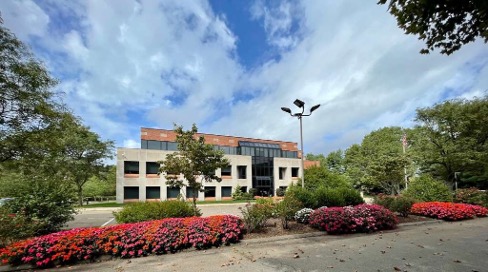
“Gaza – No Words – See Exhibit” is an official collateral event of the 61st Venice Biennale 2026. Opened on May 9, 2026, at Palazzo Mora and open until November 22, with free admission, it is not simply an artistic exhibition. It is an act of cultural resistance.
Gaza in Venice: Bringing a Genocide before the World
Faisal Saleh has been clear about why this exhibition, and why now. “I had to bring Gaza to the Biennale. There is an ongoing genocide against our people. I want the world to see what was allowed to happen — and what continues to happen. I want people to look reality in the face and demand that those responsible be held to account,” he told the Palestine Chronicle.
Saleh has also said that this exhibition will be an archival work: a permanent historical testimony, a document that will remain as evidence of what happened in Gaza.
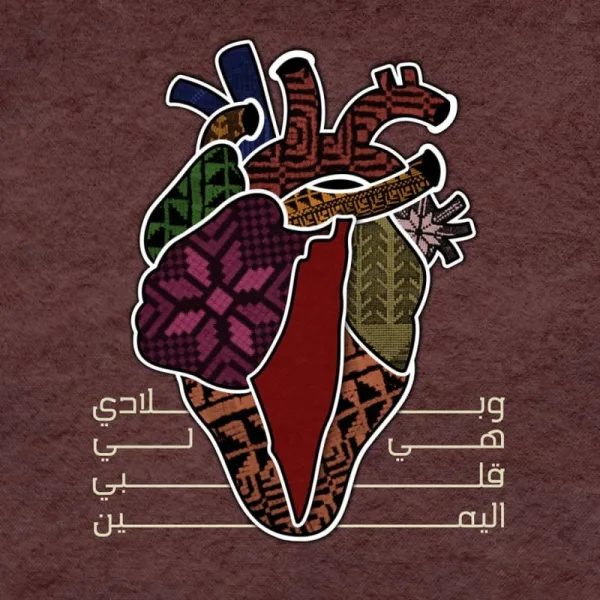
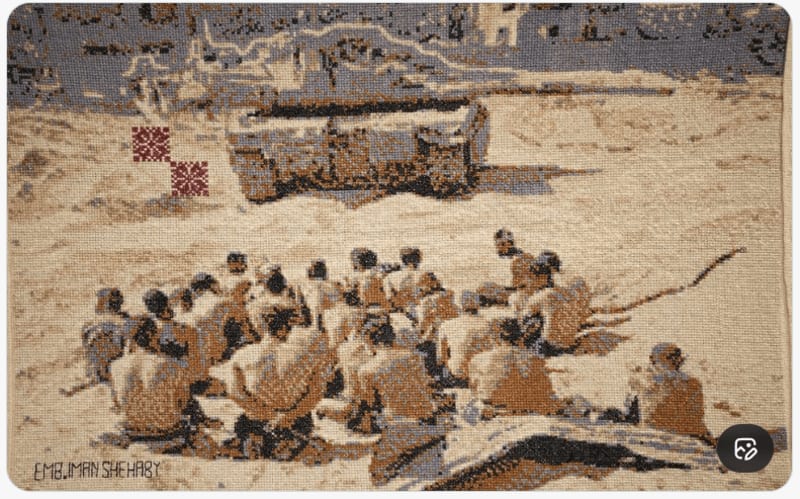
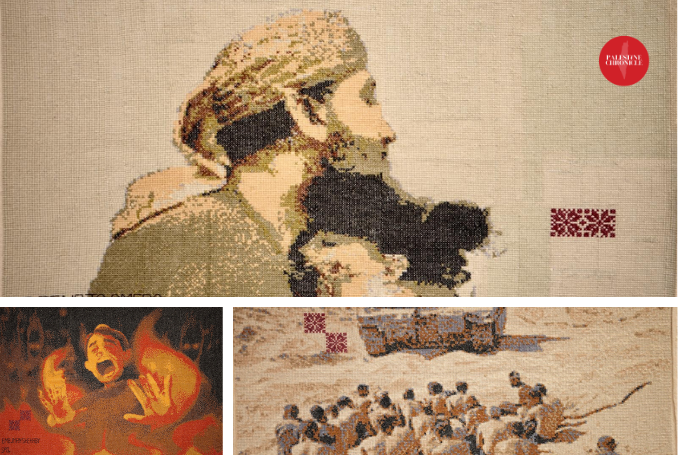
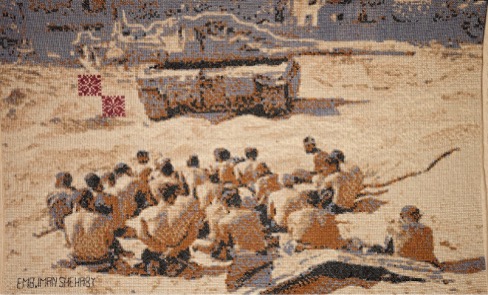
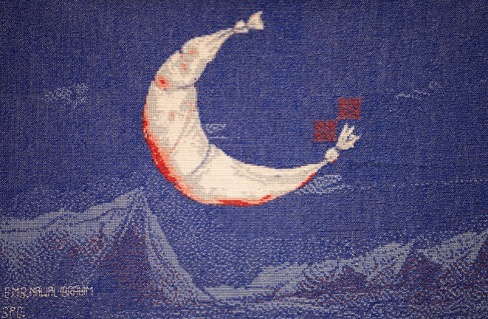
The exhibition presents one hundred panels embroidered in tatreez, made by sixty Palestinian women across the West Bank, Jordan, and Lebanon. Open to the public free of charge, it sits between art and documentation — preserving memory, bearing witness to destruction, affirming the cultural continuity of a people under siege.
Tatreez: A Living Archive
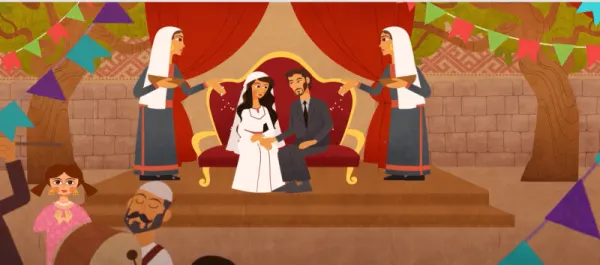
Tatreez is traditional Palestinian embroidery. It is not simply a craft practice or a decorative element. It is a system for transmitting knowledge, memory and identity. UNESCO has recognized tatreez as an intangible cultural heritage of humanity — recognition that attests to its historical depth and cultural value, and that at the same time exposes one of the most cynically contradictory aspects of the current situation:
Israel claims tatreez as its own, appropriating cultural practices such as tatreez and cuisine — hummus and falafel — traditions that belong to the very people it is trying to erase.
Each panel on display in Venice is composed of approximately 55,000 stitches. Each one requires months of work — two, three months — not weeks. This is where the difference from photography becomes crucial.
A photograph fixes an instant. It is taken in a second. Tatreez builds the image over time. Each stitch is a decision, a gesture that requires presence, concentration, and duration. What appears as an immediate image is in reality the result of months of patient, intentional work. Photography documents. Tatreez incorporates: it carries within it the time, the memory, and the body of the person who made it.
The motifs of tatreez do not simply record geographical or social belonging. They articulate a relationship between memory, space and continuity. They do not represent an event — they move through it. They do not merely bear witness to a history — they keep it active in the present. In the absence of institutions that guarantee the stability of memory, the body of the embroiderer becomes the place of its inscription.
The Women Have Become the Story
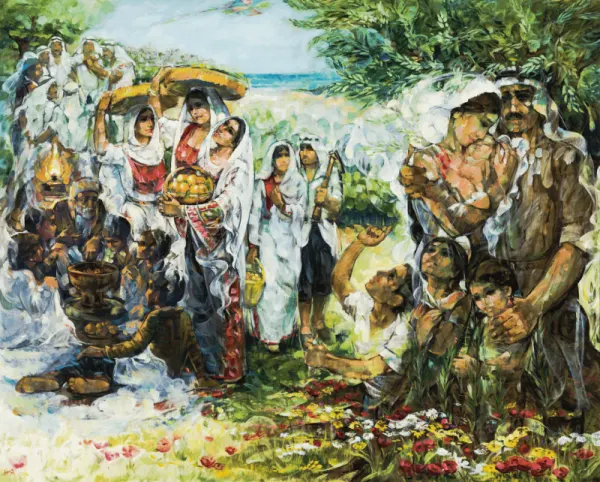
Palestinian women in Gaza have for generations produced refined tatreez embroidery. Through this practice, they passed on values, identity, and memory. Today, those same women can no longer tell their own reality through art. They have themselves become the story.
The embroiderers who made the panels in this exhibition are not passive executors of a tradition. They are active agents in the production and transmission of meaning. Every color choice, every variation, every stitch introduces a shift that holds together fidelity and transformation. To embroider Gaza is to decide what of Gaza deserves to be passed on. In a context of systematic destruction, this is a political act.
Their names, brought into an international artistic space, interrupt a double invisibility — political and economic. Their work is inseparable from the object they produce. Their presence in this exhibition does not affirm only survival, but cultural continuity.
As Saleh has said:
“This exhibition is also a response to Israel’s attempts to appropriate Palestinian embroidery. With this exhibition, the embroideries become evidence of Israeli crimes in Gaza. I want the world to see what it had allowed to happen, and for this not to go without consequence. The world must reckon with the crimes committed and to demand accountability.”
Art, Testimony, Accountability
‘Gaza – No Words – See Exhibit’ is not an exhibition that evokes suffering from a safe distance. It is an exhibition that demands a direct gaze. It does not simply make content visible — it intervenes on the very criteria through which that content can be recognized, understood, and confronted.
The question is not how to insert Palestine within a given system. The question is how to transform the criteria through which that system recognizes and makes the world legible. Faisal Saleh and the Palestine Museum US do this by bringing to Venice — to the heart of one of the most important international art events in the world — the hands and memory of Palestinian women, and the voice of an entire people that has waited too long for its right to self-determination to be recognized.
In a context where Israel is still granted a national pavilion while it carries out a genocide, the presence of the Palestine Museum US at the Biennale is an act of resistance and an appeal to the conscience of the world. Until 22 November 2026, Palazzo Mora holds something no one should allow themselves not to see.
– Tawfiq Al-Ghussein is a writer and researcher specializing in international law, geopolitical strategy, and the political economy of the Middle East. His work has been published in Mondoweiss, L’Antidiplomatico, Elaph, Al-Hayat Washington, Arab News and the Britain Palestine Project. He is a contributor to Gaza Is Dying While the World Remains Silent (L.A.D. Edizioni, 2026).
– Rania Hammad is a writer and activist based in Italy. She is a member of the Global Network on the Question of Palestine and national coordinator for Italy of the Palestine International Friends Alliance. She is the author of Palestina nel cuore, Vita tua Vita mea and Ritorno a Gaza.
ESPAÑOL