

¡2 años ya!
1.500+ publicaciones, más de 80k visitas, así que ¡80.000 gracias!
Gracias por leer, compartir y no dejar de hablar de Palestina.
Israel, death penalty to Palestinians. Pena de muerte a palestinos en Israel. ENG ESP
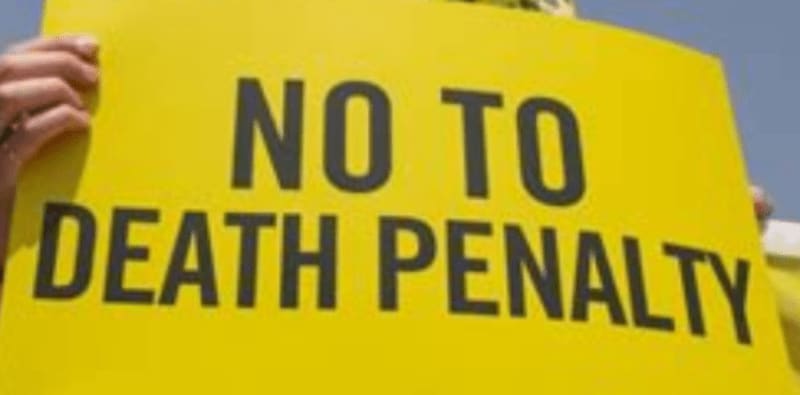
“Giving Palestinians Fewer Rights than Eichmann Received” "Menos derechos a los palestinos que a Eichmann"
Update: Tuesday 31 March 2026 Physicians for Human Rights Israel (PHRI)
@PHRIsrael Four months ago,...
...we published a comprehensive report about the systemic killing of incarcerated Palestinians, taking the lives, between October 2023 and August 2025, of 94 Palestinians in Israeli custody. This mass killing in Israeli detention facilities was committed using torture and grave violence, or through a clear policy of denial of medical treatment. Deliberate killing without any need for legislation.
This killing-without-legislation has not stopped, and nine additional Palestinians have since died in Israeli detention facilities. In all, since October 2023, at least 103 Palestinian prisoners and detainees have died. Forty-nine of them died in military custody, and 54 in Israel Prison Service custody.
This horrific reality does not diminish in any way the danger of the new, ostensibly legal, killing, which will be committed based on the new death penalty for Palestinians law, approved yesterday in the Knesset, Israel’s parliament.
The death penalty law constitutes an official stamp of approval for a policy of revenge and violent racism towards Palestinians, reaffirming that the lives of Palestinians under Israeli control are worth much less: the law targets only Palestinians and does not apply to Israelis. It gravely violates the principle of due process and undermines the ability to engage in judicial review. Beyond that, the law turns physicians into official partners in a process aimed at taking lives rather than protecting them.
The approval of the death penalty bill comes two weeks after the cancellation of the indictment against the soldiers from the Sde Teiman case and follows the decision to close the investigation into the death of 17-year-old Walid Ahmad, who died a year ago in Megiddo Prison. It is yet another manifestation of the historic moral abyss of the State of Israel and its judicial and enforcement systems.
Update: Monday 30 March 2026 Approved the law implementing the death penalty for Palestinians
The law implementing the death penalty for Palestinians has just been approved in the Knesset by 62 votes in favor and 47 against.
This evening, the Israeli Knesset gave final approval to a new law making the death penalty a default sentence for Palestinian prisoners convicted in military court of "deliberately causing the death of a person with the intent of ending Israel's existence." In the wording of the bill, "his sentence shall be death, and this penalty only." ■ Israeli military courts in the West Bank have a 96% conviction rate of Palestinians. ■ 72 MKs voted in favor while 47 MKs voted against, and detailed clauses of the law now under discussion. ■ More than 9,500 Palestinian prisoners remain detained in Israeli prisons under brutal and torturous conditions.
Update. Sunday 29 March 2026: Israel's Knesset National Security Committee has approved a proposed death penalty bill against Palestinian detainees. It will now advance to a final vote expected next week. By David Landy
The bill aims to allow for the execution of Palestinian prisoners convicted of terror offences. Pushed by the current far-right Israeli government, it would introduce a mandatory death penalty that does not require judicial unanimity, with executions to be carried out by hanging within 90 days of confirmation by the Israeli Prison Service.
There have been amendments, as well as pushbacks since its publication in January. But the motivations against the bill mostly lie within legal concerns and possible international and diplomatic backlash. Not because it constitutes the legalised, targeted killing of individuals from a specific group.
Israeli human rights organisation B'Tselem said "Israel is already killing Palestinians on a regular basis, …with close to zero accountability" and has described the bill as "… another tool in this toolbox".
Update Thursday 19 March 2026 : Calls for the Execution of Prisoners Promoted by Ben Gvir Reflect Dangerous Sadism and Pave the Way for Broader Abuses Inside Prisons.
The Palestinian Center for Prisoners Advocacy expresses grave concern over the inflammatory statements made by extremist Israeli Minister Itamar Ben Gvir, in which he explicitly called for the execution of Palestinian prisoners in a manner that reflects a deeply disturbing and dehumanizing rhetoric.
The Center stresses that such statements cannot be dismissed as isolated or provocative remarks. Rather, they reflect a dangerous level of extremism and a willingness to treat the lives of prisoners as instruments of retaliation. The remarks made by Minister Ben Gvir cannot be separated from the reality inside Israeli prisons, where detainees are subjected daily to harsh practices, including direct physical assaults, medical neglect, and severe restrictions on basic living conditions. With the escalation of such rhetoric, the risk becomes even more acute, as incitement can translate into actions on the ground.
The Center further notes that the repeated discussion of a so-called “death penalty for prisoners” law places these statements within an even more alarming context. This is no longer mere incitement, but rather an attempt to pave the way for policies that could directly endanger the lives of detainees. Such developments must not be ignored or underestimated.
The Center warns that if this trajectory continues without accountability or deterrence, it may lead to the actual targeting of prisoners within detention facilities, particularly in light of global distractions and the declining level of international attention to these issues.
The Center affirms that the protection of prisoners is both a legal and moral obligation, and that any violation of their lives or physical integrity constitutes a clear breach of international human rights standards and must be subject to accountability.
The Palestinian Center for Prisoners Advocacy calls on international bodies and human rights organizations to take meaningful action and move beyond general statements, as continued silence under such circumstances enables further violations.
Palestinian Center for Prisoners Advocacy
Thursday, 19 March 2026
“Giving Palestinians Fewer Rights than Eichmann Received”
Sociologist Ron Dudai discusses the new death penalty bill that has become a vehicle for the Israeli right’s revenge.
By Maya Rosen
February 16, 2026
On November 10th, 2025, the Israeli Knesset voted to advance a bill designed “to establish the death penalty for terrorists who have carried out murderous terror attacks.” If passed, the new law would require only a simple majority of judges to rule against a defendant; the convicted must then be hanged within 90 days without any possibility of commutation.
The bill, which applies only to the murder of Israelis, has become a symbol of the far right’s desire to extract revenge. “A death penalty for terrorists is a personal and national obligation,” Limor Son Har-Melech, the Member of Knesset who sponsored the legislation, said in a statement. It is a “bill that will frighten,” added far-right minister Itamar Ben-Gvir. The bill is currently being debated in committee; afterwards, it is expected to return to the Knesset plenary for final voting, where it appears likely to pass into law. In anticipation, the Israel Prison Service has announced that they have already begun designing special facilities where those convicted will be hanged, and training prison employees to perform the executions.
To learn more about Israel’s past positions on the death penalty, the details of the current legislation, and the cultural and political changes that have led to its advancement, I spoke with Ron Dudai, an Israeli sociologist who studies criminology and human rights. This interview has been edited for length and clarity.
Maya Rosen: Can you speak to the history of the death penalty in Israel?
Ron Dudai: When Israel was established in 1948, it inherited the death penalty [as the punishment] for murder from the British Mandate. Immediately, a debate arose about abolishing it, and following a Knesset vote in February 1954, it was outlawed. This was comparatively very early: France was still executing people with the guillotine at the time. There had been discussion about abolishing the death penalty completely, but it was ultimately abolished only for murder—in part because of the 1950 passage of legislation on Nazi crimes, which included the death penalty. That law was meant to be purely symbolic. No one anticipated Eichmann would be found and brought to Israel, but this happened. He was tried and executed in 1962—Israel’s only official use of the death penalty in its history.
But then, when Israel occupied the West Bank and Gaza in 1967, it argued that the British Mandate’s sweeping and repressive Emergency Regulations were still in force. The reason for this wasn’t about the death penalty; these regulations also allowed Israel to continue to subject Palestinians to practices such as administrative detention, and to more easily advance home demolitions, restrict freedom of movement, and prohibit political gatherings. But retaining the Emergency Regulations still meant that the military courts Israel established in the West Bank had the authority to impose the death penalty, though it was never used.
Since then, the possibility of using the death penalty against people who commit ideologically motivated violence (whom Israel calls “terrorists”) has been repeatedly debated. There have been new bills every few years to reintroduce the death penalty. But they have never passed because ultimately, the establishment—the army, the Shin Bet [Israel’s internal intelligence agency], and the judiciary—is against it.
MR: Why were the Shin Bet and the army historically opposed to the death penalty?
RD: We know from decades of research, mainly from the United States, that there is no evidence that the death penalty has any discernible deterrent effect. If you shift to life imprisonment, it does not affect the overall rate of murder, because people who commit murder don’t make a calculated cost-benefit risk assessment. This is true of ordinary murder and all the more so when we talk about “terrorism.” We also know this from many other regions, throughout many other periods of history, and with groups ranging from Palestinians to Irish to Sri Lankans. Someone who goes to carry out an attack or an operation is willing to die. Executing people in such cases may in fact create martyrs and mobilize further violence, rather than deterring it.
From the establishment’s perspective, there is also the question of Israel’s image abroad. The fact that Israel has never used the death penalty against Palestinians is one of the few issues that Israeli diplomats and spokespeople and United Nations representatives can boast about. Historically, Israel’s military has had a self-image as “the most moral army in the world.” The fact that Israel did not resort to the death penalty has been used as proof of that, to say: “We are heroic combatants. We kill reluctantly when we have to.” Having a civilian hangman kill someone who is obviously not a danger anymore—someone with his hands tied rather than at the scene of the crime or the battlefield—was seen as incompatible with this image. But this is what is now being reversed.
MR: Can you speak more about this reversal?
RD: The death penalty has become a rallying point for the radical right in Israel. For them, the military and the Shin Bet are the establishment, and like any populist movement, they define themselves in opposition to the establishment. So this has become one of the issues that they use to challenge the system—specifically by making themselves look “manly” against an “effeminate” establishment that doesn’t have the strength to impose the death penalty.
In the most recent Israeli elections in November 2022, the coalition that came to power included Likud and Ben-Gvir’s Otzma Yehudit, or Jewish Power, party. Part of the coalition agreement included committing to advancing legislation on the death penalty. Jewish Power introduced the specific bill in early 2023, and it began to make its way through Parliament. It is important to note that all of this preceded October 7th.
MR: How did things change after October 7th?
RD: October 7th generated a desire for revenge among the Israeli public, and the politicians who first introduced the death penalty bill used that to their advantage. At the same time, in early 2024, the legislation was blocked because of the issue of the hostages. Families of the hostages were in parliament, asking: “How can you even talk about the death penalty for Palestinian prisoners, when it would risk retaliation through the execution of our relatives?” So the bill got stuck in committee. Then, in October 2025, the bill was put on the table again. People hadn’t made more moral, human rights-focused arguments against the death penalty, so now that all the hostages are back, Ben-Gvir is saying: “Now we can do it.” And this time, it’s not a drill.
In December, Ben-Gvir and other far-right Members of Knesset wore golden pins shaped like nooses to a hearing on the death penalty bill. The pins are a play on the yellow ribbons people wore in solidarity with the hostages. The message is that the hostage movement was about negotiations, compromise, and being an effeminate loser, whereas the death penalty movement is about resolve, power, and manliness. In other words, Ben-Gvir and his ilk don’t want to apologize. They don’t want to hide behind euphemisms like the army spokesperson saying: “Things are under investigation, and we only responded to military targets that pose a risk.” They want to be able to say: “Yes, we kill Palestinians. Yes, this is revenge.” It’s about the primacy of their power against all the old calculations of diplomacy.
This is becoming possible in part because there is now a new far-right head of the Shin Bet, and in late 2025, he changed the formal position of the agency to no longer oppose the death penalty. The Shin Bet has not provided any rationale for this change. But the fact that all the previous heads of the agency have opposed the death penalty on security grounds (some of them wrote to the Knesset in November to reassert this opinion) indicates that the change is ideological.
MR: Can you speak more about the discriminatory nature of the death penalty bill?
RD: According to the bill, capital punishment under Israeli’s civilian law would only apply when the victim is an Israeli citizen or resident. Meanwhile, military courts only have jurisdiction over Palestinians in the occupied territories; Israeli citizens, including settlers, are explicitly exempt from their jurisdiction under the bill. This means that if a Palestinian and a settler in the West Bank are facing off and simultaneously shooting at each other, if the Palestinian kills the settler, the Palestinian would go to military court and would face the death penalty, but if the settler killed the Palestinian, the settler would go to civilian court and would not face the death penalty. When the bill’s sponsor Limor Son Har-Melech was asked about this, she said: “There is no such thing as a Jewish terrorist.”
MR: Can you explain what role the death penalty plays in a society that already regularly kills large numbers of Palestinians? Why is it important to the far right to kill Palestinians legally instead of extrajudicially?
RD: It’s an important question, because it’s not like things have been fine without the death penalty. Around 100 Palestinian prisoners have died in Sdeh Teiman and other Israeli detention and prison facilities over the last two years, not to mention the killings of Palestinians in the West Bank and the war crimes and crimes against humanity Israel has committed in Gaza.
But with extrajudicial killings, the state doesn’t always take formal responsibility, and often tries to explain things away as having happened in the heat of battle. And you don’t have the ceremony with those killings.
With the death penalty, you get these rituals: “So-and-so will be executed on Tuesday,” the countdown, the last meal, the last speech. The far right wants these rituals. When the bill passed the first vote in the plenary, Ben-Gvir went around distributing baklava. I can only imagine the disgusting celebrations if the law is actually passed: the media reporting “72 hours until the execution,” then “48 hours until the execution”; Ben-Gvir and his people dancing outside the prison. This is not to say that the death penalty is worse than other forms of death, but it’s a more specific, narrow genre of violence, and that’s what they are looking for.
MR: An earlier version of the bill stipulated that the death penalty be carried out by lethal injection, but the more recent version of the bill changed this to death by hanging. Is this change also connected to the ceremonial aspect?
RD: When the first version of the bill mentioned lethal injection, which has to be performed by doctors, the Israeli Medical Association immediately announced that doctors cannot participate in executions because under the Hippocratic Oath and medical ethics guidelines, doctors cannot kill people. This might have been one reason they shifted to hanging.
But it is also true that they might have wanted to invoke the symbols associated with hanging. Lethal injection is about creating an illusion of painless death, of a sterile medical procedure (we know that this is only an illusion, because in truth the individuals are in severe pain).
Hanging, on the other hand, is the most visceral symbol of power. You see the body shaking; it’s associated with lynchings, with the Wild West, with Eichmann. It offers a pure, clean expression of power, of Jewish supremacy, and of revenge.
MR: What would be the broader implications of this legislation passing?
RD: This legislation will be a tragedy for Palestinians, first and foremost. They will be facing something that there may not be another example of anywhere in the world: a mandatory death penalty without the possibility of reprieve. A mandatory death penalty is itself extremely rare—it is exercised in just a few countries and is a violation of international law. But denying the right to ask for reprieve may be unprecedented. Even under Louis XIV in 17th-century France, the condemned person could ask the king for a last minute clemency. Although he was denied, even Eichmann had the right to ask for reprieve. The current legislation would mean giving Palestinians fewer rights and protections than Eichmann received.
The bill will also be a major setback in the global fight for abolishing the death penalty. Since the late 1980s, the world has been moving away from the death penalty. Only a tiny minority of countries still use it, but now that number stands to grow.
Lastly, the bill would significantly affect Israeli society. By completely prohibiting the possibility of reprieve, it will advance the radical right’s challenge to both the judicial system and to the military establishment. When Ben-Gvir and his supporters say that the death penalty should be mandatory, they are saying: “We do not want to give judges any discretion. We don’t trust the discretion of the military’s chief of staff in the military courts, or the president or prime minister in the civilian courts.”
Introducing a mandatory death penalty will also affect the culture more broadly. If you accept that the state can kill people who absolutely are not a threat anymore, I can only assume it will make extrajudicial executions and lynchings even more common.
ESPAÑOL
Actualización, martes 31 marzo 2026: Physicians for Human Rights Israel (PHRI) Médicos por los Derechos Humanos Israel (PHRI) @PHRIsrael Hace cuatro meses,...
... publicamos un informe exhaustivo sobre el asesinato sistemático de palestinos encarcelados, que se cobró la vida, entre octubre de 2023 y agosto de 2025, de 94 palestinos bajo custodia israelí. Esta matanza en centros de detención israelíes se cometió mediante tortura y violencia extrema, o a través de una clara política de negación de atención médica. Un asesinato deliberado sin necesidad de legislación alguna.
Esta matanza sin ley no ha cesado, y desde entonces, nueve palestinos más han muerto en centros de detención israelíes. En total, desde octubre de 2023, al menos 103 presos y detenidos palestinos han muerto. Cuarenta y nueve de ellos murieron bajo custodia militar y 54 bajo custodia del Servicio Penitenciario de Israel.
Esta horrible realidad no disminuye en absoluto el peligro del nuevo asesinato, aparentemente legal, que se cometerá en virtud de la nueva ley de pena de muerte para palestinos, aprobada ayer en la Knesset, el parlamento israelí. La ley de pena de muerte constituye una aprobación oficial de una política de venganza y racismo violento contra los palestinos, reafirmando que las vidas de los palestinos bajo control israelí valen mucho menos: la ley se dirige únicamente a los palestinos y no se aplica a los israelíes. Viola gravemente el principio del debido proceso y socava la capacidad de ejercer la revisión judicial.
Además, la ley convierte a los médicos en cómplices oficiales de un proceso cuyo objetivo es quitar vidas en lugar de protegerlas. La aprobación del proyecto de ley de pena de muerte se produce dos semanas después de la anulación de la acusación contra los soldados del caso Sde Teiman y tras la decisión de cerrar la investigación sobre la muerte de Walid Ahmad, de 17 años, quien falleció hace un año en la prisión de Megido. Se trata de otra manifestación más del histórico abismo moral del Estado de Israel y de sus sistemas judiciales y de aplicación de la ley.
Actualización, lunes 30 marzo 2026: La ley que impone la pena de muerte a los palestinos acaba de ser aprobada en la Knéset por 62 votos a favor y 47 en contra.
Actualización, domingo 29 de marzo de 2026: El Comité de Seguridad Nacional de la Knesset israelí aprobó un proyecto de ley sobre la pena de muerte para detenidos palestinos. Ahora pasará a votación final, prevista para la próxima semana. Por David Landy
El proyecto de ley busca permitir la ejecución de prisioneros palestinos condenados por delitos de terrorismo. Impulsado por el actual gobierno israelí de extrema derecha, introduciría una pena de muerte obligatoria que no requiere unanimidad judicial, y las ejecuciones se llevarían a cabo mediante ahorcamiento dentro de los 90 días posteriores a la confirmación por parte del Servicio Penitenciario israelí.
Desde su publicación en enero, se han introducido enmiendas y se han producido rechazos. Sin embargo, las principales razones para oponerse al proyecto de ley radican en preocupaciones legales y posibles represalias internacionales y diplomáticas, no en que constituya el asesinato legalizado y selectivo de individuos de un grupo específico.
La organización israelí de derechos humanos B'Tselem afirmó que "Israel ya está matando palestinos con regularidad, con una rendición de cuentas prácticamente nula", y describió el proyecto de ley como "una herramienta más en su arsenal".
Actualización, jueves 19 de marzo de 2026: Los llamamientos a la ejecución de presos promovidos por Ben Gvir reflejan un sadismo peligroso y allanan el camino a abusos más generalizados dentro de las cárceles.
El Centro Palestino para la Defensa de los Presos expresa su profunda preocupación por las declaraciones incendiarias del ministro israelí extremista Itamar Ben Gvir, en las que pidió explícitamente la ejecución de presos palestinos con una retórica profundamente perturbadora y deshumanizadora.
El Centro subraya que tales declaraciones no pueden considerarse meros comentarios aislados o provocadores. Por el contrario, reflejan un nivel peligroso de extremismo y la disposición a utilizar la vida de los presos como instrumentos de represalia. Las declaraciones del ministro Ben Gvir son inseparables de la realidad dentro de las cárceles israelíes, donde los detenidos son sometidos diariamente a prácticas brutales, incluyendo agresiones físicas directas, negligencia médica y severas restricciones a sus condiciones básicas de vida.
Con la escalada de esta retórica, el riesgo se agrava aún más, ya que la incitación puede traducirse en acciones concretas. El Centro señala además que el reiterado debate sobre una supuesta ley de “pena de muerte para presos” sitúa estas declaraciones en un contexto aún más alarmante. Esto ya no es mera incitación, sino un intento de allanar el camino a políticas que podrían poner en peligro directamente la vida de los detenidos. Estos acontecimientos no deben ignorarse ni subestimarse.
El Centro advierte que, si esta tendencia continúa sin rendición de cuentas ni medidas disuasorias, podría derivar en ataques directos contra presos en los centros de detención, especialmente ante las distracciones globales y la disminución de la atención internacional a estos temas. El Centro afirma que la protección de los presos es una obligación tanto legal como moral, y que cualquier violación de su vida o integridad física constituye una clara violación de las normas internacionales de derechos humanos y debe ser objeto de rendición de cuentas.
El Centro Palestino para la Defensa de los Presos insta a los organismos internacionales y a las organizaciones de derechos humanos a tomar medidas concretas y a ir más allá de las declaraciones generales, ya que el silencio continuado en estas circunstancias permite que se produzcan más violaciones. Centro Palestino para la Defensa de los Presos Jueves, 19 de marzo de 2026.
“Dar a los palestinos menos derechos que los que tuvo Eichmann”
El sociólogo Ron Dudai analiza el nuevo proyecto de ley sobre la pena de muerte, que se ha convertido en un vehículo para la venganza de la derecha israelí.
Por Maya Rosen 16 de febrero de 2026
El 10 de noviembre de 2025, la Knéset israelí votó a favor de un proyecto de ley diseñado para “establecer la pena de muerte para terroristas que hayan llevado a cabo atentados terroristas asesinos”. De aprobarse, la nueva ley solo requeriría una mayoría simple de jueces para fallar en contra del acusado; el condenado deberá ser ahorcado en un plazo de 90 días sin posibilidad de conmutación de la pena.
El proyecto de ley, que se aplica únicamente al asesinato de israelíes, se ha convertido en un símbolo del deseo de venganza de la extrema derecha. “La pena de muerte para terroristas es una obligación personal y nacional”, declaró Limor Son Har-Melech, miembro de la Knéset que impulsó la legislación.
Es un “proyecto de ley que causará temor”, añadió el ministro de extrema derecha Itamar Ben-Gvir. El proyecto se debate actualmente en comisión; posteriormente, se espera que regrese al pleno de la Knéset para su votación final, donde parece probable que se convierta en ley.
Anticipándose a ello, el Servicio Penitenciario de Israel ha anunciado que ya ha comenzado a diseñar instalaciones especiales donde se ahorcará a los condenados y a capacitar al personal penitenciario para llevar a cabo las ejecuciones.
Para conocer más sobre las posturas pasadas de Israel sobre la pena de muerte, los detalles de la legislación actual y los cambios culturales y políticos que han propiciado su avance, hablé con Ron Dudai, sociólogo israelí especializado en criminología y derechos humanos. Esta entrevista ha sido editada para mayor brevedad y claridad.
Maya Rosen: ¿Podría hablarnos de la historia de la pena de muerte en Israel?
Ron Dudai: Cuando Israel se estableció en 1948, heredó del Mandato Británico la pena de muerte [como castigo] por asesinato. Inmediatamente surgió un debate sobre su abolición y, tras una votación de la Knéset en febrero de 1954, se prohibió. Esto fue comparativamente muy temprano: Francia aún ejecutaba con la guillotina en aquel entonces. Se había debatido la abolición total de la pena de muerte, pero finalmente se abolió solo por asesinato, en parte debido a la aprobación en 1950 de la legislación sobre crímenes nazis, que incluía la pena de muerte. Esa ley pretendía ser puramente simbólica.
Nadie previó que Eichmann sería encontrado y llevado a Israel, pero así sucedió. Fue juzgado y ejecutado en 1962, el único uso oficial de la pena de muerte en la historia de Israel.
Pero luego, cuando Israel ocupó Cisjordania y Gaza en 1967, argumentó que las amplias y represivas Regulaciones de Emergencia del Mandato Británico seguían vigentes. El motivo no fue la pena de muerte; estas regulaciones también permitieron a Israel seguir sometiendo a los palestinos a prácticas como la detención administrativa, así como facilitar la demolición de viviendas, restringir la libertad de movimiento y prohibir las reuniones políticas. Sin embargo, mantener las Regulaciones de Emergencia aún significaba que los tribunales militares que Israel estableció en Cisjordania tenían la autoridad para imponer la pena de muerte, aunque esta nunca se utilizó.
Desde entonces, la posibilidad de aplicar la pena de muerte contra personas que cometen actos violentos con motivos ideológicos (a quienes Israel llama "terroristas") se ha debatido repetidamente. Cada pocos años se han presentado nuevos proyectos de ley para reintroducir la pena de muerte. Pero nunca se han aprobado porque, en última instancia, el establishment —el ejército, el Shin Bet [la agencia de inteligencia interna de Israel] y el poder judicial— se opone a ella.
MR: ¿Por qué el Shin Bet y el ejército se han opuesto históricamente a la pena de muerte?
RD: Sabemos por décadas de investigación, principalmente en Estados Unidos, que no hay pruebas de que la pena de muerte tenga un efecto disuasorio perceptible. Si se cambia a cadena perpetua, no afecta la tasa general de homicidios, porque quienes cometen asesinatos no realizan una evaluación calculada de los costos y beneficios. Esto es cierto en el caso de los asesinatos comunes, y más aún cuando hablamos de terrorismo. También lo sabemos de muchas otras regiones, a lo largo de muchos otros períodos de la historia, y con grupos que van desde palestinos hasta irlandeses y esrilanqueses.
Alguien que va a llevar a cabo un ataque o una operación está dispuesto a morir. Ejecutar personas en tales casos puede, de hecho, crear mártires y movilizar más violencia, en lugar de disuadirla. Desde la perspectiva del establishment, también está la cuestión de la imagen de Israel en el exterior. El hecho de que Israel nunca haya utilizado la pena de muerte contra palestinos es uno de los pocos asuntos de los que pueden presumir los diplomáticos, portavoces y representantes de las Naciones Unidas israelíes.
Históricamente, el ejército israelí se ha autoproclamado como "el ejército más moral del mundo". El hecho de que Israel no haya recurrido a la pena de muerte se ha utilizado como prueba de ello, para decir: "Somos combatientes heroicos. Matamos a regañadientes cuando es necesario. Que un verdugo civil matara a alguien que obviamente ya no representaba un peligro —alguien con las manos atadas en lugar de en la escena del crimen o en el campo de batalla— se consideraba incompatible con esta imagen. Pero esto es lo que ahora se está revirtiendo.
MR: ¿Puede hablarnos más sobre esta reversión?
RD: La pena de muerte se ha convertido en un punto de encuentro para la derecha radical en Israel. Para ellos, el ejército y el Shin Bet son el establishment, y como cualquier movimiento populista, se definen en oposición al establishment. Por lo tanto, este se ha convertido en uno de los temas que utilizan para desafiar al sistema, específicamente al presentarse como "masculinos" frente a un establishment "afeminado" que no tiene la fuerza para imponer la pena de muerte.
En las últimas elecciones israelíes de noviembre de 2022, la coalición que llegó al poder incluyó al Likud y al partido Otzma Yehudit (Poder Judío) de Ben-Gvir. Parte del acuerdo de coalición incluía el compromiso de impulsar la legislación sobre la pena de muerte. Poder Judío presentó el proyecto de ley específico a principios de En 2023, comenzó a tramitarse en el Parlamento. Es importante destacar que todo esto precedió al 7 de octubre.
MR: ¿Cómo cambiaron las cosas después del 7 de octubre?
RD: El 7 de octubre generó un deseo de venganza entre la población israelí, y los políticos que presentaron inicialmente el proyecto de ley de pena de muerte lo aprovecharon. Al mismo tiempo, a principios de 2024, la legislación se bloqueó debido al problema de los rehenes. Las familias de los rehenes estaban en el Parlamento, preguntando: "¿Cómo pueden siquiera hablar de la pena de muerte para los prisioneros palestinos, cuando esto implicaría el riesgo de represalias con la ejecución de nuestros familiares?". Así que el proyecto de ley se estancó en comisión. Luego, en octubre de 2025, se volvió a presentar.
No se habían presentado argumentos más morales y centrados en los derechos humanos contra la pena de muerte, así que ahora que todos los rehenes han regresado, Ben-Gvir dice: "Ahora podemos hacerlo". Y esta vez, no es un simulacro. En diciembre, Ben-Gvir y otros diputados de extrema derecha de la Knéset llevaron insignias doradas con forma de soga en una audiencia sobre el proyecto de ley de pena de muerte. Las insignias son un juego de palabras con las cintas amarillas que la gente llevaba en solidaridad con los rehenes.
El mensaje es que el movimiento de los rehenes se basaba en negociaciones, acuerdos y en ser un perdedor afeminado, mientras que el movimiento de la pena de muerte se basa en determinación, poder y hombría.
En otras palabras, Ben-Gvir y los de su clase no quieren disculparse. No quieren escudarse en eufemismos como el portavoz del ejército que dijo: "Estamos investigando y solo respondimos a objetivos militares que representan un riesgo". Quieren poder decir: "Sí, matamos palestinos. Sí, esto es venganza". Se trata de la primacía de su poder frente a los viejos cálculos diplomáticos. Esto es posible en parte porque ahora hay un nuevo jefe de extrema derecha del Shin Bet, quien, a finales de 2025, cambió la postura formal de la agencia para dejar de oponerse a la pena de muerte.
El Shin Bet no ha justificado este cambio. Sin embargo, el hecho de que todos los anteriores jefes de la agencia se hayan opuesto a la pena de muerte por motivos de seguridad (algunos escribieron a la Knéset en noviembre para reafirmar esta opinión) indica que el cambio es ideológico.
MR: ¿Puede hablarnos más sobre la naturaleza discriminatoria del proyecto de ley sobre la pena de muerte?
RD: Según el proyecto de ley, la pena capital, según la legislación civil israelí, solo se aplicaría cuando la víctima fuera ciudadana o residente israelí. Mientras tanto, los tribunales militares solo tienen jurisdicción sobre los palestinos en los territorios ocupados; los ciudadanos israelíes, incluidos los colonos, están explícitamente exentos de su jurisdicción según el proyecto de ley.
Esto significa que si un palestino y un colono en Cisjordania se enfrentan y se disparan simultáneamente, si el palestino mata al colono, el palestino iría a un tribunal militar y se enfrentaría a la pena de muerte, pero si el colono lo matara, este iría a un tribunal civil y no se enfrentaría a la pena de muerte. Cuando se le preguntó a la promotora del proyecto de ley, Limor Son Har-Melech, sobre esto, dijo: "No existe tal cosa como un terrorista judío".
MR: ¿Puede explicar qué papel juega la pena de muerte en una sociedad que ya mata regularmente a un gran número de palestinos? ¿Por qué es importante para la extrema derecha matar a palestinos legalmente en lugar de extrajudicialmente?
RD: Es una pregunta importante, porque no es que las cosas hayan estado bien sin la pena de muerte. Alrededor de 100 prisioneros palestinos han muerto en Sdeh Teiman y otros centros de detención y prisiones israelíes en los últimos dos años, por no mencionar los asesinatos de palestinos en Cisjordania y los crímenes de guerra y lesa humanidad que Israel ha cometido en Gaza. Pero con las ejecuciones extrajudiciales, el Estado no siempre asume la responsabilidad formal y a menudo intenta justificar los hechos como si hubieran ocurrido en el fragor de la batalla. Y con esos asesinatos no existe la ceremonia. Con la pena de muerte, se obtienen estos rituales: "Fulano será ejecutado el martes", la cuenta regresiva, la última comida, el último discurso. La extrema derecha quiere estos rituales.
Cuando el proyecto de ley pasó la primera votación en el plenario, Ben-Gvir anduvo repartiendo baklava. Me imagino las repugnantes celebraciones si la ley finalmente se aprueba: los medios informando "72 horas para la ejecución", luego "48 horas para la ejecución"; Ben-Gvir y su gente bailando fuera de la prisión. Esto no quiere decir que la pena de muerte sea peor que otras formas de muerte, sino que es un género de violencia más específico y restringido, y eso es lo que buscan.
MR: Una versión anterior del proyecto de ley estipulaba que la pena de muerte se ejecutara mediante inyección letal, pero la versión más reciente lo cambió a la muerte por ahorcamiento. ¿Este cambio también está relacionado con el aspecto ceremonial?
RD: Cuando la primera versión del proyecto de ley mencionó la inyección letal, que debe ser administrada por médicos, la Asociación Médica Israelí anunció inmediatamente que los médicos no pueden participar en ejecuciones porque, según el Juramento Hipocrático y las directrices de ética médica, no pueden matar a personas. Esta podría haber sido una de las razones por las que optaron por el ahorcamiento. Pero también es cierto que podrían haber querido invocar los símbolos asociados con el ahorcamiento.
La inyección letal busca crear la ilusión de una muerte sin dolor, de un procedimiento médico estéril (sabemos que esto es solo una ilusión, porque en realidad las personas sufren un dolor intenso).
El ahorcamiento, por otro lado, es el símbolo más visceral del poder. Se ve el cuerpo temblando; se asocia con los linchamientos, con el Viejo Oeste, con Eichmann. Ofrece una expresión pura y limpia de poder, de supremacía judía y de venganza.
MR: ¿Cuáles serían las implicaciones más amplias de la aprobación de esta legislación? RD: Esta legislación será una tragedia para los palestinos, ante todo. Se enfrentarán a algo que quizá no exista otro ejemplo en ningún otro lugar del mundo: una pena de muerte obligatoria sin posibilidad de indulto. Una pena de muerte obligatoria es, en sí misma, extremadamente rara: se aplica en pocos países y constituye una violación del derecho internacional.
Pero negar el derecho a solicitar un indulto puede no tener precedentes. Incluso bajo el reinado de Luis XIV, en la Francia del siglo XVII, el condenado podía solicitar al rey un indulto de última hora. Aunque se le denegó, incluso Eichmann tenía derecho a solicitarlo.
La legislación actual significaría otorgar a los palestinos menos derechos y protecciones que las que recibió Eichmann. El proyecto de ley también supondrá un importante revés en la lucha mundial por la abolición de la pena de muerte. Desde finales de la década de 1980, el mundo se ha ido alejando de la pena de muerte. Solo una pequeña minoría de países la sigue aplicando, pero ahora ese número está en peligro de crecer.
Por último, el proyecto de ley afectaría significativamente a la sociedad israelí. Al prohibir por completo la posibilidad de indulto, se impulsará el desafío de la derecha radical tanto al sistema judicial como al estamento militar.
Cuando Ben-Gvir y sus partidarios afirman que la pena de muerte debería ser obligatoria, están diciendo: «No queremos dar a los jueces ningún margen de discreción. No confiamos en la discreción del jefe del Estado Mayor en los tribunales militares, ni del presidente o primer ministro en los tribunales civiles».
La introducción de una pena de muerte obligatoria también afectará la cultura de forma más amplia. Si se acepta que el Estado puede matar a personas que ya no representan una amenaza, solo puedo suponer que esto hará que las ejecuciones extrajudiciales y los linchamientos sean aún más comunes.
 Available in
 2 años de Health Workers For Palestine, Spain. Un poco de historia
Dos años de trabajo en pro de Palestina, de denuncia y esperanza, con ciencia, compromiso, coraje y ternura
Publicado hace 2 días. Available in
 La "Declaración de Rotterdam" pretende justificar la destrucción de los servicios palestinos de salud
La Asociación Médica Mundial transmite ideología sionista en lugar de expulsar a la Asociación Médica Israelí
Publicado hace 2 días.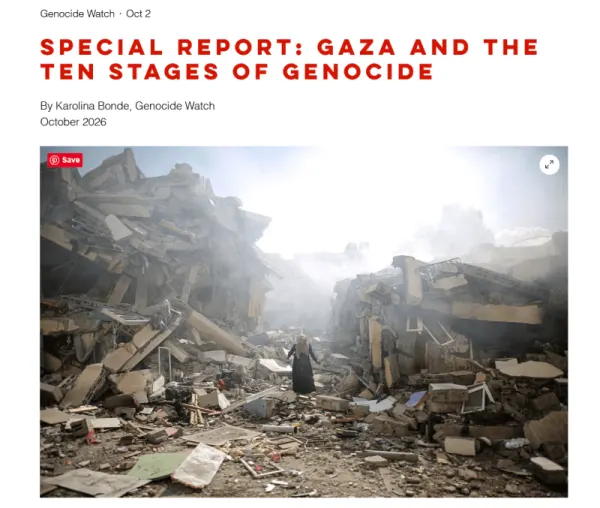 Available in
 Gaza y las 10 etapas del genocidio
Genocide Watch identifica a Estados Unidos como cómplice de Israel en el genocidio
Publicado hace 3 días. Available in
 España contrata Defensa con Palantir
Al menos 1400 millones de euros en Palantir, gasto europeo
Publicado hace 6 días. Available in
 Una vergüenza médica internacional: la "Declaración de Rotterdam" de la Asociación Médica Mundial AMM
Hecha a medida de la Asociación Médica Israelí AMI. Apoyada por la Asociación Médica Británica
Publicado hace 7 días. Available in
 Los soldados israelíes asesinan a civiles indefensos y los "cuentan" como terroristas
No asesinan, simplemente "eliminan"
Publicado hace 9 días. Available in
 Nota de prensa. 81 batas colgadas ante la Asociación Médica Mundial AMM
La Asociación Médica Israelí fuera de la AMM. En representación de 81 trabajadores palestinos en cárceles israelíes.
Publicado hace 11 días. Available in
 Miles de médicos y profesionales de sanidad piden la expulsión de la Asociación Médica Israelí de la Asociación Médica Israelí
La Asociación Médica Israelí incumple sus responsabilidades hacia los pacientes palestinos.
Publicado hace 12 días.Ver más / See more
