Palantir, information for control, surveillance and death. Palantir, información para el control, la vigilancia y la muerte.. ENG ESP
Publicado el 15 de marzo de 2026.
Palantir, the colonial-imperial boomerang: a round trip from the US to Gaza, via the UK. Palantir, el bumerán colonial-imperial: ida y vuelta de EEUU a Gaza, pasando por el Reino Unido
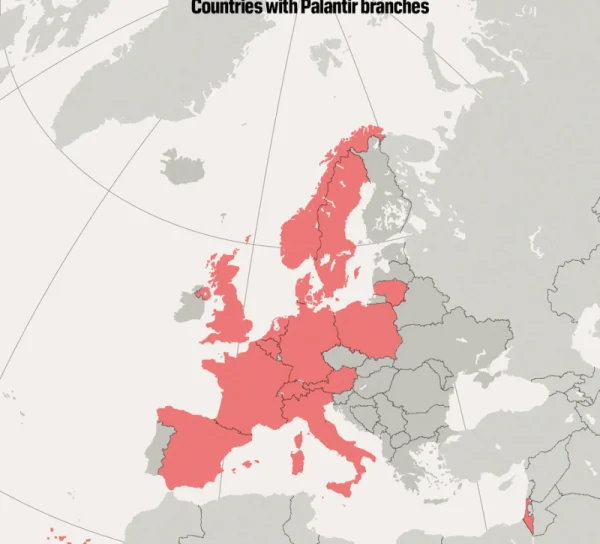
The move reflects growing wariness by European governments about dependency on US tech platforms, and particularly on Palantir Technologies' suite of products. Founded by billionaire Peter Thiel with backing from the CIA, Palantir sells military-grade AI data integration tools to governments and businesses, including Israel.
"We must use our own AI models; we cannot accept new strategic dependencies in the digital sphere," Lecornu said in a video posted on X. "We cannot rely on tools developed by foreign powers. France must have its own tools."
Palantir and ChapsVision did not immediately respond to requests for comment.
US President Donald Trump's unpredictability on the global stage has led European allies to question whether decades of US support in areas including security and technology can still be taken for granted.
Palantir has been among the US tech firms most affected, although last week Anthropic said it would "abruptly disable" its most advanced AI models for all users after the US government ordered it to exclude foreign nationals from access, citing national security concerns.
Germany's military has said it will no longer use Palantir, while Britain is reviewing the National Health Service's £330 million ($440 million) data contract with Palantir following political and parliamentary pressure.
London Mayor Sadiq Khan also blocked a proposed £50 million Palantir contract with the capital's police, citing value-for-money and procurement grounds. Palantir threatened legal proceedings in response.
Lecornu said France plans to invest €655 million ($760 million) in artificial intelligence, and set up a shared chatbot for all state services.
It will also create a public health chatbot for the state-owned health insurance agency Ameli, and a new digital platform to simplify access to public data.
Palantir has faced criticism from observers over its business ties and statements related to Israel. The company has signed strategic partnerships with Israeli government agencies and expanded its work with the country’s defence and security institutions despite the country’s genocidal war on Gaza.
New York City’s public hospital system announced that it would not be renewing its contract with Palantir as controversy mounts in the UK over the data analytics and AI firm’s government contract. The president of the US’s largest municipal public healthcare system, Dr Mitchell Katz, testified last week before the New York city council that the agreement with Palantir would expire in October. He said at the hearing that the contract, which focused on recovering money for insurance claims, was always meant to be short-term, and that there was an “absolute firewall” preventing Palantir from sharing information with US Immigration and Customs Enforcement. He said that the agency had “not had any incidents”. The contract and related payment documents shared with the Guardian by the American Friends Service Committee and first reported by the Intercept, show that NYC Health + Hospitals has paid Palantir nearly $4m since November 2023. The contract noted that Palantir would be able to review notes about patients’ health and help the hospital claim more money in public benefits through programs such as Medicaid. It also includes a line stating that with permission from the city agency, Palantir can “de-identify” patients’ protected health information and use it for “purposes other than research”.
Shameless, downright brutal.An advertisement and propaganda piece showcasing Palantir's ability to connect the information chain to the destructive chain. Unify the supply chain to increase readiness, build combat power and efficiently deploy materiel with Palantir’s Sustainment and Logistics Solutions. Leverage generative AI and machine learning to bring precision sustainment and contested logistics to sustainment decision makers across the strategic, operational, and tactical levels.
Photo 2 June 2025: Palantir kills in Gaza (and at home, USA) No Tech for Apartheid, and Extinction Rebellion Disrupt Palantir Head of Defense Mike Gallagher and Secretary of the Navy John Phelan at AI Expo. WASHINGTON–Anti-war and climate activists with CODEPINK, No Tech for Apartheid, and Extinction Rebellion disrupted Mike Gallagher, Head of Defense for Palantir, and John Phelan, the Secretary of the Navy, at the AI+ Expo in Washington, DC. “We need to call out corporations like Palantir and their connections between supporting endless wars and genocide abroad and the surveillance and terror here at home".
Actualización, 16 junio 2026: La Dirección General de Inteligencia Interior (DGSI, espionaje) francesa ha decidido rescindir su contrato con la empresa tecnológica estadounidense Palantir y optar por un acuerdo con su competidora francesa, ChapsVision, según anunció el primer ministro Sébastien Lecornu el martes.
Esta decisión refleja la creciente preocupación de los gobiernos europeos por la dependencia de las plataformas tecnológicas estadounidenses, y en particular de la gama de productos de Palantir Technologies.Fundada por el multimillonario Peter Thiel con el respaldo de la CIA, Palantir vende herramientas de integración de datos con inteligencia artificial de grado militar a gobiernos y empresas, incluido Israel.
«Debemos utilizar nuestros propios modelos de IA; no podemos aceptar nuevas dependencias estratégicas en el ámbito digital», declaró Lecornu en un vídeo publicado en X. «No podemos depender de herramientas desarrolladas por potencias extranjeras. Francia debe tener sus propias herramientas».
Palantir y ChapsVision no respondieron de inmediato a las solicitudes de comentarios.
La imprevisibilidad del presidente estadounidense Donald Trump en el escenario mundial ha llevado a los aliados europeos a cuestionar si décadas de apoyo estadounidense en áreas como la seguridad y la tecnología pueden seguir dándose por sentadas.
Palantir ha sido una de las empresas tecnológicas estadounidenses más afectadas, aunque la semana pasada Anthropic anunció que "desactivaría abruptamente" sus modelos de IA más avanzados para todos los usuarios después de que el gobierno estadounidense le ordenara excluir a los extranjeros del acceso, alegando motivos de seguridad nacional.
El ejército alemán ha declarado que dejará de usar Palantir, mientras que el Reino Unido está revisando el contrato de datos de 330 millones de libras esterlinas (440 millones de dólares) del Servicio Nacional de Salud con Palantir tras la presión política y parlamentaria.
El alcalde de Londres, Sadiq Khan, también bloqueó un contrato propuesto de 50 millones de libras esterlinas de Palantir con la policía de la capital, alegando motivos de relación calidad-precio y contratación pública.Palantir amenazó con emprender acciones legales en respuesta.
Lecornu afirmó que Francia planea invertir 655 millones de euros (760 millones de dólares) en inteligencia artificial y establecer un chatbot compartido para todos los servicios estatales. También creará un chatbot de salud pública para la aseguradora estatal Ameli y una nueva plataforma digital para simplificar el acceso a los datos públicos.
Palantir ha recibido críticas de observadores por sus vínculos comerciales y declaraciones relacionadas con Israel. La compañía ha firmado alianzas estratégicas con agencias gubernamentales israelíes y ha ampliado su colaboración con las instituciones de defensa y seguridad del país, a pesar de la guerra genocida que Israel libra en Gaza.
Actualización, 27 marzo 2026:Los hospitales de la ciudad de Nueva York (EEUU) prescinden de Palantir ante la expansión de la controvertida empresa de IA en el Reino Unido.La decisión se produce tras la presión de activistas.
Sanya Mansoor Vie. 27 de marzo de 2026 El sistema de hospitales públicos de la ciudad de Nueva York anunció que no renovaría su contrato con Palantir, en medio de la creciente controversia en el Reino Unido por el contrato gubernamental de la empresa de análisis de datos e IA.
El Dr. Mitchell Katz, presidente del mayor sistema municipal de salud pública de EE. UU., testificó la semana pasada ante el consejo municipal de Nueva York que el acuerdo con Palantir expiraría en octubre. En la audiencia, afirmó que el contrato, centrado en la recuperación de fondos para reclamaciones de seguros, siempre tuvo una duración corta y que existía una "barrera de seguridad absoluta" que impedía a Palantir compartir información con el Servicio de Inmigración y Control de Aduanas de EE. UU. Añadió que la agencia "no había tenido ningún incidente".
El contrato y los documentos de pago relacionados, compartidos con The Guardian por el American Friends Service Committee y publicados inicialmente por The Intercept, muestran que NYC Health + Hospitals ha pagado a Palantir casi 4 millones de dólares desde noviembre de 2023.
El contrato estipulaba que Palantir podría revisar los historiales médicos de los pacientes y ayudar al hospital a obtener mayores beneficios públicos a través de programas como Medicaid.También incluía una cláusula que indicaba que, con la autorización de la agencia municipal, Palantir podía anonimizar la información médica protegida de los pacientes y utilizarla para fines distintos a la investigación.
Sin vergüenza, directamente brutal.Anuncio y propaganda sobre la capacidad de Palantir para conectar la cadena informativa con la cadena destructora. Conectando la cadena de suministro con la cadena de ataque. Unifique la cadena de suministro para aumentar la preparación, desarrollar el poder de combate y desplegar material de manera eficiente con las soluciones de sostenimiento y logística de Palantir.Aproveche la IA generativa y el aprendizaje automático para brindar sostenimiento de precisión y logística en situaciones de conflicto a los responsables de la toma de decisiones en materia de sostenimiento en los niveles estratégico, operativo y táctico.
Palantir, ejemplo de corrupción ética y moral.
Fotografía 2 de junio de 2025Palantir asesina en Gaza (y en Estados Unidos) No Tech for Apartheid y Extinction Rebellion interrumpen la intervención de Mike Gallagher, jefe de defensa de Palantir, y John Phelan, secretario de la Marina, en la AI+ Expo.WASHINGTON – Activistas pacifistas y climáticos de CODEPINK, No Tech for Apartheid y Extinction Rebellion interrumpieron la intervención de Mike Gallagher, jefe de defensa de Palantir, y John Phelan, secretario de la Marina, en la AI+ Expo en Washington, D.C. “Debemos denunciar a corporaciones como Palantir y sus vínculos entre el apoyo a guerras interminables y genocidio en el extranjero y la vigilancia y el terror aquí en casa”.
Un representante de Maven estuvo presente en el Centro de Coordinación Civil-Militar (CMCC) en Israel.Desarrollada por la empresa tecnológica estadounidense Palantir, cuyo logotipo se pudo ver en las presentaciones realizadas dentro del Centro, Maven recopila y analiza datos de vigilancia de zonas de guerra para agilizar las operaciones militares estadounidenses, incluidos los ataques aéreos letales.
La plataforma extrae información de satélites, aviones espía, drones, telecomunicaciones interceptadas e internet, y la integra en una aplicación común y con función de búsqueda para comandantes y grupos de apoyo, según fuentes de defensa estadounidenses.
El ejército estadounidense denomina a Maven su "plataforma de campo de batalla con inteligencia artificial".Ya se ha desplegado para guiar los ataques aéreos estadounidenses en Oriente Medio, incluyendo Yemen, Siria e Irak.
Palantir ha promocionado su tecnología como una herramienta para acortar el proceso de identificación y bombardeo de objetivos militares, lo que el director de tecnología de la compañía describió recientemente como "la optimización de la cadena de ataque".
Durante el verano, Palantir obtuvo un contrato de 10.000 millones de dólares para actualizar y perfeccionar la plataforma Maven para las fuerzas armadas estadounidenses.
Palantir también ha colaborado estrechamente con el ejército israelí desde enero de 2024, cuando ambas partes firmaron una «alianza estratégica» para «misiones relacionadas con la guerra».La empresa ha estado reclutando activamente personal para su oficina en Tel Aviv, que abrió sus puertas en 2015 y se ha expandido significativamente en los últimos dos años.Justificando su firme compromiso con Israel a pesar de las crecientes acusaciones de crímenes de guerra y genocidio, el director ejecutivo de Palantir, Alex Karp, declaró recientemente que su empresa fue la primera en ser «completamente anti-woke».
No podemos permitir que se escuden en sus modelos. Cuando los tiempos de verificación reportados para objetivos asistidos por IA se miden en segundos, ya no hablamos de juicio humano con asistencia algorítmica. Hablamos de validar sin más el resultado de una máquina. Y cuando los datos de esa máquina tienen una década de antigüedad, las consecuencias son nefastas.
El marco de rendición de cuentas no solo se ha visto sometido a presión o puesto a prueba por la guerra con IA. Se ha vuelto estructuralmente irrelevante. Las empresas implicadas no son startups de defensa desconocidas. Palantir, fundada con financiación inicial de la CIA y ahora uno de los principales proveedores de infraestructura de IA para el ejército estadounidense, suministró sistemas utilizados en la campaña de Irán.
Palantir fue fundada en 2003 por Alex Karp, su actual CEO, junto a Peter Thiel, el empresaria de Silicon Valley conocida por haber cofundado PayPal y por sus posturas políticas de extrema derecha. Desde sus inicios, Palantir Technologies fue financiada por In-Q-Tel, la firma de capital de riesgo de la CIA, también vinculada al Mossad y a la creación de herramientas como Google Maps. Esta poderosa plataforma de análisis de datos e inteligencia artificial saltó a la fama cuando se le atribuyó un rol clave en el hallazgo de Osama Bin Laden, perfeccionando un sistema de extracción de información iniciado por la contralmirante John Poindexter dentro del programa Total Information Awareness del Pentágono, antecedente directo de las herramientas de espionaje masivo que luego expondría Edward Snowden.
¿Qué es Palantir y cómo funciona? Palantir no es un software convencional: es un sistema pionero en integración, gestión y análisis de datos a gran escala mediante IA. Su tecnología permite cruzar información de inteligencia militar, registros financieros, comunicaciones, perfiles de activistas, políticas y, en el contexto actual, la población completa de Gaza. Según el portal especializado Xataka, Palantir recopila:
Datos personales: nombre, dirección, matrícula, número de identidad. Datos digitales: correos electrónicos, teléfonos, viajes, fotos en redes. Relaciones: posibles familiares, vínculos laborales o afectivos.
El objetivo: crear mapas detallados de relaciones sociales y anticipar movimientos para dirigir operaciones militares.
Anonymous contra Palantir: la amenaza de Wikileaks En 2011, el grupo Anonymous inició acciones de presión contra Palantir tras revelarse documentos que la vinculaban al intento de neutralizar a WikiLeaks. Barrett Brown, miembro de Anonymous y periodista para medios como Vanity Fair y The Guardian, denunció que Palantir era una amenaza directa contra la libertad de prensa y la transparencia.
Aunque Anonymous negó haber lanzado ciberataques directos, advirtió que vigilaría de cerca a la corporación:
«Nadie controla a Anonymous… estamos en pie de guerra», declaró Brown.
Palantir en Gaza: inteligencia artificial al servicio del genocidio
Según un informe publicado por The Guardian y citado por The British Tribune, Israel utilizó por primera vez la inteligencia artificial de manera masiva durante la Guerra de los 11 días en Gaza de 2021. El software Palantir jugó un rol clave en:
Seleccionar objetivos de bombardeo basados en análisis de datos. Clasificar a civiles como «amenazas potenciales» basándose en patrones de relación y localización.
Uno de los ataques más aberrantes atribuidos a esta inteligencia artificial fue el bombardeo intencional al convoy humanitario de World Central Kitchen, organización que distribuía alimentos en Gaza. El saldo: siete cooperantes asesinadas para asegurar que, bajo ninguna circunstancia, llegaran alimentos a la población de Gaza
Además, Palantir ha sido determinante para identificar y dirigir ataques contra:
Periodistas palestinas. Activistas de derechos humanos. Centros de maternidad. Mujeres, niñas y civiles desarmadas.
Cada objetivo es previamente procesado y marcado por la plataforma. Israel sabe exactamente a quién asesina y lo hace de forma deliberada en su campaña sionista de exterminio étnico contra Palestina.
El significado de Palantir: «quien todo lo ve» El nombre de la compañía no es casual. En el universo de "El Señor de los Anillos", Palantir es el nombre de unas piedras mágicas que permiten ver acontecimientos lejanos y secretos. La empresa eligió este nombre para representar su capacidad de vigilancia total sobre cualquier persona o población objetivo.
Los financiadores europeos apuestan fuerte por el gigante tecnológico Palantir a pesar de las preocupaciones sobre los derechos humanos y la democracia. “Palantir no es una empresa privada en ningún sentido real. Es un brazo del aparato de seguridad nacional estadounidense: un instrumento privado de poder geopolítico. Cuando los gobiernos europeos compran sus herramientas, no solo adquieren software. Renuncian a su soberanía”. “Palantir se ha vuelto indispensable, y ese es precisamente el objetivo. Al invertir en ella, se financia la guerra contra la democracia europea”.
El movimiento BDS, liderado por palestinos, aboga por la formación de amplias coaliciones interseccionales para liderar campañas de exclusión de contratos, interrupciones pacíficas y otras formas creativas de presión sobre las instituciones que contratan con Palantir. Presione a su gobierno, instituciones y hospitales para que rescindan los contratos con Palantir y desinviertan en ella.Presione a sus fondos de pensiones para que desinviertan en Palantir. Palantir se enorgullece de colaborar con el gobierno israelí de apartheid, proporcionando sistemas de vigilancia predictiva discriminatorios por motivos raciales y tecnologías utilizadas para coordinar ataques remotos. Palantir funciona como fabricante de armas digitales, y su dirección afirma abiertamente que su tecnología se utiliza "en ocasiones, para matar". La personalización por parte de Palantir de tecnologías que facilitan el genocidio apoya directamente los crímenes de guerra de Israel y viola explícitamente el derecho internacional. El impacto de Palantir en los derechos humanos no se limita a los palestinos. Palantir colabora con el Servicio de Inmigración y Control de Aduanas de Estados Unidos (ICE).La tecnología de Palantir también se vende a hospitales, lo que supone una amenaza para los derechos de los pacientes y los trabajadores sanitarios debido a problemas de privacidad de datos y a la dependencia de la IA en la atención médica.
La complicidad de Palantir en los crímenes de guerra y el genocidio del Israel del apartheid en Gaza se evidencia en su apoyo tecnológico e ideológico constante e inquebrantable al ejército israelí.Tras el ataque genocida de Israel contra Gaza, la empresa se alineó con entusiasmo con el ejército israelí, equipando sus operaciones en Gaza con tecnologías de vanguardia.
....
....
Introducción, Palantir en el Servicio Nacional de Salud del Reino Unido:
Una coalición de destacadas organizaciones de derechos humanos, salud y sindicatos ha instado al NHS England a cancelar su contrato con Palantir debido a los graves riesgos que supone para el NHS.Medact ha enviado su nuevo informe, «Preocupaciones sobre las tecnologías de Palantir en los sistemas de datos del NHS», a todos los directores ejecutivos de los fideicomisos del NHS y de las juntas de atención integrada. En él, se les insta a ejercer su autonomía local y a no acatar la instrucción del NHS England de adoptar la plataforma de datos federados de Palantir.
BMJ 2026;392 doi: https://doi.org/10.1136/bmj.s481 (Publicado el 12 de marzo de 2026) Citar como: BMJ 2026;392:s481
Stephen Armstrong
Se ha instado a todos los hospitales de Inglaterra a desobedecer la directiva del NHS que exige el uso del software de Palantir, la controvertida empresa estadounidense de análisis de datos.
Una coalición de organizaciones de derechos humanos, salud y pacientes, así como sindicatos, envió la petición a los hospitales del NHS por correo electrónico, debido a la preocupación que suscita la plataforma de datos federados (FDP) de Palantir.
Instaron a los hospitales a no seguir las instrucciones del NHS England de firmar un memorando de entendimiento para usar la FDP, tal como se establecía en la guía de planificación publicada en octubre.
Esta guía indicaba que todos los hospitales debían usar los "productos básicos" de la FDP a partir de abril, aunque, según fuentes del NHS, se trataba de una decisión política y no de una instrucción vinculante.
La FDP se creó durante la pandemia de COVID-19 con el objetivo de ayudar a gestionar un servicio de salud federalizado y fragmentado en un momento de crisis nacional.Palantir ganó el contrato, ahora valorado en mil millones de libras, para suministrar el servicio mediante su software Foundry, una plataforma que puede conectar bases de datos incompatibles y permite a los clientes integrar y analizar datos de diversas fuentes.
En el NHS posterior a la COVID-19, esto implica monitorizar aspectos como las listas de espera, los suministros hospitalarios y la disponibilidad de camas y quirófanos. Sin embargo, un nuevo informe del grupo de defensa de los trabajadores sanitarios Medact, titulado «Preocupaciones sobre las tecnologías de Palantir en los sistemas de datos del NHS»,⁴ subraya que los hospitales tienen la posibilidad de rechazar la directiva del NHS England y les insta a hacerlo.
El documento, compartido con The BMJ y The Guardian, expone las preocupaciones sobre el comportamiento anterior de Palantir, la seguridad de los datos de la plataforma FDP, el posible daño a la confianza de los pacientes y el riesgo de que otros departamentos gubernamentales utilicen la FDP para acceder a los datos de salud de las personas.
«Sabemos que la implementación de la FDP no está saliendo según lo previsto, y sabemos que el NHS England está bajo una intensa presión para cancelar el contrato cuando venza su cláusula de rescisión en febrero de 2027», declaró Rhiannon Osborne, de Medact.
Habló en nombre de varios grupos preocupados por Palantir, entre ellos Amnistía Internacional, Good Law Project, Privacy International, Just Treatment, Corporate Watch y el sindicato United Tech and Allied Workers Union.
Añadió: «Cincuenta mil pacientes han presentado quejas formales a sus hospitales, y la BMA (British Medical Association) está instando a sus miembros a buscar alternativas al uso de productos Palantir. «Es un momento crucial para que los hospitales locales ejerzan su autonomía cuando el NHS England no les presta atención».
Medact también teme que, con los sistemas de Palantir en funcionamiento, el control fronterizo del Ministerio del Interior, las fuerzas policiales de todo el país y los gobiernos británicos, tanto actuales como futuros, puedan utilizar los datos del NHS para otros fines.
Algunos partidos políticos ya han manifestado su posible disposición a utilizar datos sanitarios de esta manera. Por ejemplo, el partido Reform ha anunciado planes para compartir datos entre el Ministerio del Interior, el NHS, la Agencia Tributaria (HM Revenue and Customs), la Agencia de Licencias de Conducir y Vehículos (DVLA), los bancos y la policía, como parte de un propuesto Comando de Deportación del Reino Unido para identificar y deportar a inmigrantes ilegales.⁵
Sin embargo, fuentes del NHS England han declarado que, dado que Palantir fue contratada conforme a la normativa de contratación pública, debe operar únicamente bajo las instrucciones del servicio de salud al procesar datos, y que las estrictas cláusulas contractuales sobre confidencialidad impedirían dicho intercambio de datos.
Palantir fue fundada en 2003 por el multimillonario de Silicon Valley Peter Thiel, el exprofesor de filosofía Alex Karp y el informático Stephen Cohen, con el respaldo financiero de la CIA. Inicialmente, suministraba plataformas de software a gobiernos y organizaciones militares y policiales.
Entre sus clientes se encuentran el Ejército y el Departamento de Defensa de EE. UU., los ministerios de defensa del Reino Unido e Israel, la OTAN, así como la mayoría de sus miembros y el ejército ucraniano. Palantir también colabora con las fuerzas del orden en el Reino Unido y EE. UU.
En EE. UU., prestó servicios, de forma controvertida, al Servicio de Inmigración y Control de Aduanas (ICE). En enero, se supo que agentes de inmigración estadounidenses estaban utilizando una aplicación desarrollada por Palantir que se basa en los historiales médicos de millones de estadounidenses para localizar y detener a personas consideradas inmigrantes ilegales.⁶
A raíz de esto, el presidente del consejo de la Asociación Médica Británica (BMA), Tom Dolphin, advirtió que el uso de Palantir en el Servicio Nacional de Salud (NHS) podría poner en riesgo la seguridad de los pacientes.
«Si los pacientes ya no confían en que el NHS gestione sus datos de forma confidencial o temen que la información personal que comparten con su médico se utilice para fines que no esperan, esto socavará la confianza pública en un servicio de salud confidencial», escribió en una respuesta rápida a The BMJ.⁷
Dolphin añadió: «La BMA considera que los médicos que trabajan en el NHS ya no pueden garantizar la confidencialidad de sus datos».
El paciente debe tomar medidas inmediatas para explorar la posibilidad de rechazar cualquier uso de la plataforma de datos federados de Palantir que no esté directamente relacionado con la atención médica, con miras a abandonarla por completo en el futuro, cuando se pueda implementar una alternativa adecuada.
Posteriormente, declaró directamente a The BMJ: «La BMA proporcionará orientación a sus miembros sobre lo que esto significa en la práctica, incluyendo si existe la opción de no utilizar la plataforma de Palantir en tales situaciones».
La implementación de la plataforma de datos federados (FDP) en el NHS aún no ha concluido, pero NHS England afirmó que cada vez más hospitales se están adhiriendo al sistema, que ofrece claros beneficios, según un portavoz.
«La FDP ya está dando resultados para los pacientes y el NHS, ayudando a integrar la atención médica, aumentar la productividad hospitalaria, acelerar el diagnóstico del cáncer y garantizar que miles de pacientes adicionales puedan recibir tratamiento cada mes», declaró un portavoz de NHS England a The BMJ. «La plataforma ya la utilizan más de 150 organizaciones del NHS en toda Inglaterra, y otras 57 se han adherido para implementarla en los próximos meses».
Sin embargo, algunos hospitales, como el Royal Marsden, el Great Ormond Street, el Leeds Teaching Hospitals y el Nottingham University College, no han adoptado la plataforma, y algunos, como el Leeds and Greater Manchester Integrated Care Board, afirman que sus sistemas actuales son superiores.⁹
Palantir ha rechazado las afirmaciones del documento de Medact, incluyendo la de que sus ingenieros accedieran a datos identificables de pacientes. La empresa declaró que los ingenieros de Palantir solo podían acceder a los datos bajo la dirección de los responsables del tratamiento de datos del NHS England y únicamente para actividades de ingeniería pertinentes.
«El software de Palantir está desempeñando un papel importante en la mejora de la atención al paciente a través de la plataforma de datos federada del NHS», declaró un portavoz de Palantir a The BMJ, «contribuyendo a realizar 100 000 operaciones adicionales, una reducción del 12 % en los retrasos en las altas hospitalarias y la eliminación de 675 000 pacientes de las listas de espera».
“Numerosas organizaciones han reconocido públicamente esta función. El uso del software está totalmente bajo el control del NHS, y los datos solo pueden procesarse de acuerdo con sus estrictas instrucciones. “No tenemos intención ni medios para utilizar los datos de la forma que sugiere el informe de Medact.Hacerlo sería ilegal e incumpliría el contrato.El software cuenta con capacidades de seguridad y gobernanza de datos líderes a nivel mundial y totalmente auditables.”
Referencias
NHS England.Marco de planificación a medio plazo: impulsando el cambio juntos 2026/27 a 2028/29.Actualizado en diciembre de 2025. https://www.england.nhs.uk/publication/medium-term-planning-framework-delivering-change-together-2026-27-to-2028-29
Talora J. Exclusiva: El coste total de la plataforma de datos federados superará los 1.000 millones de libras.HSJ.Agosto de 2025. https://www.hsj.co.uk/technology-and-innovation/exclusive-full-cost-of-federated-data-platform-to-exceed-1bn/7039871.article
Hasking C. ¿Qué hace realmente Palantir?Wired.Agosto de 2025.https://www.wired.com/story/palantir-what-the-company-does
Medact.Informe: Preocupaciones sobre Palantir Technologies y los sistemas de datos del NHS.12 de marzo de 2026. https://www.medact.org/briefing-palantir-fdp
Reform.Nuestro plan para deportar a todos los inmigrantes ilegales en el Reino Unido y asegurar nuestras fronteras.https://www.reform-oxfordshire.co.uk/operation-restoring-justice
Taylor L. ICE y Palantir: Agentes estadounidenses utilizan datos de salud para perseguir inmigrantes ilegales.BMJ2026;392:s168.doi:10.1136/bmj.s168 pmid:41592818 Texto completo gratuito en Google Académico
Dolphin T. La BMA responde a la participación de Palantir con ICE y cuestiona su creciente papel central en el NHS[Respuesta rápida].BMJ 2026. https://www.bmj.com/content/392/bmj.s168/rr-2 NHS England.
Adopción y beneficios de la plataforma de datos federados del NHS.https://www.england.nhs.uk/digitaltechnology/nhs-federated-data-platform/impact/fdp-uptake-and-benefits
Limb M. Palantir y el NHS: La BMA pedirá a sus miembros que limiten el uso del sistema tecnológico.BMJ2026;392:s246.doi:10.1136/bmj.s246 pmid:41644151
La intromisión de Palantir en los servicios públicos debería ser motivo de gran preocupación para la ciudadanía y el gobierno.El control es fundamental para el mantenimiento de la infraestructura y la prestación de servicios sanitarios. Nuestros miembros del sector tecnológico comprenden la importancia de la confianza y la supervisión en este ámbito, y esta empresa ha demostrado repetidamente ser poco fiable y carecer de escrúpulos. Nuestros sistemas del NHS (Servicio Nacional de Salud) deberían construirse y gestionarse bajo supervisión y rendición de cuentas públicas.Deberíamos aprovechar y desarrollar la experiencia tecnológica interna del NHS para gestionar el sistema de datos del que dependemos, en lugar de otorgar a Palantir beneficios y el control de nuestros datos de salud privados.
Hope Worsdale, de Just Treatment, afirmó:
La confianza entre un paciente y su médico es primordial: es la base del sistema sanitario.Situar a Palantir en el centro de nuestro NHS —a pesar de sus prácticas comerciales inmorales, productos letales, liderazgo antidemocrático y servicios ineficaces— tendrá un efecto corrosivo e irreparable sobre esa confianza.Esto plantea la siguiente pregunta: ¿por qué los intereses de los grupos de presión han sido más importantes para este gobierno que la vida de los pacientes? Instamos a todos los que ostentan poder dentro del NHS a que presten atención a la advertencia de este informe y se resistan en todo momento a la imposición del control de Palantir sobre los datos de los pacientes. Exigimos a los parlamentarios que pidan al gobierno que rescinda su contrato con Palantir y desarrolle un sistema de procesamiento de datos propio y controlado por nuestro servicio de salud, centrado exclusivamente en los intereses, necesidades y derechos de los pacientes del NHS.
Tecnología sangrienta: El embajador del Reino Unido, el agresor sexual, Palantir y Gaza
Por Simon Speakman Cordall 17 Mar 2026
Los vínculos entre el gigante tecnológico estadounidense Palantir y el gobierno del Reino Unido están siendo objeto de un mayor escrutinio tras la detención del exembajador británico en Estados Unidos, Peter Mandelson, por sus conexiones con el fallecido agresor sexual convicto Jeffrey Epstein.
Palantir, que era cliente de Global Counsel, la consultora de Mandelson recientemente clausurada, ha sido fundamental para apoyar la guerra genocida de Israel contra Gaza y la continua ocupación de Cisjordania.
El escrutinio sobre Mandelson, Palantir y su relación con el gobierno británico cobró mayor urgencia tras la detención del exembajador a finales de febrero por las acusaciones contenidas en los archivos de Epstein —millones de documentos que detallan las actividades del desacreditado financiero—, según las cuales Mandelson mantuvo una relación con Epstein tras su condena por delitos sexuales en 2008 y pudo haber compartido con él información confidencial de interés financiero.
A muchos les preocupa la visita que Mandelson y el primer ministro británico, Keir Starmer, realizaron a la sede de Palantir en Washington, D.C., en febrero de 2025, once meses antes de que el Reino Unido seleccionara a la empresa estadounidense en un proceso de licitación sin oposición para proporcionar inteligencia artificial a sus fuerzas armadas.
Las solicitudes de información de Foxglove, The Good Law Project y Al Jazeera, organizaciones que defienden la transparencia tecnológica, aún no han revelado detalles de dicha reunión.Sin embargo, en respuesta a una solicitud de acceso a la información presentada por el Good Law Project en abril de 2025, la Oficina del Gabinete del Reino Unido la describió como una reunión "informal" y sin acta entre el primer ministro británico, su embajador y una empresa estadounidense que, para entonces, ya estaba acusada de participar en crímenes de guerra en Gaza y la Cisjordania ocupada.
Palantir, an example of ethical and moral corruption
A “Maven Field Service Representative” has been present at the The Civil-Military Coordination Center (CMCC) (Israel). Built by the U.S. tech company Palantir, whose logo was visible in presentations given inside the Center, Maven collects and analyses surveillance data taken from warzones to speed-up U.S. military operations, including lethal airstrikes. The platform sucks information from satellites, spy planes, drones, intercepted telecommunications, and the internet, and “packages it into a common, searchable app for commanders and support groups,” according to U.S. defense outlets. The U.S. military calls Maven its “AI-powered battlefield platform.” It has already been deployed to guide U.S. airstrikes across the Middle East, including in Yemen, Syria, and Iraq. Palantir has marketed its technology as shortening the process of identifying and bombing military targets — what the company’s CTO recently described as “optimizing the kill chain.” Over the summer, Palantir scored a $10 billion contract to update and refine the Maven platform for U.S. armed forces.
Palantir has also worked closely with Israel’s military since January 2024, when the two parties entered into a “strategic partnership” for “war related missions.” The company has been aggressively recruiting employees to staff its Tel Aviv office, which first opened in 2015 and has expanded significantly over the last two years. Justifying its stalwart commitment to Israel in spite of mounting charges of war crimes and genocide, Palantir CEO Alex Karp recently said his company was the first to be “completely anti-woke.”
Explore "The Authoritarian Stack" How Tech Billionaires Are Building a Post-Democratic America — And Why Europe Is Next This project maps the "Authoritarian Stack"—a network of firms, funds, and political actors turning core state functions into private platforms.
Silicon Valley’s Authoritarian Tech Right is not theorizing this world. They are already building it. The pipelines are operational. The feedback loops are functioning. The sovereignty transfers are completing. Democracy persists as a legacy interface— maintained for stability, while being systematically hollowed out and replaced. The question now is whether democratic societies can recognize this formation for what it is—and build alternatives before the infrastructure of control becomes too deeply embedded to dislodge.
We can’t let them hide behind their models. When reported verification times for AI-assisted targets are measured in seconds, we are no longer talking about human judgment with algorithmic assistance. We are talking about rubber-stamping a machine’s output. And when that machine’s data is a decade out of date, the consequences are written in rows of small coffins. The accountability framework has not been merely strained or tested by AI warfare. It has been made structurally irrelevant The companies implicated in this are not obscure defense startups. Palantir, founded with early CIA funding and now one of the primary AI infrastructure providers to the US military, supplied systems used in the Iran campaign.
Palantir was founded in 2003 by Alex Karp, its current CEO, along with Peter Thiel, the controversial Silicon Valley businessman known for co-founding PayPal and for his far-right political views.
From its inception, Palantir Technologies was funded by In-Q-Tel, the CIA's venture capital firm, which is also linked to Mossad and the creation of tools like Google Maps. This powerful data analytics and artificial intelligence platform rose to prominence when it was credited with playing a key role in the capture of Osama Bin Laden, refining an information extraction system initiated by Rear Admiral John Poindexter within the Pentagon's Total Information Awareness program, a direct precursor to the mass surveillance tools later exposed by Edward Snowden.
What is Palantir and how does it work?Palantir is not conventional software: it's a pioneering system for integrating, managing, and analyzing large-scale data using AI. Its technology allows for cross-referencing military intelligence, financial records, communications, activist profiles, political data, and, in the current context, the entire population of Gaza.
According to the specialized website Xataka, Palantir collects:
Personal data: name, address, license plate number, national identity number.
Digital data: emails, phone numbers, travel history, social media photos.
Relationships: potential family members, professional or personal ties.
The objective: to create detailed maps of social relationships and anticipate movements to direct military operations.
Anonymous vs. Palantir: the WikiLeaks threat In 2011, the group Anonymous began lobbying Palantir after documents were released linking it to an attempt to neutralize WikiLeaks. Barrett Brown, a member of Anonymous and a journalist for publications such as Vanity Fair and The Guardian, denounced Palantir as a direct threat to press freedom and transparency.
Although Anonymous denied launching direct cyberattacks, it warned that it would be closely monitoring the corporation: “No one controls Anonymous… we are on a war footing,” Brown declared.
Palantir in Gaza: Artificial Intelligence at the Service of Genocide According to a report published by The Guardian and cited by The British Tribune, Israel used artificial intelligence on a massive scale for the first time during the 2021 Gaza War.
The Palantir software played a key role in:
Selecting bombing targets based on data analysis.
Classifying civilians as “potential threats” based on relationship and location patterns.
One of the most egregious attacks attributed to this artificial intelligence was the intentional bombing of the World Central Kitchen humanitarian convoy, an organization that distributed food in Gaza.The toll: seven aid workers murdered to ensure that, under no circumstances, food reached the population of Gaza.
Furthermore, Palantir has been instrumental in identifying and directing attacks against:
Palestinian journalists.
Human rights activists.
Maternity centers.
Unarmed women, girls, and civilians.
Each target is pre-screened and marked by the platform. Israel knows exactly who it is killing and does so deliberately as part of its Zionist campaign of ethnic extermination against Palestine.
The meaning of Palantir: "the all-seeing one" The company's name is not accidental. In the "Lord of the Rings" universe, Palantir is the name of magical stones that allow one to see distant and secret events. The company chose this name to represent its capacity for total surveillance of any targeted person or population.
“Palantir has made itself indispensable and that is exactly the point. When you invest in that, you're financing the war against European democracy,” she said.
Palantir is a priority BDS target (Twitter, 19 March 2026) The Palestinian-led BDS movement calls for forming broad intersectional coalitions to lead contract exclusion campaigns, peaceful disruptions, and other creative forms of pressure on institutions contracting Palantir. Pressure your government, institutions and hospitals to end contracts with Palantir and divest from it. Pressure your pension funds to divest from Palantir. Palantir proudly partners with Israel’s apartheid government, providing racially discriminatory predictive policing systems, and technologies used to coordinate remote attacks. Palantir functions as a digital weapons manufacturer, and its leadership openly says its tech is used “on occasion, to kill.” Palantir’s customization of genocide-enabling technologies directly support Israel’s war crimes and explicitly violates international law. Palantir’s impact on human rights is not limited to Palestinians. Palantir collaborates with US Immigration and Customs Enforcement (ICE). Palantir’s technology is also sold to hospitals, and that poses a threat to patient rights and healthcare workers because of issues of data privacy and reliance on AI in healthcare.
Palantir Company Complicity ProfilePalantir's complicity in apartheid Israel's war crimes and genocide in Gaza is evident in its unwavering,ongoing technological and ideological support for the Israeli military. In the wake of Israel's genocidal assault on Gaza, the company eagerly aligned itself with the Israeli military, equipping its operations in Gaza with cutting-edge technologies.
....
....
Introduction, Palantir in the UK, National Health Service
A coalition of leading human rights, health groups and trade unions has urged NHS England to cancel its contract with Palantir based on serious risks to the NHS. Medact has sent its new briefing document, Concerns Regarding Palantir Technologies in NHS Data Systems, to all NHS trust and Integrated Care Board CEOs. It urges them to exercise their local autonomy and not comply with NHS England’s instruction to adopt Palantir’s Federated Data Platform.
Every hospital in England has been urged to disobey an NHS directive to use software operated by controversial US analytics software company Palantir.
A coalition of human rights, health and patient organisations, and unions sent out the plea to NHS trusts by email, out of concern over Palantir’s federated data platform (FDP).
They urged hospitals to not follow NHS England’s instructions to sign a memorandum of understanding to use the FDP, as set out in planning guidance issued in October.1
This guidance said all trusts should be using FDP “core products” from April, although this, NHS sources indicated, was a policy decision rather than an enforceable instruction.
The FDP was created during the covid pandemic with the aim of helping manage a federalised, siloed health service at a time of national crisis. Palantir won the now £1bn contract to supply the service using its Foundry software, a platform that can connect incompatible databases and allows customers to integrate and analyse data from across many different sources.23
In the post-covid NHS this involves monitoring things such as waiting lists, hospital supplies, and available beds and operating theatres.
But a new briefing document from the health worker campaign group Medact, called Concerns Regarding Palantir Technologies in NHS Data Systems,4 emphasises that hospitals have the ability to refuse NHS England’s directive and urges them to do so.
The document, shared with The BMJ and Guardian, outlines concerns over Palantir’s past behaviour, data security of the FDP platform, potential harm to trust among patients, and the risk of the FDP being used by other government departments to access people’s health data.
“We know the FDP rollout is not going to plan, and we know that NHS England is under intense pressure to cancel the contract when it reaches its break clause in February 2027,” said Medact’s Rhiannon Osborne.
She spoke for a collection of groups concerned about Palantir, including Amnesty International, the Good Law Project, Privacy International, Just Treatment, Corporate Watch, and the United Tech and Allied Workers Union.
She added, “Fifty thousand patients have written formal complaints to their hospitals, and the BMA is telling members to explore ways around using Palantir products.
“It’s a key time for local hospitals to exercise their autonomy when NHS England isn’t listening.”
Medact is also concerned that, with Palantir systems in place, the Home Office border control, police forces across the country, and current or future UK governments could use NHS data for other purposes.
Some political parties have already indicated a potential willingness to use health data in this manner.
For example, Reform has announced plans to share data between the Home Office, NHS, HM Revenue and Customs, the Driver and Vehicle Licensing Agency, banks, and the police as part of a proposed UK Deportation Command “to identify illegal migrants and deport them.”5
But NHS England sources have said that, as Palantir was appointed in line with public contract regulations, it must operate only under the instruction of the health service when processing data and that strict stipulations in the contract about confidentiality would prevent such data sharing.
Palantir was founded in 2003 by the Silicon Valley billionaire Peter Thiel, former philosophy academic Alex Karp, and computer scientist Stephen Cohen, with financial backing from the CIA.
It initially supplied software platforms to governments and military and law enforcement organisations. Customers include the US Army and Department of Defense, the UK and Israel defence ministries, and NATO, as well as most NATO members and the Ukrainian military.
Palantir also works with law enforcement in the UK and the US. In the US it controversially provided services for Immigration and Customs Enforcement (ICE).
In January it emerged that US immigration agents were using an app developed by Palantir that draws on the health records of millions of Americans to find and detain people they deemed illegal immigrants.6
In the wake of this, the BMA (British Medical Association) chair of council, Tom Dolphin, warned that the use of Palantir in the NHS could risk patient safety.
“If patients no longer feel able to trust the NHS to handle their data confidentially or worry that the personal information they share with their doctor will be used for purposes which they do not expect, this will undermine public trust in a confidential health service,” he wrote in a rapid response to The BMJ.7
Dolphin added, “It is the view of the BMA that doctors working in the NHS can no longer provide the tacit endorsement that using a product implies and must immediately take steps to explore refusing any non-direct care usage of Palantir’s federated data platform, with a view to moving away from the platform entirely in time, when a suitable alternative can be put in place.”
He later told The BMJ directly, “The BMA will provide guidance to members on what this means in practice, including whether there is an option to not use Palantir’s platform in such situations.”
The FDP rollout in the NHS is incomplete, but NHS England said that more trusts were signing up to the system, which had clear benefits,8 a spokesperson said.
“The FDP is already delivering for patients and the NHS—helping to join up care, increase hospital productivity, speed up cancer diagnosis, and ensure thousands of additional patients can be treated each month,” an NHS England spokesperson told The BMJ. “The platform is now being used by over 150 NHS organisations across England, with another 57 signed up to implement it in the next few months.”
However, some trusts, including Royal Marsden, Great Ormond Street, Leeds Teaching Hospitals, and Nottingham University College, have not adopted the platform, with some, including Leeds and Greater Manchester Integrated Care Board, saying their existing systems were superior.9
Palantir has rejected the claims in Medact’s document, including that its engineers were accessing patient identifiable data.
The company stated that Palantir engineers were able to access data only under the direction of NHS England data controllers and only for appropriate engineering activities.
“Palantir software is playing an important role in improving patient care through the NHS federated data platform,” a Palantir spokesperson told The BMJ, “helping to deliver 100 000 additional operations, a 12% reduction in discharge delays, and the removal of 675 000 patients from waiting lists.
“That role has been publicly recognised by a large number of trusts. How the software is used is entirely under the control of the NHS, with data only able to be processed in accordance with their strict instructions.
“We have no intention of and no means of using the data in the way that the Medact report is suggesting. To do so would be illegal and in breach of contract. The software has world leading, fully auditable data security and governance capabilities.”
References
↵NHS England. Medium term planning framework—delivering change together 2026/27 to 2028/29. Updated Dec 2025. https://www.england.nhs.uk/publication/medium-term-planning-framework-delivering-change-together-2026-27-to-2028-29 ↵Talora J. Exclusive: Full cost of federated data platform to exceed £1bn. HSJ. Aug 2025. https://www.hsj.co.uk/technology-and-innovation/exclusive-full-cost-of-federated-data-platform-to-exceed-1bn/7039871.article ↵Hasking C. What does Palantir actually do? Wired. Aug 2025. https://www.wired.com/story/palantir-what-the-company-does ↵Medact. Briefing: Concerns regarding Palantir Technologies and NHS data systems. 12 Mar 2026. https://www.medact.org/briefing-palantir-fdp ↵Reform. Our plan to deport all illegal migrants in the UK, and secure our borders. https://www.reform-oxfordshire.co.uk/operation-restoring-justice ↵ Taylor L. ICE and Palantir: US agents using health data to hunt illegal immigrants. BMJ2026;392:s168. doi:10.1136/bmj.s168 pmid:41592818
↵Dolphin T. BMA responds to Palantir’s involvement with ICE and questions their increasing centrality in the NHS [rapid response]. BMJ 2026. https://www.bmj.com/content/392/bmj.s168/rr-2 ↵NHS England. NHS federated data platform uptake and benefits. https://www.england.nhs.uk/digitaltechnology/nhs-federated-data-platform/impact/fdp-uptake-and-benefits ↵ Limb M. Palantir and NHS: BMA to tell members to limit use of tech system. BMJ2026;392:s246. doi:10.1136/bmj.s246 pmid:41644151
Palantir’s encroachment into public services should be of utmost concern to the public and the government. The question of control is critical to maintaining both infrastructure and healthcare delivery.
Our members in the tech sector understand the importance of trust and oversight in tech, and this company has repeatedly proven itself to be untrustworthy and scruple-less.
Our NHS systems should be built and owned with public oversight and accountability. We should be leveraging and building in-house NHS technology expertise to deliver the data system we rely on, rather than giving Palantir profit and control of our private health data.
Hope Worsdale of Just Treatment said:
The trust between a patient and their doctor is paramount: it is the bedrock of the health service. Placing Palantir at the heart of our NHS – despite its immoral business practices, deadly products, anti-democratic leadership, and ineffective services – will have an irreparable, corrosive effect on that trust.
It begs the question: why have the lines of lobbyists mattered more to this government than the lives of patients?
We call on everyone with power within the NHS to heed this report’s warning, and resist at every possible point the imposition of Palantir’s control over patient data.
We call on parliamentarians to demand the government rips up its contract with Palantir, and develops a data processing system owned and controlled by our health service focused solely on the interests, needs, and rights of NHS patients.
Blood tech: The UK ambassador, the sex offender, Palantir, and Gaza Despite its public objections to Israel’s actions, the UK is buying spyware developed and tested on Palestinians. By Simon Speakman Cordall 17 Mar 2026 Ties between the US tech giant Palantir and the United Kingdom government are coming under increased scrutiny following the arrest of former UK ambassador to the US Peter Mandelson over his links to the late convicted sex offender Jeffrey Epstein. Palantir, which was a client of Mandelson’s recently-shuttered consultancy company Global Counsel, has been instrumental in supporting Israel’s genocidal war on Gaza and continued occupation of the West Bank. Scrutiny over Mandelson, Palantir, and its relationship with the UK government gained new urgency after the ex-ambassador’s arrest in late February over allegations contained in the Epstein files – millions of documents detailing the disgraced financier’s activities – that Mandelson had maintained a relationship with Epstein after his 2008 sex offence conviction and may have shared with Epstein market-sensitive information of financial interest to him. Of concern to many is the visit Mandelson and UK Prime Minister Keir Starmer paid to Palantir’s headquarters in Washington, DC, in February 2025, 11 months before the UK selected the American company in an uncontested bidding process to provide artificial intelligence to its armed services. Requests from tech fairness group Foxglove, The Good Law Project and Al Jazeera have yet to reveal details of that meeting. However, responding to a Freedom of Information request by the Good Law Project in April 2025, the UK’s Cabinet Office described it as an “informal” and un-minuted meeting between the UK prime minister, its ambassador and a US company that, by that time, was already accused of participating in war crimes in Gaza and the occupied West Bank.
Ties between the US tech giant Palantir and the United Kingdom government are coming under increased scrutiny following the arrest of former UK ambassador to the US Peter Mandelson over his links to the late convicted sex offender Jeffrey Epstein.
Palantir, which was a client of Mandelson’s recently-shuttered consultancy company Global Counsel, has been instrumental in supporting Israel’s genocidal war on Gaza and continued occupation of the West Bank.
Scrutiny over Mandelson, Palantir, and its relationship with the UK government gained new urgency after the ex-ambassador’s arrest in late February over allegations contained in the Epstein files – millions of documents detailing the disgraced financier’s activities – that Mandelson had maintained a relationship with Epstein after his 2008 sex offence conviction and may have shared with Epstein market-sensitive information of financial interest to him.
Of concern to many is the visit Mandelson and UK Prime Minister Keir Starmer paid to Palantir’s headquarters in Washington, DC, in February 2025, 11 months before the UK selected the American company in an uncontested bidding process to provide artificial intelligence to its armed services.
Requests from tech fairness group Foxglove, The Good Law Project and Al Jazeera have yet to reveal details of that meeting. However, responding to a Freedom of Information request by the Good Law Project in April 2025, the UK’s Cabinet Office described it as an “informal” and un-minuted meeting between the UK prime minister, its ambassador and a US company that, by that time, was already accused of participating in war crimes in Gaza and the occupied West Bank.





 Available in
  Available in
  Available in
  Available in
  Available in
  Available in
  Available in
  Available in