

Publicado el 26 de marzo de 2025.
Hypocrisy about Gaza in the NEJM. Hipocresía acerca de Gaza en el NEJM. ENGL ESP
PUBLICACIÓN ORIGINAL (SI PRECISA EL PDF NOS LO PUEDE PEDIR POR CORREO-E
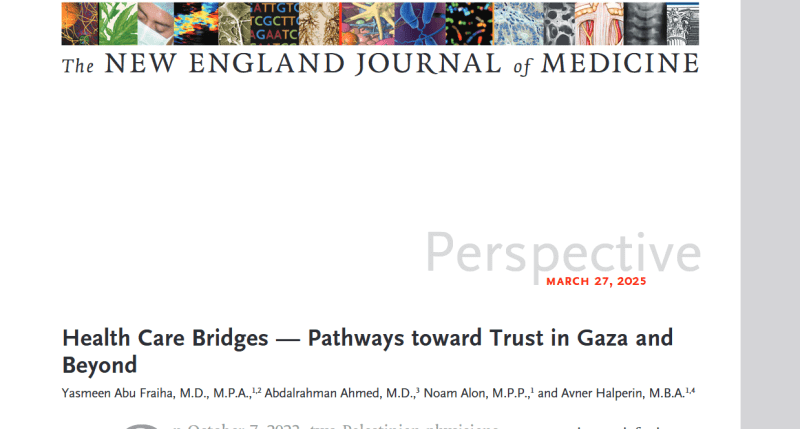
Perspectiva Puentes de Atención Médica: Caminos hacia la Confianza en Gaza y más allá
The NEW ENGLAND JOURNAL of MEDICINE 27 de marzo de 2025
El 7 de octubre de 2023, dos médicos palestinos se despertaron con el sonido de bombas explotando y cohetes cayendo. La Dra. Abu Fraiha acudió de urgencia al Centro Médico Soroka, el mayor centro de traumatología del sur de Israel. Pasó el día en el servicio de urgencias del hospital atendiendo a cientos de pacientes que huían de los ataques terroristas de Hamás, la mayoría con heridas de bala y lesiones por explosión. Muchos llegaron muertos al hospital, con sus cuerpos tan profanados que se tardó días en identificarlos.
A menos de 40 kilómetros de distancia, el hospital del Dr. Ahmed en Khan Younis, Gaza, fue bombardeado, por lo que fue a ayudar en el Hospital Indonesio, cerca del extremo opuesto de la Franja de Gaza. En los siguientes días, se encontró con un caos absoluto: cientos de pacientes inundaron el lugar, tras escapar de los bombardeos de las Fuerzas de Defensa de Israel, con quemaduras graves, miembros amputados y heridas por explosiones. El hospital luchaba por salir adelante, con pacientes heridos siendo tratados en el piso debido a la falta de camas, sometidos a procedimientos dolorosos sin anestesia y atendidos únicamente por médicos jóvenes y estudiantes de medicina, sin ningún miembro del equipo de traumatología capacitado disponible para manejar la abrumadora cantidad de casos críticos.
Una semana después, el Dr. Ahmed se vio obligado a abandonar su hogar y de repente se encontró siendo el único médico que atendía a 20.000 personas en un campo de refugiados en el sur de Gaza, tratando todo, desde infecciones respiratorias agudas hasta enfermedades crónicas, y manejando brotes infecciosos en condiciones extremas.
...
COMENTARIO
26 de marzo de 2025
La revista médica más importante del mundo encubre el genocidio
El New England Journal of Medicine finalmente rompió su silencio sobre Gaza, solo para ocultar la verdad de un genocidio israelí respaldado por Estados Unidos que se está desarrollando en tiempo real.
El viernes pasado (21 de marzo de 2025), las fuerzas israelíes, apenas unos días después de matar a más de 200 niños en un solo período de 24 horas, volaron el único hospital oncológico de Gaza, junto con una facultad de medicina adyacente. Para entonces, era evidente que Israel había reanudado por completo su guerra contra los hospitales, el personal sanitario y la infraestructura sanitaria esencial de Gaza.
A la mañana siguiente, The New England Journal of Medicine publicó su primer artículo reconociendo la devastación en Gaza. Durante los 17 meses anteriores a lo que las investigaciones de la ONU y otras entidades han declarado como un ataque israelí inequívocamente genocida contra civiles palestinos, el NEJM, considerado ampliamente como la revista médica más influyente del mundo, había recibido innumerables artículos sobre el tema y los había rechazado todos.
En medio de estas decisiones, la revista fue objeto de reiteradas críticas por su silencio e hipocresía ante una de las catástrofes de salud pública más urgentes y prevenibles de la historia reciente. Por fin, el silencio de la revista se ha roto. Su tan esperada intervención llega en forma de un artículo titulado "Puentes de Atención Médica: Caminos hacia la Confianza en Gaza y más allá". Un artículo sobre un tema tan delicado habría sido cuidadosamente editado por el equipo del Journal, incluyendo, muy probablemente, a su editor jefe.
Para una poderosa institución estadounidense que ha esperado hasta ahora para abordar la violencia respaldada por Estados Unidos en Gaza, el artículo es tan evasivo y antipolítico como cabría esperar. El artículo —escrito por Yasmeen Abu Fraiha, ciudadana palestina de Israel, los israelíes Noam Alon y Avner Halperin, y Abdalrahman Ahmed, palestino de Gaza— rechaza cualquier análisis riguroso de los crímenes de Israel contra la infraestructura médica de Gaza, en favor de superficiales perogrulladas sobre cómo la atención médica puede ser una vía para "generar confianza" entre dos poblaciones en conflicto.
"Los cuatro, palestinos e israelíes, creemos firmemente en la necesidad de fomentar la esperanza y generar confianza", escriben los autores. Al ver cómo los hospitales se convierten en campos de batalla, también hemos sido testigos directos del poder de la atención médica para superar la animosidad y salvar las divisiones entre las poblaciones en conflicto. Se esmera en describir la destrucción de los hospitales de Gaza y la muerte de sus médicos y pacientes como una lamentable consecuencia de la guerra, como si las bombas simplemente cayeran del cielo, sin ninguna motivación genocida ni conexión con un proyecto colonial de larga data.
...
...
10 April 2025
Why is the New England Journal of Medicine promoting 'health bridges' while Gaza's hospitals burn?
The journal promotes medical 'bridges to peace' while ignoring Israel's systematic destruction of Gaza’s health system as part of its genocidal assault on Palestinian life,There has been no report on the systematic targeting of the Palestinian healthcare system, no call for accountability or justice for the more than 1,200 medical workers killed, and no condemnation of the incarceration and torture of hundreds more. Instead, the journal offers a narrow appeal to build trust through joint health programmes.
This editorial decision is deeply political. It promotes a depoliticised narrative of health as a "bridge to peace" at the expense of an ethical commitment to confront the ongoing destruction of the Palestinian healthcare system, Israel's culpability for these crimes, and the structures of power that enable and sustain such violence.
These are not background conditions; they are the central obstruction to any serious effort towards peace.
False equivalence
The article's problematic framing is evident from the outset. It opens with parallel narratives from an Israeli and a Palestinian doctor, each presented as a victim of violence.
While the emotional experiences of both individuals warrant consideration, the structural asymmetry between them is entirely ignored. One works in a fully resourced trauma centre in Israel. The other is violently displaced and left as the sole doctor for 20,000 others in a refugee camp in southern Gaza.
Nowhere do the authors acknowledge that the Palestinian healthcare system has been systematically dismantled, while Israel's remains intact
By presenting these narratives side by side, the article constructs a false equivalence - portraying both as equally harmed and jointly responsible for the breakdown of trust that the authors claim must now be rebuilt.
Nowhere do the authors acknowledge that the Palestinian healthcare system has been systematically dismantled, while Israel's remains intact - and in many cases, actively serves its war effort.
This article reflects a broader pattern within medicine, medical institutions and the editorial cultures of leading journals - one that erases Palestinians, dehumanises their experience, and sidelines their political rights.
As healthcare workers and public health advocates, we have a responsibility to expose and challenge these narratives before they become the basis for further harm. We join others in doing so here.
Why is the New England Journal of Medicine promoting 'health bridges' while Gaza's hospitals burn?
The journal promotes medical 'bridges to peace' while ignoring Israel's systematic destruction of Gaza’s health system as part of its genocidal assault on Palestinian life,There has been no report on the systematic targeting of the Palestinian healthcare system, no call for accountability or justice for the more than 1,200 medical workers killed, and no condemnation of the incarceration and torture of hundreds more. Instead, the journal offers a narrow appeal to build trust through joint health programmes.
This editorial decision is deeply political. It promotes a depoliticised narrative of health as a "bridge to peace" at the expense of an ethical commitment to confront the ongoing destruction of the Palestinian healthcare system, Israel's culpability for these crimes, and the structures of power that enable and sustain such violence.
These are not background conditions; they are the central obstruction to any serious effort towards peace.
False equivalence
The article's problematic framing is evident from the outset. It opens with parallel narratives from an Israeli and a Palestinian doctor, each presented as a victim of violence.
While the emotional experiences of both individuals warrant consideration, the structural asymmetry between them is entirely ignored. One works in a fully resourced trauma centre in Israel. The other is violently displaced and left as the sole doctor for 20,000 others in a refugee camp in southern Gaza.
Nowhere do the authors acknowledge that the Palestinian healthcare system has been systematically dismantled, while Israel's remains intact
By presenting these narratives side by side, the article constructs a false equivalence - portraying both as equally harmed and jointly responsible for the breakdown of trust that the authors claim must now be rebuilt.
Nowhere do the authors acknowledge that the Palestinian healthcare system has been systematically dismantled, while Israel's remains intact - and in many cases, actively serves its war effort.
This article reflects a broader pattern within medicine, medical institutions and the editorial cultures of leading journals - one that erases Palestinians, dehumanises their experience, and sidelines their political rights.
As healthcare workers and public health advocates, we have a responsibility to expose and challenge these narratives before they become the basis for further harm. We join others in doing so here.
Actualización ESPAÑOL 10 abril 2025
¿Por qué el New England Journal of Medicine promueve "puentes sanitarios" mientras los hospitales de Gaza arden?
La revista promueve "puentes médicos hacia la paz" mientras ignora la destrucción sistemática del sistema de salud de Gaza por parte de Israel como parte de su ataque genocida contra la vida palestina.
No se ha informado sobre los ataques sistemáticos al sistema de salud palestino, ni se ha exigido justicia ni rendición de cuentas por los más de 1200 trabajadores sanitarios asesinados, ni se ha condenado el encarcelamiento y la tortura de cientos más.
En cambio, la revista ofrece un llamado limitado a generar confianza mediante programas de salud conjuntos. Esta decisión editorial es profundamente política. Promueve una narrativa despolitizada de la salud como un "puente hacia la paz" a expensas de un compromiso ético para enfrentar la continua destrucción del sistema de salud palestino, la culpabilidad de Israel por estos crímenes y las estructuras de poder que permiten y sostienen dicha violencia.
Estas no son condiciones de fondo; son el principal obstáculo para cualquier esfuerzo serio por la paz.
Falsa equivalencia
El encuadre problemático del artículo es evidente desde el principio. Comienza con narrativas paralelas de un médico israelí y uno palestino, cada uno presentado como víctima de violencia. Si bien las experiencias emocionales de ambos individuos merecen consideración, la asimetría estructural entre ellos se ignora por completo. Uno trabaja en un centro de trauma con todos los recursos en Israel. El otro es desplazado violentamente y se convierte en el único médico para otras 20.000 personas en un campo de refugiados en el sur de Gaza.
En ningún momento los autores reconocen que el sistema de salud palestino ha sido desmantelado sistemáticamente, mientras que el de Israel permanece intacto. Al presentar estas narrativas una junto a la otra, el artículo construye una falsa equivalencia, retratando a ambos como igualmente perjudicados y corresponsables de la ruptura de la confianza que, según los autores, ahora debe reconstruirse.
Los autores no reconocen en ningún momento que el sistema de salud palestino ha sido desmantelado sistemáticamente, mientras que el de Israel permanece intacto y, en muchos casos, contribuye activamente a su esfuerzo bélico.
Este artículo refleja un patrón más amplio dentro de la medicina, las instituciones médicas y la cultura editorial de las principales revistas: uno que ignora a los palestinos, deshumaniza su experiencia y margina sus derechos políticos.
Como profesionales de la salud y defensores de la salud pública, tenemos la responsabilidad de exponer y cuestionar estas narrativas antes de que se conviertan en la base de mayores daños. Nos unimos a otros en este esfuerzo.
 Available in
 The GazaIndex. GazaDatos
Publicado el 11 de septiembre.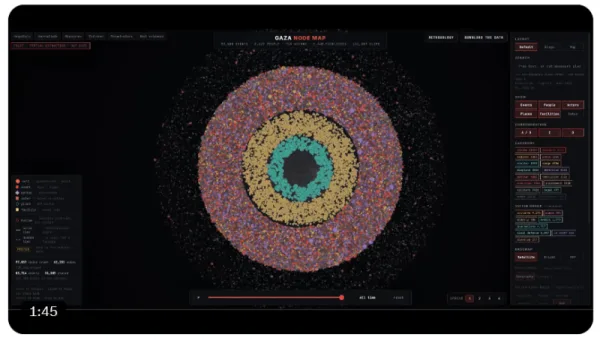 Available in
 Gaza Node Map. Mapa de Nodos de Gaza.
Publicado el 7 de septiembre.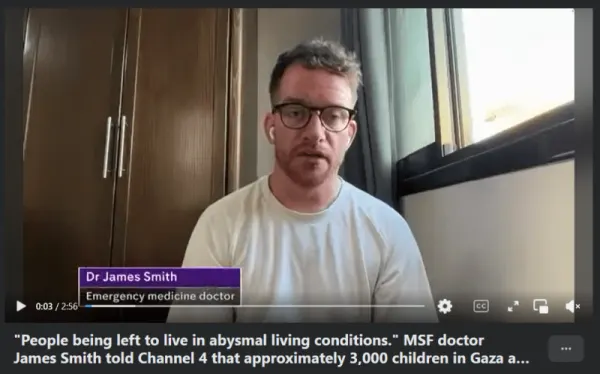 Available in
 Gaza "People being left to live in abysmal living conditions." "Condiciones de vida infrahumanas"
Publicado el 3 de septiembre.![Poor response from the Israeli Medical Association [expulsion of the World Medical Association]. ENG ESP](https://res.cloudinary.com/dohlie6or/image/upload/f_webp,q_auto,w_600/v1787675081/c0ue4z5k3kut05cduwyg.png) Available in
Available in Poor response from the Israeli Medical Association [expulsion of the World Medical Association]. ENG ESP
Publicado el 25 de agosto.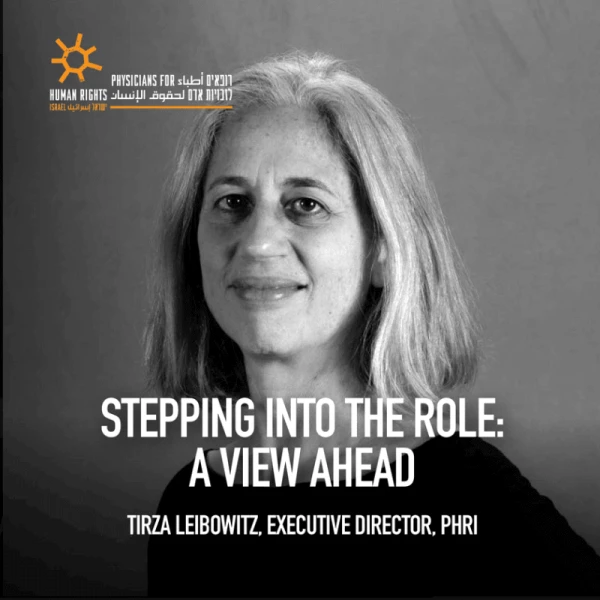 Available in
 Tirza Leibowitz. Executive director of Physicians for Human Rights Israel. Directora de Médicos for los Derechos Humanos en Israel. ENG ESP
Publicado el 17 de agosto. Available in
 Humanitarian Situation Report | 7 August 2026. Informe sobre la situación humanitaria, actualizado al 7 de agosto de 2026. ENG ESP
Publicado el 10 de agosto. Available in
 Israel kills without ceasing in Palestine and expands extermination zone in Gaza. Israel asesina sin cesar en Palestina, y expande la zona de destrucción en Gaza. ESP ENG
Publicado el 3 de agosto. Available in
 Dental care in Gaza. Atención dental en Gaza. ENG ESP
Publicado el 15 de julio.Ver más / See more
