

Memoirs of a Palestinian Communist, Najati Sidq. Memorias de un comunista palestino. ENG ESP
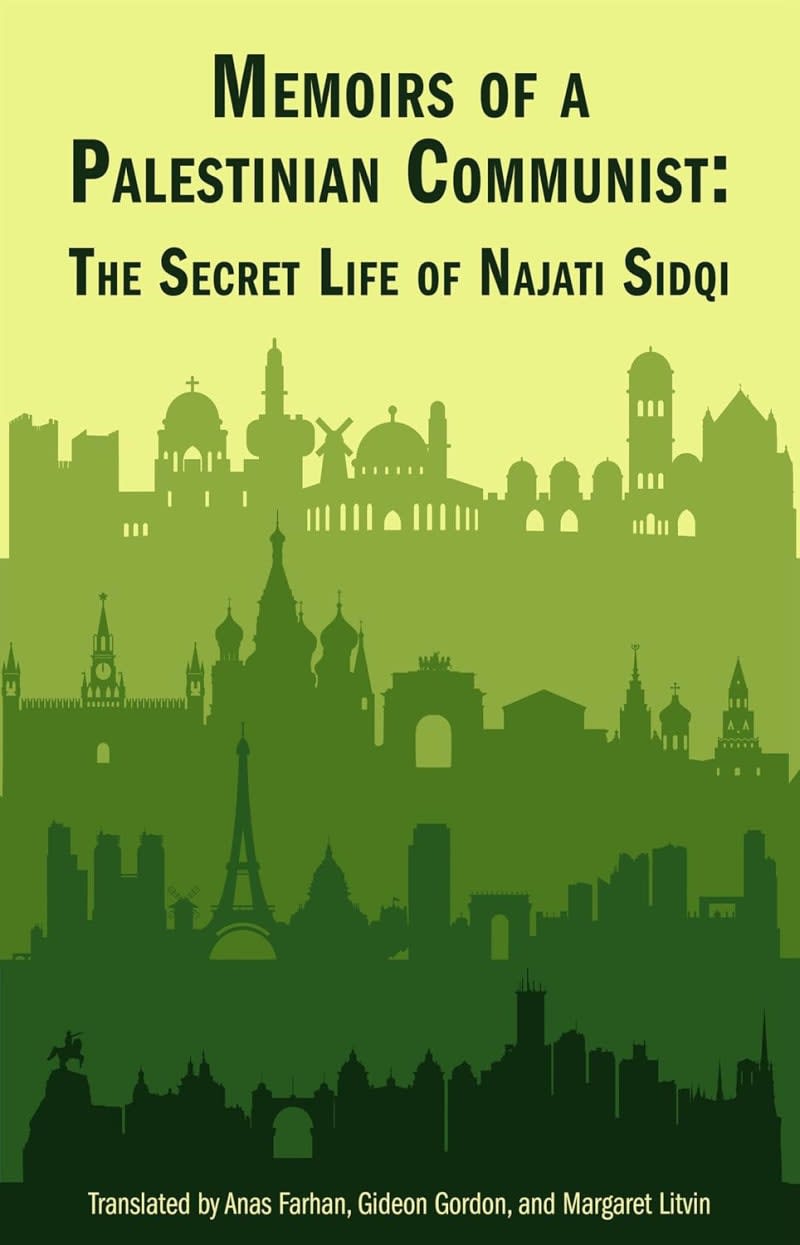

ENGLISH
Memoirs of a Palestinian Communist
Najati Sidqi’s reminiscences, which chronicle the upheavals of the early 20th century, resonate with shocking familiarity today.
Najati Sidqi Introduced by Margaret Litvin
October 31, 2025
In the opening chapter of his posthumously published memoir, the activist and intellectual Najati Sidqi (1905–1979) wryly recalls how, in the early 1920s, “Jewish immigration to Palestine brought customs, ideas, and social practices alien to the conditions of Arab life” there. He reminisces about the cultural heterogeneity of his birthplace, Jerusalem—various tongues, intermingling styles of dress—as well as the influx of foreign ideologies:
We started hearing of Bolshevism, of Anarchism, of Marx, Lenin, and Trotsky, and of Herzl. We got to know the workers’ movements among the Jewish immigrants, such as the Histadrut (the Federation of Jewish Workers), the Fraktsiya (the leftist opposition within the Histadrut), the Po’alei Tzion (Workers of Zion) party, and the kibbutzim . . . The Jewish workers with leftist inclinations sought to propagandize among the Arabs.
Sidqi, then a teenage postal worker, frequented a coffee shop where he learned of these competing leftist tendencies and of the socialist revolution in Russia. All this, he reflects, at first seemed “distant from our local concerns,” yet “we were ready to listen to anything, to accept anything that might lift from us the nightmare” of the hardening British occupation in Palestine.
At the café Sidqi befriended former members of the Po’alei Tzion who had broken with the party over its commitment to “a socialist Jewish state.” These activists, who coalesced into the Palestine Communist Party (PCP), rejected both British imperial rule and Zionism, which they considered “a bourgeois movement that benefited only wealthy Jews.”
They insisted that their party, which “was for all inhabitants of Palestine,” could “reconcile the interests of the working classes” of Jews and Arabs alike. After the PCP was admitted to the Communist International (Comintern) in 1924, Sidqi became one of its first Arab members. When Moscow pushed the party to “Arabize” its upper ranks, he joined the youth central committee and was sent to the Soviet Union to study.
A freethinker and protean public intellectual, Sidqi has been admired from many sides. The Palestinian writer and revolutionary Ghassan Kanafani hailed him as “probably the first” materialist chronicler of the Arab nationalist movement. Historians of Arab antifascism celebrate his 1940 book Islamic Traditions and Nazi Principles: Are They Compatible?, written to counteract Hitler’s appeal to the Muslim world and amplified by the British war effort. Sidqi also translated Pushkin and Chekhov, published comic short stories such as “The Millionaire Communist,” and helped popularize Descartes, Darwin, and the medieval Islamic sociologist Ibn Khaldun among Palestinians. But few readers have encountered his masterpiece: this rich and riveting memoir, now available in English for the first time.
Completed in 1976, Sidqi’s memoir—which I co-translated with Gideon Gordon and Anas Farhan—traces the arc of his early life as it intersects with the upheavals of the early 20th century, mixing reminiscences on the day’s political movements with winding digressions and gossip.
We learn about his years at Moscow’s Communist University of Toilers of the East, his role in the PCP’s organizing against Zionism and the British Mandate, his cat-and-mouse games with police and nearly two years of imprisonment in Jerusalem, and his activist and intellectual work abroad—including stints in France, where he edited a clandestine Communist newspaper, and Spain, where he wrote Arabic anti-Franco propaganda during the Spanish Civil War. He chronicles all this with verve, noting the Communist movement’s hypocrisies and subtle racism. The memoir cuts off abruptly in 1940 with his expulsion from the party for writing against Nazi Germany—then an ally of the Soviet Union under the 1939 Molotov–Ribbentrop nonaggression pact—and for doing so with reference to religious texts.
Sidqi’s rollicking tale reads like a political travelogue from a bygone age, partly because it omits the tragic experiences that followed his Communist adventures. After coming back to Jerusalem in 1940, Sidqi left Palestine shortly before the Nakba and never returned. Exiled in Cyprus and then Beirut, he and his family endured poverty and separation from many relatives; they saw Arab nationalism falter and many postcolonial hopes turn to ash. (During the Lebanese Civil War, they fled to Athens, where he died in 1979.) The memoir also suppresses his personal life during the period it covers: It barely mentions Sidqi’s 50-year marriage to Lotka Lorberbaum Sidqi—who had immigrated to Palestine from Lviv as a teenager, joined the PCP, and converted to Islam —or their three children; the eldest, their daughter Dawlieh (“Internationale”), was raised in Soviet children’s homes long after her parents’ release from British Mandate prison and even after her father’s expulsion from the party. The family petitioned bureaucrats in three countries for the right to live together, to no avail. Dawlieh was still under Soviet power as Sidqi wrote, which may help explain this elision.
However carefully depersonalized Sidqi’s story, it still resonates with shocking familiarity today. The following excerpt, the memoir’s seventh chapter, focuses on the five debates Sidqi sees as most central for the PCP between 1929 and 1931. These include the Comintern’s directive to “Arabize” the party, which Jewish members resisted, and the party members’ divergent responses to the intercommunal violence of August 1929—events now known in Jewish historiography as “the Western Wall riots” and “the Hebron Massacre” and in Palestinian memory as “the Buraq Uprising.” Some activists saw only an anti-Jewish pogrom, while others (and Moscow) saw a national liberation uprising. Sidqi, his Jewish-born partner already pregnant with their first child, must have seen both. Though his account is matter-of-fact, it evokes the torment of this moment when the PCP—and the global left—was riven between mutually incompatible interpretations of history that fed on, and in turn reinforced, contradictory structures of feeling.
It is striking that this pattern, which has repeated after the October 7th attacks, was already present even before the accumulated trauma of the Holocaust, the Nakba, and the Israeli occupation. Today, as in 1929, the left is forced to reckon with these irreconcilable perspectives. Sidqi cannot help us do so. But he can at least help us understand the challenge.
— Margaret Litvin
Five leading issues arose in the time I spent as a party official, from 1929 until my arrest in 1931. The issues were: Arabization; the uprising of 1929; Jewish immigration; the rural land issue; and our stance with respect to the Arab national movement.
1. Arabization
The directive to “Arabize” the party came directly from the Comintern. This meant that the party had to give more opportunities for Arab members affiliated with it to enter sensitive positions, from the local committees to the Central Committee. This didn’t mean that the membership had to become majority Arab and minority Jewish, but we were meant to tilt the leadership more toward the Arab side. What drove this decision was that the party’s Jewish members and supporters comprised about ten thousand people, while Arabs numbered fewer than one thousand.
Arabization was not easy or effortless. The Jewish Communists were very cautious about it, as they were convinced that the Jewish Communist was more ideologically and organizationally prepared than the Arab Communist, and that the Arab member would collapse if ever exposed to pressure and persecution, causing problems for others.
The Jewish leadership were the ones who put forward this argument. They stalled Arabization, supporting it in theory but impeding it in practice. Meanwhile, messages from the Comintern urged us to courageously implement Arabization. They highlighted how the movement in Palestine was chaotic and confused relative to the rest of the Arab world, and that as a consequence, “the wheat was being separated from the chaff.”
The Jewish party leadership wavered about implementing the Arabization policy and could not find the courage to open the doors to Arab leadership. It decided to send the largest possible number of Arab members (and even Arabs who were just sympathetic to the party) to Moscow to be educated. Then when they returned to Palestine, they could take up sensitive positions in the party once the Comintern knew them, had gauged their capabilities, and assigned their role within the party. Agreeing to the leadership’s proposal, the party took to sending student missions of every class and profession. These included ironworkers, woodworkers, students, peasants, office workers, journalists, and street vendors.
The party had a fixed leadership, composed of known people like Tepper, Barzilai, Berman, and Lichtinsky,[1] who managed to keep themselves well out of prison, and a shifting leadership in the local committees, composed of people who entered sensitive positions only when spots opened up there, although the nature of their work and their constant contact with the public (running unions, organizing strikes, and leading protests) exposed them to arrest. This therefore produced a “leadership crisis.” A matter that exacerbated this serious crisis was that many Jewish Communists who carried Soviet passports or Russian birth certificates got deported to the Soviet Union by the British authorities. Some Jewish Communists had every hope that they would meet this fate—until they stumbled into it. They were crammed into prison for three to six months, then were shipped from Jaffa to Odessa on the next Soviet ship.
Despite all this, the party actively worked on the issue of Arabization. In 1931, the Comintern dispatched a representative named Mueller to investigate the progress of Arabization. I joked to him, “In Moscow, the acronym for the Communist Party was V.K.P., the Communist Party for the Nations of the Soviet Union, and they added a B to it, to stand for Bolshevik.”
He replied, “Yeah . . . so?”
I said, “We abbreviate the name of the Palestine Communist Party as P.K.P. So what do you think about adding an A to the end, for Arabized?” He shook his head, laughing, and said, “That could also stand for ‘antisemite’ . . . ”
On that note, Mueller almost fell into the hands of the police in the suburb of Nahr al-Uja near Jaffa. We had held a meeting with him in a safe house, and after the meeting about eight of us set off together in the direction of Jaffa. We were halfway there when we ran into a Jewish cart driver who knew that some of us were Jewish Communists. He said, “Don’t go on along this route; there’s a police squad stationed ahead. No doubt they would love to do you mischief!” We thanked him, split up, and went in different directions, thus evading the trap planned for us. But we were burning to know: Who had told the police about our secret meeting? Was the informant among us? Suspicion fell on an Arab journalist from Jerusalem, D. Sh., who had hosted the meeting. Considering the evidence, we decided not to rely on him for party activities anymore.
Anyway, Arabization was a central concern of the party at all levels and during all its conferences. In the end the Jewish Communists conceded central leadership to the Arab comrades, while they remained in their leadership positions in Jewish areas. The creation of a sort of “federal” structure within the single party allowed us to implement the concept of Arabization and kept peace with the part of the party apparatus that the Jewish leadership administered.
The main dispute was over how to define the nature of this uprising: Was it a nationalist revolt, or a sectarian massacre?
2. The Uprising of 1929[2]
The uprising of August 23rd, 1929, shook the party quite violently, and left the Jewish Communists completely at a loss. There were some who defended their countrymen, and others who clung to neutrality and preferred to distance themselves from it. However, this situation created a problem in the party between the Jewish comrades and the Arab comrades. We held a contentious meeting in which we discussed the uprising and its consequences. The main dispute was over how to define the nature of this uprising: Was it a nationalist revolt, or a sectarian massacre?
Here a division emerged in the party. Among the Jewish Communists, some said that it was a massacre, but others supported the Central Committee in saying that it was a national uprising caused by unjust British rule, the seizure of lands, and the impoverishment of the peasants.
After a heated back-and-forth, it was decided that it was a nationalist uprising that had no connection to outbreaks of incidents of sectarian violence like the murder of the sheikh of the Jaffa mosque and his family,[3] the massacre of students in a Talmud school in Khalil [Hebron], or other anomalous incidents uncharacteristic of uprisings. Some of the Jewish members complied with this decision; others were enraged by it and withdrew from the party, or were expelled by the party until they changed their stance.
At the time, I was overseeing the party’s activities in Haifa in close coordination with the Federation of Trade Unions, which was managed by a Lebanese man, a railroad employee from Qlailah. He had also opened a school to fight illiteracy in Qlailah, with the help of another young Lebanese man, who was from Fathallah.
In Haifa, I communicated secretly with the Sheikh of the mosque, ‘Izz al-Din al-Qassam, a towering man who lived on the slopes of the mountain, east of the bridge over the Rushmiya wadi. He told me about his struggle against the French in Syria in 1920, his flight to Haifa since then, his fight with the English in Palestine, and how the authorities were pursuing him. I found out in 1935, while I was in Paris, that al-Qassam had been martyred with four of his comrades near Jenin.[4]
While I was stationed in Haifa during the uprising, I came down with dysentery from eating polluted food at a restaurant in the fish market. I was taken to the government hospital, where I stayed ten days until I had recovered. I had barely left the hospital when I was asked to make my way to Jerusalem to join the Central Committee. So I put on a [Jewish-style] hat[5] as a disguise and took a seat on a half-empty train. When the train stopped at Lydda [Lyd], I looked out the window and saw two Arab youths approaching my seat. In each one’s hand was a knife; they were waiting to attack me once the train was in motion. So I laughed and said, “I’m an Arab, like you.” They both put their knives back in their pockets and said, “Take that thing off your head and go away.”
The train arrived at the Jerusalem station at nine in the evening. The station was shrouded in darkness, and the streets were empty. Here and there, I heard the whistle of bullets. I hired the only carriage in the square to take me to the home of my co-worker from the post office, from before I went to Moscow in 1925. This was Qustandi Rofa, who lived in the Greek colony near the railway station. I knocked on the door; he opened the latch with great caution. He saw me in the dim light after my long absence. But he welcomed me and hosted me for three days until I could rendezvous with my comrades in Jerusalem.
The Central Committee had assigned Joseph Barzilai to rent a house in his name in Beit Safafa, an Arab-majority neighborhood, from an Arab farmer. I moved there and lived there. While in Jerusalem, I contributed to a report to the Comintern about the 1929 uprising and the party’s stance on it.
An odd event occurred at the time. The landlord had advised Barzilai to leave the house, so that he and whoever he hosted would not be endangered. The landlord helped Barzilai pack up the furniture, then, pistol in hand, he escorted Barzilai in the moving truck to safety in the Jewish neighborhood of Talpiot, on the eastern side of the al-Fawqa neighborhood. Then the landlord bid Barzilai farewell, saying, “I have fulfilled my duty to you; go on your way. If I run into you again, I’ll kill you!”
So the 1929 uprising placed the party actively on the side of Arab rights, and opened the door to a new push from Arab activists and officials. It also highlighted the Communists as an organized and active party, present and influential in both the Arab and Jewish camps.
In the process, the party’s headquarters was transferred to a house deep in a pine forest owned by Jamil al-Shakir al-Husseini, on the western side of al-Fawqa. Joseph Barzilai paid the rent, as usual, using his cover as a journalist.
The 1929 uprising placed the party actively on the side of Arab rights, and opened the door to a new push from Arab activists and officials.
3. Jewish Immigration
The party was preoccupied by the issue of Jewish immigration and was led to debate it and publish pieces about it more than once. Which stance were we to take on it? There were a few different positions that the comrades took at the time, and they were:
First—that the door should be closed to immigration, since the country’s economic situation could not support more newcomers. Among the immigrants were some who competed with the Jewish labor force itself in the fields of manufacturing and agriculture, in addition to their negative effect on the Arab community, which intensified public hostility toward Jews.
Second—that it was impossible to stop all immigration so long as it was a pillar of the Zionist movement, and that it was better to try to prevent illegal immigration and to stick to a stance of limiting Jewish immigration, a policy which the Arabs themselves demanded. This would unite the party with the Arab national movement, so that cooperation between the two groups could take place on a point of serious political importance.
Third—that we should seek a halt to Jewish “bourgeois immigration” while supporting Jewish “working-class immigration,” as workers were the sinews of the socialist movement. Their presence would produce a conscious proletarian movement, which would help to create social change in Palestine. Those of the latter opinion converged with the theory of the Po’alei Tzion party, which called for the greatest number possible of Jewish workers in Palestine, considering them the educated and conscious vanguard of socialism. In the Po’alei Tzion platform, the Arabs would be integrated into the Jewish socialist society through social mixing and marriage.
Ultimately, the position the party adopted was that immigration should be halted in principle, and that immigration should be restricted and limited to a certain number annually so long as it was impossible to prevent it in practice. The party benefited from this stance, which pleased the Arabs and mollified the Jews.
4. The Land Question
The agricultural situation in Palestine was not feudal, i.e., one in which the large feudal landowners ruled vast expanses of land while peasants worked the land like slaves, as was the situation in Russia, Egypt, and Iraq. Rather, Palestinian agriculture consisted of: a relatively limited area of land, distributed among a few large landowners (farms and orchards, including orange groves); “common” land, which villagers worked with crude cooperative methods; state land, of which some was useful for farming and some was fallow; and finally, many small plots of lands dispersed among small farmers. The latter category made up most of the agricultural land.
Making preparations to establish their state with the help of the Mandatory Power, and as this state required ownership of the land, their leaders established two funds to implement plans for the colonization of Palestine. The first of these was the “National Fund” (Keren Kayemeth), the purpose of which was to collect funds from Jewish capital: donations in “shekels” (an ancient Hebrew unit of currency), levies, investments, and so on. The second was the
“Establishment Fund” (Keren HaYesod; the United Jewish Appeal), the mission of which was purchasing land and utilizing it in every possible way.[6] It prevented the resale or transfer of land: The land became the national property of the Jewish people, and only Jewish labor could work there.
The Establishment Fund was active in purchasing land through skilled Jewish and Arab agents. The process of land “purchase” often took on tragic dimensions, as all the departments of the Mandatory government were mobilized to support it, from the agricultural courts to the criminal courts. The result was that the central prison in Jerusalem was overflowing, as were the ‘Atlit quarry near Haifa and the Acre fortress, with immense numbers of peasant “rebels.” The sentences issued to these people ranged from ten years to life imprisonment to execution.
The party had taken a unified stance on this land issue, calling for opposition to the Mandate’s policy, which was designed to impoverish Arab farmers, coerce them into selling their land, then drive them from that land, and against the “businessmen” and landowners—the wealthy farmers and the effendis [educated, middle-class Arabs]—who were selling their land to Jewish institutions. The party wanted to force them to take responsibility for these sales. In this position on agricultural policy, the party worked closely with the Arab national movement, serving our ideological and social struggle.
5. The Arab National Movement
The party took a stance distinct from that of the Arab national movement, as the nationalists were divided: Some were activists struggling against Zionist colonialism, but others were opportunists, collaborating with the occupiers.
The activists were divided into two groups. The first was the Executive Committee, elected by the seventh Palestinian conference in 1928. It was a bourgeois activist group and worked within a framework of Arabism and Islamic solidarity. The second was the leftist nationalist movement, which represented the middle class; it was a petit-bourgeois group that worked in a framework of Arabism combined with internationalism.
The party cooperated with the Executive Committee, supporting its campaigns against the Mandate and Zionism, and collaborated closely with the leftist activists both individually and collectively, even if we did not fully merge with them in a fixed organization at that time. As for other Arab parties in Palestine at the time, the party considered them to be either lacking a popular base or opportunistic and paid them little attention.
Excerpted from Memoirs of a Palestinian Communist: The Secret Life of Najati Sidqi, by Najati Sidqi, translated by Margaret Litvin, Anas Farhan, and Gideon Gordon © 2025, published with permission from the Center for Middle Eastern Studies, University of Texas at Austin.
1 Eliyahu Tepper, Joseph Berger-Barzilai, Yankel Berman, and David Lichtinsky all served on the PCP’s Central Committee. Sidqi recounts that Lichtinsky briefly “lived in Cairo disguised as a Talmud student” to rekindle Communist activities there but then was discovered and deported. Tepper and Berger-Barzilai were each imprisoned in the Soviet Union under Stalin (the former for “Zionist deviations,” the latter for allegedly meeting with Nazis); both survived.
2 The 1929 violence began in a dispute over the Temple Mount/al-Aqsa Mosque in Jerusalem, where Jewish protesters had raised Zionist flags and chanted, “The Wall is ours,” on August 15th, 1929. As fighting spread to a dozen cities, Arabs killed 133 Jews and injured between 198 and 339, while Jews and British Mandate police killed 116 Arabs and wounded at least 232 in one week (August 23rd–29th). The violence peaked on August 25th, when an attack on Jewish civilians in the West Bank city of Hebron killed 67 Jews and wounded 53. The British investigating commission found that the violence was sparked by tensions over communal rights at the Western Wall but fed by a broader “Arab feeling of animosity and hostility towards the Jews consequent upon the disappointment of their political and national aspirations and fear for their economic future.”
3 This refers to an attack on Sheikh ‘Abd al-Chani ‘Awn and his family during the August violence in Jaffa.
4 Sheikh ‘Izz al-Din al-Qassam (1881–1935) was a Syrian-born Muslim preacher and fighter who helped organize resistance movements against Italy in Libya, against the French army in Syria, and finally against British colonialism in Palestine. He declared jihad in Haifa on November 12th, 1935, and was killed by British forces in a forest shootout a week later. His funeral drew more than 3,000 mourners, mainly workers and peasants.
5 The Arabic word used here, “qub‘ah,” is cognate with the Hebrew word “kippah,” but pre-1948 photographs and dictionaries generally show the yarmulke to be strictly indoor headwear in Palestine. This word likely refers to a European-style brimmed hat such as a fedora, which would have marked Sidqi as Jewish because a Muslim man would have worn a fez. However, it is also possible that Sidqi actually wore a yarmulke in public, or misremembered himself doing so.
6 These organizations still exist today—the former as Keren Kayemeth-LeIsrael (or the Jewish National Fund), the latter as Keren Hayesod (or United Israel Appeal)—and serve essentially the same functions for the State of Israel.
Najati Sidqi (1905–1979) was an activist, journalist, translator, and writer. One of the first Arab members of the Palestinian Communist Party, he studied in Moscow, ran a clandestine newspaper in Paris, served in the Spanish Civil War, and opposed Hitlerism.
Margaret Litvin is associate professor of Arabic and comparative literature at Boston University and a co-founder of the group Concerned Jewish Faculty & Staff. Her book Red Mecca: The Life and Afterlives of the Arab-Soviet Romance is forthcoming from Princeton. She co-translated Najati Sidqi’s memoir with then-undergraduate students Gideon Gordon and Anas Farhan.
ESPAÑOL
Al Ard — “The Land” — Palestinian folklore group. Al Ard - The Land- La Tierra. Grupo de folklore palestino
Publicado hace 2 días.
تغاريد عرس فلسطيني.. حكاية تراث لا يموت Preparativos, canciones de boda palestina: Un documental/relato de patrimonio perdurable
Publicado hace 2 días.
Citizen Osama. Documental
Publicado hace 3 días.
"Gaza. No words" Exhibition Venice. Gaza, sin palabras. Exposición Venecia. ENG ESP
Publicado hace 9 días.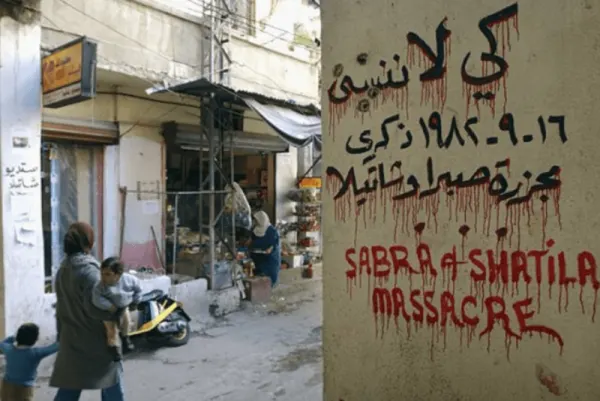
"Moving towards home". June Jordan. 44 years since the Sabra and Sathila massacres. "Camino al hogar"- 44 años desde la masacre de Sabra y Sathila. ENG ESP
Publicado hace 12 días.
Palestine, war of memory. Palestina, memoria de guerra.
Publicado el 11 de septiembre.
Naza ("No other land"), documental, el genocidio de Gaza desde una sala de exterminio con aire acondicionado
Publicado el 11 de septiembre.
"All we have" Palestinian animation film. "Todo lo que tenemos" dibujos animados palestinos. ENG ESP
Publicado el 3 de septiembre.Ver más / See more
