

Kamal Aljafari’s “With Hasan in Gaza (2001)” Film. Película de Kamal Aljafari "Con Hasan en Gaza (2001)"
ENGLISH
By Ed Meza Aug 6, 2025
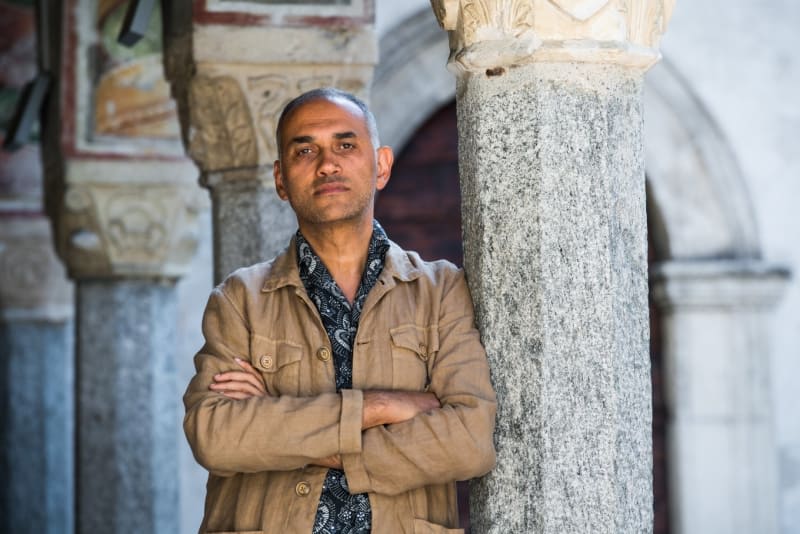
Photo Kamal Aljafari Locarno Film Festival/Ti-Press/Alessandro Crinari
Based on recently rediscovered video footage shot on a trip to the region 24 years ago, Aljafari describes his latest work as “an homage to Gaza and its people, to all that was erased and that came back to me in this urgent moment of Palestinian existence, or non-existence. It is a film about the catastrophe, and the poetry that resists.”
Kicking off this year’s International Competition in Locarno, “With Hasan in Gaza” follows Aljafari and Hasan, a local guide, on a 2001 road trip as they travel north to south down the coastal strip in search of Abdel Rahim, a man the director met in 1989 when they were serving time together as teenagers in the juvenile section of Israel’s Naqab Desert prison.
At the time, Aljafari was studying film in Cologne, Germany, and was hoping to find Abdel Rahim as part of his research for a planned project about his experience in prison.
Aljafari, who grew up in the Israeli town of Ramle, had been accused by a military court of joining an enemy organization while in high school. While he eventually discussed his imprisonment in his 2006 debut feature “The Roof,” he did not use the Gaza footage in the end and had completely forgotten about it until he recently came across the MiniDV tapes by chance.
“This is the first film that I never made,” he says.
Depicting simple life in Gaza – kids playing on the beach, bustling outdoor markets, crowded cafés, lively neighborhoods – the footage has taken on a completely new context in view of Gaza’s destruction and the tens of thousands of people killed by Israeli forces since the 2023 attacks by Palestinian militants triggered the brutal war.
“It is really inevitable to think about what happened to all these people when you watch it,” the Berlin-based filmmaker says.
“It’s kind of a miracle that I found these tapes,” he adds. “Life is so mysterious – that they appear at this moment when they actually make sense, like they are needed and as if also they were waiting all these years, for 24 years, to be discovered. Actually, in a way, this is a film that made itself.”
“There are long shots, lots of shots in the car, and everything today has a completely different meaning because we know that Gaza has been destroyed. We don’t know what happened to all these people. In many ways it’s really having a documentation of a life that no longer exists. And I don’t know about the fate of any of the people, nor of Hassan.”
“There’s no family that hasn’t lost some members,” he adds, noting that his own relatives, members of his mother’s family, originally from Jaffa, ended up in Gaza after being displaced in 1948.
“The situation is really something that is undescribable. And it’s just getting worse and worse, you know, just getting worse and worse. Especially that one cannot help. What can you do?”
For Aljafari, the film at least offers an opportunity to address the situation and he very much welcomes its selection for Locarno’s International Competition section.
“I was very happy about the film opening the international competition. I think this is so important, that such a film is screened. It’s almost the minimum you can do, to share this life that no longer exists.”
The film appears to be having a strong impact among festival programmers. Aljafari has already received confirmations from 35 international festivals, including North American events.
“We receive invitations almost every day, which is great. There are many people who have their heart in the right place. It gives you a lot of hope, but it’s still a very bittersweet feeling.”
Premiering the film is “difficult to celebrate,” he adds. “I’m looking forward to showing it and to talk about it, but it’s very difficult to be happy about showing this film, especially when you know that [Gaza] does not exist anymore.”
In conveying that sense of loss, Aljafari worked with veteran composer and past collaborator Simon Fisher Turner, who joined the project early on.
Turner’s music perfectly evokes on an emotional level the sentiment of the film, the essence of a place and people that only exist in the past, Aljafari adds. “He would send me almost every week new pieces,” Aljafari says. “I have an entire archive of so many amazing tracks that he sent us.”
Classic Arabic songs from artists like Nagat El-Sagheera further intensif the sense of nostalgia and a bygone era.
Although still based in Berlin, Aljafari forewent German funding for “With Hasan in Gaza,” instead tapping Qatari, French, Swiss and Canadian sources of support, including the Institute for Ideas and Imagination at Columbia University in Paris, where he is currently participating in a fellowship.
“I was fortunate enough to have this fellowship and be able to work on this film. The Institute itself was very supportive. There are people who have really their heart in the right place. It’s so important to understand that, despite the horrific moment we live in, there are a lot of people that want to defend humanity and want to stand by the Palestinians in this very dark moment.”
Aljafari is in the process of financing his next project, the scripted feature film “Beirut 1931,” which he hopes to shoot in Jaffa next year
ESPAÑOL
“Con Hasan en Gaza”, del cineasta palestino Kamal Aljafari, será para muchos un viaje visual conmovedor y cautivador a través de la Gaza de 2001.
Basado en imágenes de video recientemente redescubiertas, grabadas durante un viaje a la región hace 24 años, Aljafari describe su último trabajo como “un homenaje a Gaza y su gente, a todo lo que fue borrado y que regresó a mí en este momento urgente de existencia, o inexistencia, palestina.
Es una película sobre la catástrofe y la poesía que resiste”.
Inaugurando la Competencia Internacional de este año en Locarno, "Con Hasan en Gaza" sigue a Aljafari y a Hasan, un guía local, en un viaje por carretera en 2001, recorriendo la costa de norte a sur en busca de Abdel Rahim, un hombre que el director conoció en 1989 cuando cumplían condena juntos, siendo adolescentes, en la sección de menores de la prisión israelí del desierto de Naqab.
En ese momento, Aljafari estudiaba cine en Colonia, Alemania, y esperaba encontrar a Abdel Rahim como parte de su investigación para un proyecto sobre su experiencia en prisión.
Aljafari, quien creció en la ciudad israelí de Ramle, había sido acusado por un tribunal militar de unirse a una organización enemiga mientras estudiaba secundaria. Aunque finalmente habló de su encarcelamiento en su ópera prima de 2006, "The Roof", al final no utilizó las imágenes de Gaza y las había olvidado por completo hasta que recientemente se topó por casualidad con las cintas MiniDV.
"Esta es la primera película que nunca hice", afirma.
Retratando la vida sencilla en Gaza —niños jugando en la playa, bulliciosos mercados al aire libre, cafés abarrotados, barrios animados—, las imágenes adquieren un contexto completamente nuevo en vista de la destrucción de Gaza y las decenas de miles de personas asesinadas por las fuerzas israelíes desde que los ataques de 2023 perpetrados por militantes palestinos desencadenaron la brutal guerra.
"Es inevitable pensar en lo que les ocurrió a todas estas personas al verlo", afirma el cineasta berlinés. "Es un milagro haber encontrado estas cintas", añade.
La vida es tan misteriosa que aparece en este momento en que realmente cobra sentido, como si fuera necesaria y como si también hubiera estado esperando todos estos años, durante 24 años, para ser descubierta. De hecho, en cierto modo, esta es una película que se hizo sola.
Hay planos generales, muchos planos en el coche, y hoy todo tiene un significado completamente diferente porque sabemos que Gaza ha sido destruida. No sabemos qué pasó con toda esta gente. En muchos sentidos, es como documentar una vida que ya no existe. Y desconozco el destino de ninguna de estas personas, ni siquiera de Hassan.
No hay familia que no haya perdido a algún miembro, añade, señalando que sus propios parientes, miembros de la familia de su madre, originarios de Jaffa, acabaron en Gaza tras ser desplazados en 1948. La situación es realmente indescriptible. Y va de mal en peor, ¿sabes?, va de mal en peor. Sobre todo porque uno no puede evitarlo. ¿Qué se puede hacer? Para Aljafari, la película al menos ofrece una oportunidad para abordar la situación y celebra enormemente su selección en la Competición Internacional de Locarno.
“Me alegró mucho que la película abriera la competición internacional. Creo que es muy importante que se proyecte una película así. Es casi lo mínimo que se puede hacer: compartir esta vida que ya no existe”.
La película parece estar teniendo un gran impacto entre los programadores de festivales. Aljafari ya ha recibido confirmaciones de 35 festivales internacionales, incluyendo eventos norteamericanos.
“Recibimos invitaciones casi a diario, lo cual es genial. Hay mucha gente que tiene buenas intenciones. Te da mucha esperanza, pero sigue siendo una sensación agridulce”. El estreno de la película es “difícil de celebrar”, añade. “Tengo muchas ganas de mostrarla y hablar de ella, pero es muy difícil estar contento con ella, sobre todo cuando sabes que [Gaza] ya no existe”.
Para transmitir esa sensación de pérdida, Aljafari trabajó con el veterano compositor y antiguo colaborador Simon Fisher Turner, quien se unió al proyecto desde el principio. La música de Turner evoca a la perfección, a nivel emocional, el sentimiento de la película, la esencia de un lugar y de personas que solo existen en el pasado, añade Aljafari. “Me enviaba piezas nuevas casi todas las semanas”, dice Aljafari. “Tengo un archivo completo de muchísimas canciones increíbles que nos envió”.
Canciones árabes clásicas de artistas como Nagat El-Sagheera intensifican aún más la sensación de nostalgia y de una época pasada. Aunque aún reside en Berlín, Aljafari renunció a la financiación alemana para "Con Hasan en Gaza", recurriendo en su lugar a fuentes de apoyo cataríes, francesas, suizas y canadienses, incluido el Instituto de Ideas e Imaginación de la Universidad de Columbia en París, donde actualmente participa en una beca.
“Tuve la suerte de recibir esta beca y poder trabajar en esta película. El propio Instituto me brindó un gran apoyo. Hay personas que realmente tienen el corazón en el lugar correcto. Es fundamental comprender que, a pesar del terrible momento que vivimos, hay muchas personas que quieren defender a la humanidad y apoyar a los palestinos en este momento tan oscuro”.
Aljafari está en proceso de financiar su próximo proyecto, el largometraje con guion "Beirut 1931", que espera rodar en Jaffa el próximo año.
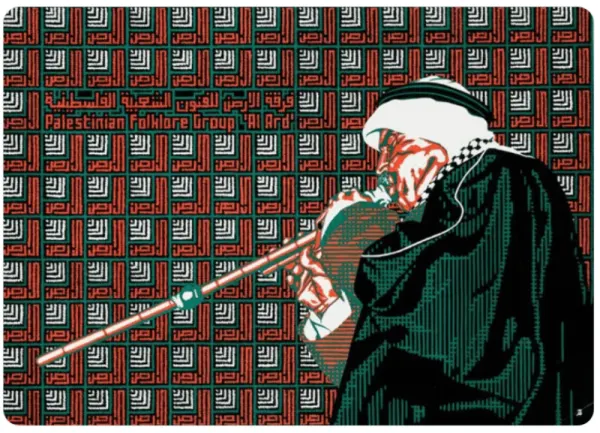
Al Ard — “The Land” — Palestinian folklore group. Al Ard - The Land- La Tierra. Grupo de folklore palestino
Publicado hace 7 días.
تغاريد عرس فلسطيني.. حكاية تراث لا يموت Preparativos, canciones de boda palestina: Un documental/relato de patrimonio perdurable
Publicado hace 7 días.
Citizen Osama. Documental
Publicado hace 8 días.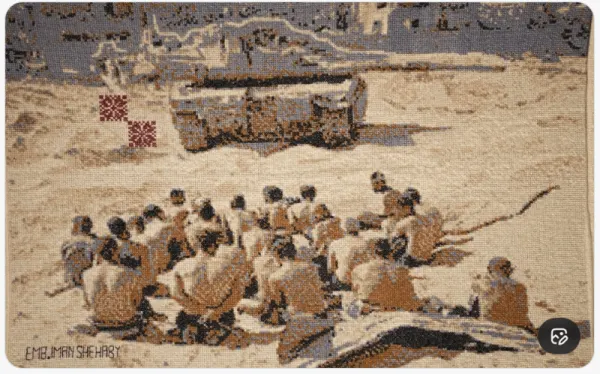
"Gaza. No words" Exhibition Venice. Gaza, sin palabras. Exposición Venecia. ENG ESP
Publicado hace 14 días.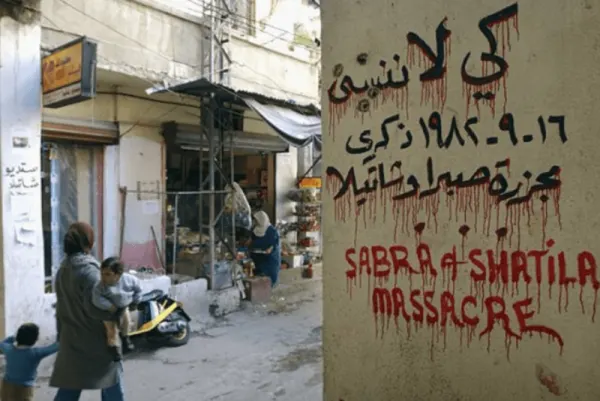
"Moving towards home". June Jordan. 44 years since the Sabra and Sathila massacres. "Camino al hogar"- 44 años desde la masacre de Sabra y Sathila. ENG ESP
Publicado el 15 de septiembre.
Palestine, war of memory. Palestina, memoria de guerra.
Publicado el 11 de septiembre.
Naza ("No other land"), documental, el genocidio de Gaza desde una sala de exterminio con aire acondicionado
Publicado el 11 de septiembre.
"All we have" Palestinian animation film. "Todo lo que tenemos" dibujos animados palestinos. ENG ESP
Publicado el 3 de septiembre.Ver más / See more
