“Shock treatment”, accepting the unacceptable (now it’s being applied in Gaza — and later, to the rest of the world).
‘Board of Peace’ formed in Gaza, backs transitional govt.
It is the doctrine that "the end justifies the means." Today this imposition, tomorrow another, and so on, a continuous blackmail to "achieve the ends." All against ethics and politics, simple submission. We will reach "symbolic violence" (when the lamb goes willingly to the slaughter). In Palestine, and in the world.
SYNTHESIS
The National Committee for the Administration of Gaza (NCAG) was launched in January 15, 2026, as part of President Donald Trump’s 20-point plan for ending the 2023 Gaza War. It is composed of technocratic Palestinian figures from Gaza and is intended as a transitional body to oversee Gaza’s rehabilitation and governance functions pending the full return of the Palestinian Authority (PA). Its establishment was formally authorised by UN Security Council Resolution 2803.
The NCAG formally reports to High Representative Nikolay Mladenov, and through him to a Board of Peace chaired by President Trump.
The NCAG is composed of 15 commissioners led by Ali Shaath, all originally from Gaza.
The Committee was first envisaged as a Community Support Committee which Palestinian factions agreed to establish under the PA’s auspices during intra-Palestinian talks held in Cairo in October 2024.
It replaces Hamas‘ Government Follow-up Committee which was previously responsible for running civil and security affairs in Gaza.
NEWS
Ghinwa Obeid - Al Arabiya English
18 January ,2026
The newly formed National Committee for the Administration of Gaza (NCAG) stressed in its mission statement its commitment to rebuilding Gaza and to work on lasting “Palestinian prosperity.”
Ali Shaath, the committee’s chief commissioner and a former Palestinian Authority deputy minister, shared the NCAG’s mission statement on Saturday (17 January) saying that his first official act was to adopt and sign this statement.
“Authorized by the UN Security Council Resolution 2803 and President Donald J. Trump’s 20-Point Peace Plan, the National Committee for the Administration of Gaza is dedicated to transforming the transitional period in Gaza into a foundation for lasting Palestinian prosperity,” the committee’s mission statement read.
Trump’s Gaza plan says that the Palestinian technocratic body will be overseen by an international “Board of Peace” that is meant to supervise Gaza’s governance for a transitional period.
“Under the guidance of the Board of Peace, chaired by President Donald J. Trump, and with the support and assistance of the High Representative for Gaza, our mission is to rebuild the Gaza Strip not just in infrastructure but also in spirit,” the mission statement read.
Nickolay Mladenov will serve as the High Representative for Gaza.
Mladenov “will act as the on-the-ground link between the Board of Peace and the NCAG. He will support the Board’s oversight of all aspects of Gaza’s governance, reconstruction, and development, while ensuring coordination across civilian and security pillars,” according to a White House statement issued on Friday (16 January).
The NCAG mission statement added that it is “committed to establishing security, restoring the essential services that form the bedrock of human dignity such as electricity, water, healthcare, and education, as well as cultivating a society rooted in peace, democracy, and justice,”
“Operating with the highest standards of integrity and transparency, the NCAG will forge a productive economy capable of replacing unemployment with opportunity for all. We embrace peace, through which we strive to secure the path to true Palestinian rights and self-determination.”
US Secretary of State Marco Rubio said he was looking forward to working with the NCAG.
“I look forward to working with Dr. Ali Shaath and the National Committee for the Administration of Gaza to build a better future for the people of Gaza and the entire region,” Rubio said in a post on X.
Analysis
How Israel and the U.S. are using the ‘shock doctrine’ to impose a new administration in Gaza
The U.S.-sanctioned “Board of Peace” is imposing a colonial mandate in Gaza. It is the latest example of the "shock doctrine," with the U.S. and Israel attempting to transform Palestinian society in Gaza after destroying it through genocide.
By Qassam Muaddi January 22, 2026
The committee of Palestinian technocrats tasked with running Gaza is about to enter the Strip. Sanctioned by the U.S., the so-called “technocratic committee” will answer to the recently unveiled “Board of Peace” headed by Donald Trump. Palestinian factions had earlier voiced their rejection of the Board, calling it a recycling of the British Mandate era and a new form of colonial rule. But the Palestinian position has now shifted dramatically.
All Palestinian factions now voice their support for the technocratic committee. Even Hamas said in a statement that it is ready to hand over the administration of Gaza to the administrative body, despite its subordinate character to Trump’s peace board.
The Palestinian acceptance of this new fact, as surprising as it might seem, comes after two years of unprecedented destruction and human loss inflicted on the Palestinian people in Gaza, as well as the systematic theft of land, settler violence, and displacement of tens of thousands of Palestinians from their homes in the West Bank. Two years that have sent shockwaves through Palestinian society and politics. It has led to a reshuffling of Palestinian priorities from which Palestinians will need years to recover.
The technocratic committee’s announcement followed multiple meetings between representatives of Palestinian factions over its formation. The same factions had previously agreed that such a committee should be formed by a presidential decree from Palestinian Authority (PA) head Mahmoud Abbas, and that it should report to the PA. That vision was cast aside in favor of Israel’s: having neither Hamas nor the PA in charge of the Strip.
The fact that Palestinians have acquiesced to this state of affairs isn’t a coincidence, and it didn’t start with Gaza. Canadian author Naomi Klein calls it “the shock doctrine,” a deliberate strategy perfected over decades around the world in which policies are imposed on societies after they have undergone extreme collective shock, leaving them powerless to resist.
In her book, Klein traces the practice of the “shock doctrine” to the U.S.-backed military coup in Chile in 1973, when the CIA orchestrated the overthrow of democratically elected socialist president, Salvador Allende, imposing a military dictatorship under General Augusto Pinochet.
Pinochet’s military junta presided over a dark period in Chile’s history, carrying out summary executions, torture, and disappearances of people in the country for over 12 years. It was also the period in which Pinochet introduced radical free-market policies that privatized vast industries and eliminated government-subsidized public goods, such as bread and milk at schools. These policies were introduced at the personal advice of U.S. free-market economist Milton Friedman, the theoretician of neoliberal economics, who reportedly described Pinochet’s policies in Chile as a form of “shock treatment.”
Now it’s being applied in Gaza — and later, to the rest of the world.
Meet the technocrats
Dubbed the National Committee for the Administration of Gaza (NCAG), the technocratic body comprises 13 Palestinians, all of them from the Gaza Strip. Each of them is in charge of a particular administrative portfolio, and they are collectively supposed to function as a kind of local government or glorified municipality.
The NCAG is headed by Ali Shaath, a Palestinian engineer and businessman from Khan Younis in southern Gaza who served as the PA’s Deputy Minister of Planning from 1995 to 2004, and later as Deputy Minister of Transportation from 2004 to 2016. He has no public political affiliation, despite his close connections to the PA leadership.
The committee also includes figures with social credentials in Gaza and no public political profile, such as Hana Tarazi, assigned to the women’s affairs portfolio. She is known for being the first female Christian lawyer in Gaza to serve in Islamic Sharia courts, which adjudicate exclusively in family disputes.
Other members have an important social role in Gaza, with political affiliations from third parties. One of them is Aed Yaghi, a physician trusted with the health portfolio who has served as head of the Palestinian Medical Relief Society’s Gaza branch, and is a leading figure in the Palestinian National Initiative, a Palestinian center-left party led by Palestinian politician Mustafa Barghouthi.
Other members of the committee come from the business sector, such as Ayed Abu Ramadan, who is responsible for the economy and trade portfolio. Abu Ramadan was director of the Palestinian Islamic Bank and served as head of Gaza’s chamber of commerce, during which he worked to secure World Bank grants for the private sector in Gaza. His profile indicates that his approach to governing Gaza will echo previous neoliberal economic policies introduced by the PA after the Second Intifada.
Other figures on the committee are known to be close to the dissident faction within Fatah, led by the UAE-based Muhammad Dahlan, who was expelled from Fatah by Abbas. Those include Jabr Daour, in charge of education; Husni Mughni, in charge of tribal affairs; and even Ali Shaath himself.
But the most controversial member of Gaza’s technocratic committee is Sami Nasman, who is assigned to the security portfolio.
Nasman is a retired general from the PA’s security forces who left Gaza following Hamas’s takeover of the Strip in 2007. He is a lifelong Fatah member and has been one of the most hardline opponents of Hamas rule in the Strip. Hamas accused him in the past of leading arrest campaigns of its members in the 1990s and of acting against the movement’s rule in the Strip after the Fatah-Hamas split in 2007.
The Arabic-speaking newspaper, Asharq al-Awsat, quoted sources close to Nasman denying previous accusations against him, considering them “part of exchanged accusations in the context of Palestinian divisions.”
Despite some independent names with a well-known presence in Gaza, the committee’s composition includes enough controversial names to have made Palestinians — especially Palestinian factions — reject the committee’s current makeup under any other circumstance.
The most controversial aspect of the NCAG, however, is not its membership but the fact that it is subordinated to Trump’s colonial Mandate-style Board of Peace.
The board’s executive committee includes Trump’s son-in-law, Jared Kushner, Trump’s Middle East envoy, Steve Witkoff, and U.S. Secretary of State Marco Rubio — all of them explicitly pro-Israel. The other member of the executive committee is former British Prime Minister Tony Blair, responsible for the invasion and destruction of Iraq.
Accepting the unacceptable
The circumstances under which the NCAG came to be give it very little leeway to relieve the catastrophic conditions of Palestinians in Gaza without Israeli cooperation. In effect, this means acquiescing to Israeli conditions.
Yet Israel hasn’t even met its commitments within the current phase of the ceasefire, allowing less than half of the agreed quantity of aid to enter Gaza, according to the World Food Program. Israel has also blocked the entry of construction material and continued deadly strikes across the Strip, and yet Palestinian factions who had previously demanded that the new authority in Gaza be supervised by the UN are now willing to form a committee at the complete mercy of Israel, Trump, and his “Peace” Board.
This change of priorities is a reflection of Palestinians operating in “survival mode,” a state induced by collective shock.
Chile was the first test case, but Klein identified similar processes elsewhere, where unpopular political realities and economic policies were forced upon societies following their exposure to extreme traumatic intervention. Argentina after a similar military coup in 1976. Iraq after the 2003 U.S.-led invasion. Even in the U.S., following the 9/11 attacks.
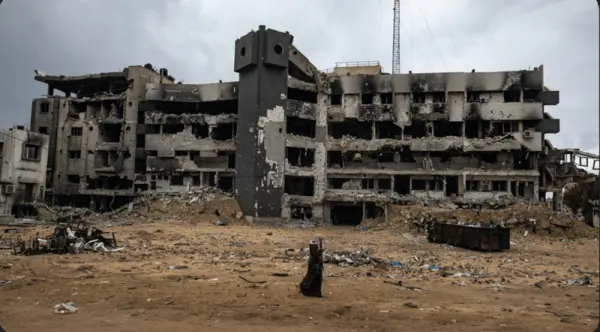
But what happened in Gaza after October 7 wasn’t just a “shock” — it was the obliteration of an entire society, disfiguring the Palestinian social and political body.
An additional application of the shock doctrine can be found outside of Palestine as well. Israel’s genocide sent shockwaves through the entire global order, opening the door to a new world consecrated today at Davos, which Craig Mokhiber described as “a world on its knees.”
Palestinians find themselves abandoned by the world amid these tectonic shifts, their lives treated as pawns in the hands of the new global players while their own political forces remain fragmented — contained, co-opted, or decimated. The result is that after over a hundred years of resistance to colonialism, Palestinians today have no choice but to accept the unacceptable.
26 January 2026
The NCAG: Gaza’s Technocratic Turn to Genocide Management
Al-Shabaka Yara Hawari
Yara Hawari· Jan 26, 2026
Introduction
The announcement of the National Committee for the Administration of Gaza (NCAG), a 15-member technocratic body chaired by Ali Shaath, signals a shift toward depoliticized governance in Gaza amid ongoing genocide. Shaath, a Palestinian civil engineer and former deputy minister of planning and international cooperation, is positioned to lead an interim governing structure tasked with managing reconstruction and service provision under external oversight. While presented as a neutral technocratic governing structure, the NCAG is more likely to function as a managerial apparatus that stabilizes conditions that enable genocide rather than challenging them.
This policy memo argues that technocratic governance in Gaza—particularly under US oversight, given its role as a co-perpetrator in the genocide—should be understood not as a pathway to recovery or sovereignty, but as part of a broader strategy of genocide management.
The Turn to Technocracy
The NCAG was established under the oversight of US President Donald Trump’s Board of Peace (BoP) as part of the second phase of the ceasefire deal, which the Israeli regime has repeatedly violated. The BoP’s composition and mandate remain unclear, despite its endorsement by UN Security Council Resolution 2803 as the primary body overseeing reconstruction and interim administration in Gaza. Yet, according to its draft charter circulated to prospective member states, Trump, as BoP chairman, is granted sweeping authority to shape membership, control subsidiary bodies, and exercise decisive influence over strategic policy and implementation.
Most glaring in Trump’s plan for Gaza is the absence of any discussion of Palestinian sovereignty
Most glaring in Trump’s plan for Gaza is the absence of any discussion of Palestinian sovereignty. Indeed, Palestinians have been excluded from any meaningful decision-making, effectively stripping Gaza’s population of political agency and once again subordinating them to external colonial control.
The composition of the NCAG illustrates how technocratic administration is being operationalized in practice. The committee convened for the first time on January 15 in Cairo. Its 15 Palestinian members are all originally from Gaza, and most are affiliated with or close to the Palestinian Authority (PA) in the West Bank. Their expertise spans infrastructure, finance, telecommunications, and waste management. Notably, there is only one woman on the committee, Hana al-Tarazi, tasked with the social affairs portfolio.
The committee’s chair, Shaath, is an engineer from Khan Younis who has held various positions within the PA and played a prominent role in the development of Palestinian industrial zones. In his first interview following his appointment, given to a radio station owned by Palestinian businessman Bashar al Masri, Shaath repeatedly emphasized that the NCAG will play no political role in governing Gaza. He deferred questions on ceasefire arrangements and territorial demarcations—including the expansion of the “yellow line,” which Israeli authorities treat as Gaza’s new de facto boundary—to Trump’s BoP. He was also deliberately vague about the committee’s funding, citing Arab states as potential sources, and was notably evasive when asked about the salaries of committee members.
Ali Shaath spoke of the need for Palestinians to unite under 'one system, one law, and one president,' signaling the PA’s return to governing Gaza and the expansion of President Mahmoud Abbas’s authoritarian rule
In the same interview, Shaath spoke of the need for Palestinians to unite under “one system, one law, and one president.” Later, at the Davos signing of the BoP, Shaath amended this formulation to “one law, one authority, one weapon”—language that appeared verbatim in Jared Kushner’s presentation explaining Hamas’s demilitarization and the NCAG’s role in authorizing all weapons in Gaza.
This language clearly signals the PA’s return to governing Gaza and the expansion of President Mahmoud Abbas’s authoritarian rule. The appointment of Sami Nasman to the internal security portfolio, reportedly at the insistence of Mohammed Dahlan’s faction within Fatah, further underscores the NCAG’s political alignment. A former PA intelligence official and longstanding opponent of Hamas, Nasman has been accused in media reports of collaborating with Israeli forces during the genocide.
Depoliticization as Policy
Gaza is in urgent need of immediate relief, recovery, and reconstruction, some of which the NCAG might facilitate. Yet it is also in need of a political solution that ends the genocide, siege, and occupation. Without a political solution, the NCAG will serve as a mechanism of genocide management and a political instrument that entrenches the very conditions that made it possible.
The formation of the National Committee for the Administration of Gaza is part of a deliberate approach by the US to depoliticize the Palestinian struggle
Indeed, the formation of the NCAG is part of a deliberate approach by the US to depoliticize the Palestinian struggle. It creates the appearance of Palestinian participation while operating under Trump’s BoP, effectively eroding Palestinian political agency. In practice, the NCAG is positioned to play a role similar to that of the PA in the West Bank: a service provider operating under colonial oversight.
This arrangement effectively defers political resolution indefinitely. Worse yet, by advancing technocratic governance in place of justice, self-determination, and accountability, this arrangement sustains the structural conditions that enable genocide. Ultimately, treating Gaza’s governance and reconstruction as mere technical challenges requiring technocratic expertise masks the ongoing genocide and facilitates the evasion of accountability for it.
Refusing Colonial Control
Palestinian civil society, grassroots movements, political organizations, and international solidarity actors should reject depoliticized frameworks that operate without an immediate and permanent ceasefire. They must also press for enforceable guarantees against renewed military assault and for accountability for the genocide. They should insist that both reconstruction and governance arrangements are grounded in Palestinian political agency and collective decision-making rather than technocratic neutrality imposed under external colonial control. One such example is the Gaza Phoenix Framework, a reconstruction plan developed by Palestinian experts in Gaza and the West Bank.
Moreover, security arrangements that prioritize internal policing among Palestinians over civilian protection and collective recovery and healing should be closely scrutinized and challenged. Finally, international engagement with Gaza must reject “stabilization” paradigms and insist on the dismantlement of the structures that enable genocide, siege, and occupation.



 Available in
  Available in
  Available in
  Available in
  Available in
  Available in
  Available in
  Available in