

Shatha Safi, a visual artist
Shatha Safi visual artist
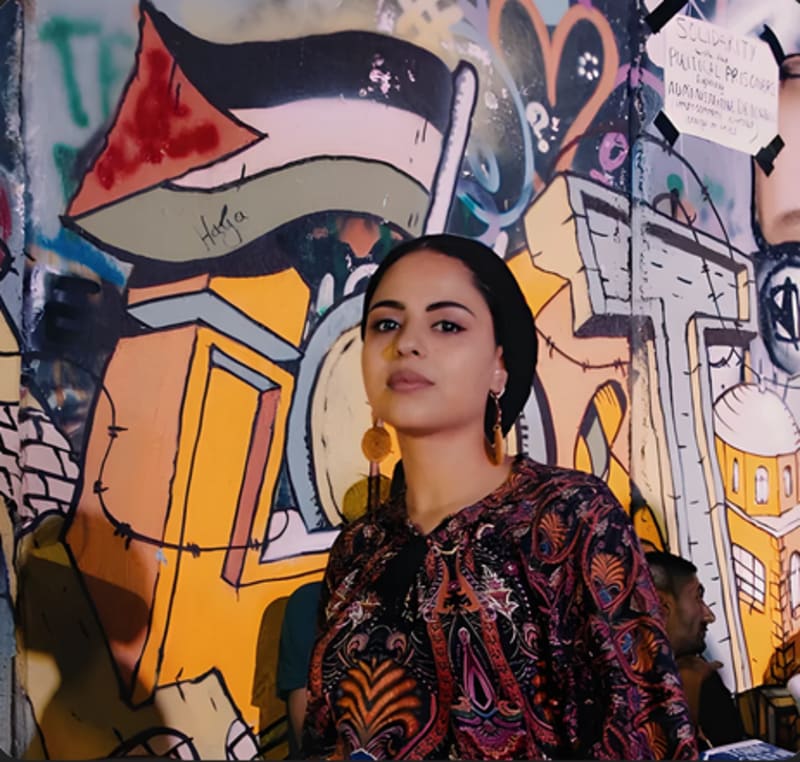
Shatha Safi is a Palestinian visual artist and social activist based in Dheisheh Refugee Camp, Bethlehem, with ancestral roots in the village of Jarash, near Jerusalem.
Her artistic journey began through self-directed learning, deeply inspired by Palestinian heritage, the history of resistance, and the lived memory of her family’s forced displacement during the 1948 Nakba.
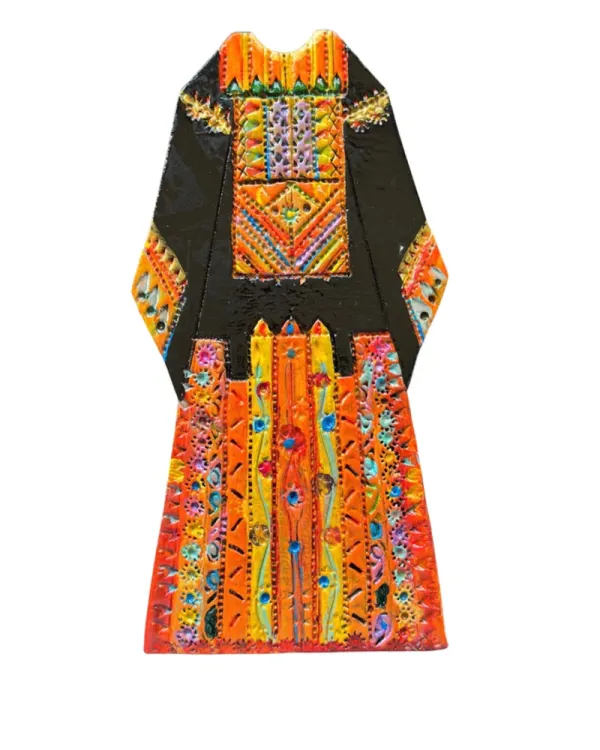
Her practice spans ink and acrylic on paper, as well as clay sculpture. Safi is the creator of “Daughter of the Sun,” a multidisciplinary project that reinterprets traditional Palestinian symbols—such as the embroidered dress—through a contemporary lens, giving familiar cultural motifs new life and meaning.
She has participated in several solo exhibitions and numerous group shows both in Palestine and abroad, using her art as a platform for storytelling, identity, and cultural preservation.
Raised on the inspiring stories of Palestinian resilience and resistance from her family, lifelong artist Shatha Safi began creating art that illustrated Palestinian traditions after the loss of her father and grandmother.
Missing her grandmother also meant missing seeing her grandmother’s thobe every day. Traditionally worn daily by Palestinian women all over the country, thobes have been a staple in Palestinian culture for centuries. With intricate embroidery patterns unique to each village in Palestine, thobes are more than just everyday attire, but a physical manifestation of Palestine itself.
With the occupation attempting to erase more of Palestine each day, Shatha has carried on the tradition of thobes by starting a project she named Bint El Shams (or Daughter of the Sun). She makes clay thobe décor that she paints to match each intricate pattern native to each village. After letting the clay bake in the sun, she paints each thobe patterns from historical photos, memories, and input from community members. She named the project after the process of baking clay in the sun and to remind us that Palestinians, as farmers, are forever children of the sun.
Beyond clay thobes, Shatha creates other beautiful art pieces she prints onto tote bags, small prints, and shares them on social media. A lot of her work is rooted in pre-1948 imagery of Palestinians. Shatha continues her strong efforts of resistance through preserving Palestinian culture in light of a world trying to erase it.
[When asked why she wants to continue the thobe legacy] “To remind me that this is us. This is still an important aspect of being Palestinian.”
“It’s a form of resistance… I feel like it is a duty for me to carry this heritage and give it to the people and to generations to come. I think that if a Bint el Shams thobe can hang in someone’s house for, maybe 50 years… then I’ve done something.”
In the Dheisheh Camp in the city of Bethlehem, south of Jerusalem, visual artist Shatha Safi lives in a “temporary station” that she insists on leaving one day to return to her Jerusalem village that was displaced in 1948, “Jarash.”
Four decades after the year of the Nakba, Safi was born in Jordan to a militant father and a mother who hails from the same village. The year 1996 was the difference in her life when she visited her maternal grandmother’s house in the Dheisheh camp for the first time.
There, she listened to the stories of the Nakba that were told by her grandmother, Ghazlan, whose children were divided between a prisoner and a persecuted person. She played with the children of her peers in the alleys of the camp what she had never played in her childhood outside Palestine, such as “Arabs and Jews” and “A war broke out between us and them,” focusing on hit-and-run operations. Between the people of the camp and the Israeli occupation army.
Shatha Safi learned art on her own, drawing her inspiration from history, heritage, Palestinian resistance, and the Nakba, which she did not live through, but she lived through it and appeared in her artistic works.
Some of the works of artist Shatha Safi that fill her house (Al Jazeera Net)
In her home - where the Nakba and the refugee issue are prominent in every corner and on its walls - Safi received Al Jazeera Net, and talked about her father discovering her talent when she completed her first drawings of the leader “Abu Jihad” (the leader in the Palestinian National Liberation Movement (Fatah), Shahid Khalil Al-Wazir), and then continued Drawings in which the features of the Nakba, its pain, and the hopes of the refugees who suffered from its fire became more clearly evident.
She says, “My father saw the light in 1945 in the village of Jarash, and settled in the Dheisheh camp, where he lived a harsh childhood that he always told me about. He talked about extreme poverty and the children’s torn clothes that did not withstand the harsh winter cold, and he told me that lentil soup was the camp’s children’s daily meal that It is distributed to them in the Agency’s schools” (Palestinian Relief and Works Agency “UNRWA” [UNRWA]).
Safi expresses her gratitude that her father decided to return to Dheisheh camp permanently in 2004 after a long expatriate journey in which he toured as a student and employee in Germany, Lebanon, Tunisia and Jordan. Despite the harshness of living in refugee camps, Safi feels safe in this crowded geographical area with about 13 thousand refugees live in the camp and only dream of returning to their displaced villages.
Her artistic career developed and was no longer limited to drawing. In 2016, she entered the world of forming clay sculptures to reproduce familiar shapes of the Palestinian dress, in an attempt to preserve memory.
Sun girl
Shatha Safi called her collection made of clay “Daughter of the Sun,” and said, “The clay represents my land, my home, my displaced village, and the olive tree in which my grandmother used to provide shade for years while she was spinning and embroidering her dress, and the sun that dried the figures expresses our freedom, hope, strength, and dream of return.”
The dresses of her grandmothers, Ghazlan and Khairiya, and her mother, Adla, were the inspiration for her clay works, and from there she set out to explore the depths of the dresses of the camp’s elderly women who were displaced from the same village and its neighboring villages.
In the alleys of the camp, we accompanied her to the house of Hajja Khadra, who hails from the same village, and there we listened to a poignant conversation led by the elderly woman in her nineties who came out of Jarash carrying 12 traditional dresses that she had sewn for herself with her own hands.
“This, my lady, is the vein of the gazelle, and this is the vein of sugarcane, and that is the vein of roses, and those are the horns and sickles,” Khadra explains at length the details of her dresses, and Safi listens carefully and asks about this dress and that one, and about the dozens of pieces of “peasant embroidery” spread throughout her grandmother’s house.
In other images and many sources as well, Shatha Safi searched for the heritage of grandmothers and the reasons for the appearance of this or that “stitch” in various Palestinian cities and villages, until she made hundreds of clay dresses.
The Nakba lives there
At the University of Bethlehem, Shatha Safi studied social work, and refugees had a major share of her educational career. She prepared her graduation project under the title “After the Trauma of Refugee in the Dheisheh and Shatila Camps.”
This young woman hopes to one day be liberated from her office job to devote herself fully to the art she has dedicated to serving her cause and her story, which is similar to the stories of millions of refugees around the world.
Shatha Safi, artista visual
Published today.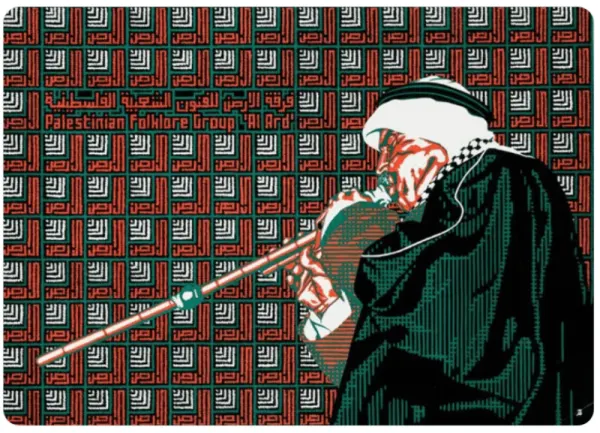
Al Ard — “The Land” — Palestinian folklore group. Al Ard - The Land- La Tierra. Grupo de folklore palestino
Published on 25 September.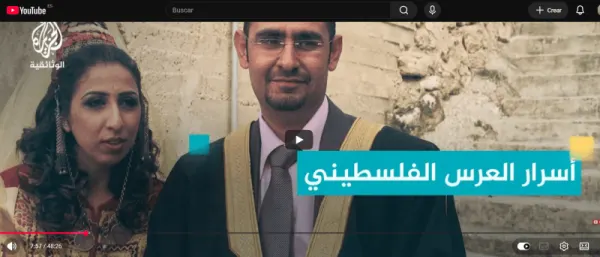
تغاريد عرس فلسطيني.. حكاية تراث لا يموت Preparativos, canciones de boda palestina: Un documental/relato de patrimonio perdurable
Published on 25 September.
Citizen Osama. Documental
Published on 24 September.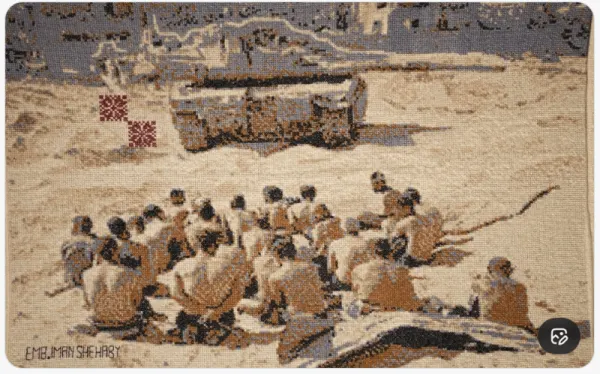
"Gaza. No words" Exhibition Venice. Gaza, sin palabras. Exposición Venecia. ENG ESP
Published on 18 September.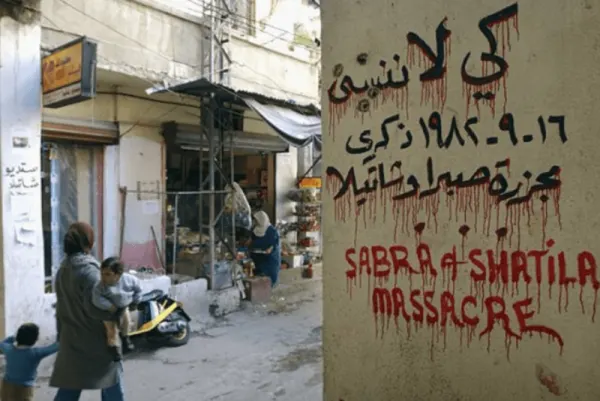
"Moving towards home". June Jordan. 44 years since the Sabra and Sathila massacres. "Camino al hogar"- 44 años desde la masacre de Sabra y Sathila. ENG ESP
Published on 15 September.
Palestine, war of memory. Palestina, memoria de guerra.
Published on 11 September.Ver más / See more
