

ICE operations (USA) versus Israel occupation of Gaza. EEUU, policía de inmigración versus Israel ocupación de Gaza. ENG ESP

“Imperial-colonial boomerang” in action. El «bumerán imperial-colonial» en acción
ENGLISH
ICE operations increasingly resemble Israeli occupation. That’s no coincidence
“Imperial-colonial boomerang” in action
U.S. immigration enforcement has long cultivated ties with Israel. Now it adapts algorithmic surveillance tactics from Gaza for use on American streets.
By Sophia Goodfriend February 12, 2026
Photo: Shadows of police CCTV cameras seen near Jaffa Gate in Jerusalem’s Old City, January 30, 2017. (Sebi Berens/Flash90)
Immigration and Customs Enforcement (ICE)
As U.S. Immigration and Customs Enforcement (ICE) agents have swarmed cities across the United States, American politics has appeared to enter a new phase, one in which armed federal forces turn civilian neighborhoods into active conflict zones. Part of what is driving this political shift is a potent technical infrastructure: ICE operations are now expedited by mobile surveillance and targeting systems, where agents’ most powerful weapon can fit in the palm of their hands.
Recent reporting has revealed ICE is relying on at least two applications to guide its crackdown. The first is ELITE (Enhanced Leads Identification & Targeting for Enforcement), a new geospatial system built by the data analytics firm Palantir for the Department of Homeland Security (DHS), and designed for use on smartphones and tablets. ELITE “populates a map with deportation targets, brings up a dossier on each person, and provides a ‘confidence score’ on the person’s current address,” according to a user manual published late last month.
The second is Mobile Fortify, a facial recognition application manufactured by the biometrics company NEC that allows immigration enforcement officers to identify both citizens and undocumented migrants. ICE and other DHS agents have reportedly photographed and scanned the faces of Americans in cities like Minneapolis and Chicago — images that are cross-checked with biometric databases, compiled into dossiers, and stored for up to 15 years.
It’s no coincidence that, reporting on ICE’s incursion into Minnesota, New York Times columnist Lydia Polgreen described an “occupation designed to punish and terrorize.” The technologies supporting their operations illustrate how thoroughly ICE is following in Israel’s footsteps: both ELITE and Mobile Fortify bear a striking resemblance to mobile targeting applications Israeli forces have integrated into their policing arsenal over the last decade.
Israel’s surveillance ‘selling point’
Since September 11, 2001, Israel has cultivated close ties with U.S. immigration enforcement through joint delegations, trainings, and technology exchanges, all of which helped deliver Israeli counterterrorism methods into the hands of ICE. But DHS would only begin to experiment with data mining and algorithmic surveillance — practices largely pioneered by Israeli intelligence agencies — during U.S. President Donald Trump’s first term in office. It happened just as Israeli forces were automating their surveillance and targeting tactics across Palestine.
At Israel’s first International Homeland Security Forum in Jerusalem in 2018, with a host of Trump-appointed officials in the crowd, Public Security Minister Gilad Erdan boasted that Israeli forces were using “advanced web intelligence tools and algorithms to find potential terrorists” for the first time. He told reporters that Israel’s experience “can help other countries deal with this kind of terrorism.”
The “advanced tools” Erdan referred to were part of a growing suite of algorithmic surveillance systems first deployed in the West Bank and later in Gaza. By the late 2010s, in response to a series of so-called lone-wolf terror attacks, Israeli intelligence units had developed an extensive dragnet of surveillance tech to fish “potential terrorists” from the civilian population.
CCTV cameras and license plate scanners proliferated across the West Bank. Algorithms scraped content from social media platforms and messaging applications. And in recent years, as +972 revealed last summer, the Israeli army also began storing millions of calls and text messages sent from the occupied Palestinian territories on Microsoft cloud servers. This vast trove of surveillance data has enabled the Israeli army to equip combat troops patrolling Palestinian cities with intrusive algorithmic policing systems.
One of them is Blue Wolf, an application that allows soldiers to access biographical information on civilians by photographing their faces or scanning an ID card. Alongside details like addresses, employment history, and place of residence, the app analyzes intelligence from phone calls, texts, social media, and other surveillance sources to generate a “security rating” — an estimate of the individual’s likelihood of carrying out an attack, on a scale of one to ten.
“I wouldn’t feel comfortable if they used it in the mall in [my hometown], let’s put it that way,” an Israeli intelligence operative told the Washington Post when news of the application first broke in late 2021. “It’s a total violation of the privacy of an entire people.”
Pillar of Fire, a mobile mapping system modeled on civilian GPS interfaces, also became part of the Israeli combat arsenal around 2020. It allows intelligence units to mark terror targets for ground forces patrolling a given area or flag certain geographic regions where another set of machine learning systems predict militant activity is likely. Combat troops can then toggle through and search for people to arrest or places to raid based on algorithmically synthesized intelligence.
“It has an interactive layer, where we would upload targets and share them with forces in the field,” an Israeli veteran of the elite cyberintelligence unit 8200 told me last week, describing his experience using these systems over the last few years. “It gave troops instant access to all this classified information.
“The more data you have the more you can do,” he continued. “Israel’s selling point was its ability to amass all these reserves of information and build up systems for policing on the ground,” systems that have become too attractive for U.S. law enforcement to ignore.
Deploying ‘the Israeli method’
Over time, collaboration among Israeli intelligence units, tech companies, and the U.S. homeland security state has only deepened. Palantir opened an office in Tel Aviv in 2015, where it scored contracts with the Israeli government. Veterans of Israeli intelligence units founded surveillance firms like Paragon and Cellebrite, which have sold military-grade spy tech to DHS.
For decades, national and local U.S. law enforcement agencies have sent officers to Israel to learn new policing and counterterrorism tactics, which some participants said were too potent to be implemented at home: monitoring telecommunications and scraping internet content to decide whom to arrest; mining health records and location data to track others down; photographing civilians on the street to determine whether they should be questioned; and shooting them with impunity.
“A little more invasive than what you would see here in the U.S.” is how Bill Ayub, a sheriff from southern California, described the predictive policing tools Israel demoed during a delegation trip he attended in 2017. “It was like, ‘Wow, you do that?’ … We’d be in jail if we did something like that here.”
In 2022, Santa Barbara Police Chief Craig Bonner also noted Israeli methods were far more aggressive than what was legally permissible in the United States. Recalling his training in Israel, he emphasized that, “In many instances, the things done there are simply not allowable by law and/or the constitution.”
“American ideals on the use of force revolve around using the least amount of force in a conservative, defensive manner,” an officer in the Memphis police department reflected after receiving combat training in Israel. “In the Israeli method, the intent is to bring the maximum amount of force into play in an offensive manner.”
Nonetheless, DHS increasingly emulated Israeli surveillance and targeting methods, and ICE has come to operate more like a military unit than an immigration enforcement body. In recent years, ICE has contracted with data brokers that amassed information from Departments of Motor Vehicles, social media platforms, and border crossings, to compile unregulated databases of human behavior. In addition to individuals’ travel histories, professional background, and family relationships, this data has also encompassed travel histories logged through clandestine networks of license plate scanners and facial recognition cameras.
For most of the last decade, these experiments primarily ensnared undocumented immigrants and their communities, leaving the more privileged sectors of American society unscathed. But Trump 2.0 rolled back whatever limitations the United States had placed on the indiscriminate use of these tools. Since January 2025, the DHS has worked with firms with deep roots in military targeting, like Palantir, to expand their reach to citizens and non-citizens alike.
From Gaza to Minneapolis
To grasp the most severe implications of AI-powered surveillance technology in the hands of rogue military actors, we only have to observe Israel’s conduct in Gaza over the past two years. Not only did intelligence operatives and air force pilots rely on algorithmically-generated targeting databases to guide airstrikes, but on the ground, the Israeli military’s “Operational Cloud” meant that combat troops could access much of the same data in real time. Soldiers pinpointed buildings to blow up on operational maps and identified civilians to detain — or kill — using facial recognition systems, all accessible through tablets and smart phones.
Juan Sebastián Pinto, a former employee at Palantir Technologies who is now calling for AI regulation and accountability in the company’s home state of Colorado, put it plainly when we spoke last week. “Platforms used by the DHS bring war-grade technologies we see in Gaza to American neighborhoods,” he said. “They give ICE officers the same kind of common operating picture as military and intelligence agencies.”
Pinto also emphasized that these technologies are error prone. Mobile Fortify — like the facial recognition platforms used across Palestine — has reportedly misidentified people as ICE agents detain them. The platform’s algorithms are less reliable in inclement weather, when photos are taken at certain angles, and when identifying people of color. The confidence scoring powering ELITE, ICE’s geospatial intelligence platform, similarly rests on faulty machine learning algorithms, unable to parse nuance or contextual variation in the troves of data they collect.
ESPAÑOL

“Resist by all available means—armed resistance, cultural resistance and economic resistance.” «Resistir por todos los medios disponibles: resistencia armada, resistencia cultural y resistencia económica». ENG ESP
Breaking the Taboo: Palestine and Armed Resistance. Sin tabués: la resistencia armada palestina.
Publicado hace 10 días.
Asier y Youssef, miembros de ‘Iranekin Bat’ y Samidoun detenidos y procesados en la Audiencia Nacional.
"Si Youssef y Asier son terroristas, yo también soy terrorista”
Publicado el 11 de septiembre.
1060 días de horror. 2 septiembre 2026. Spanish Revolution
La obscenidad también consiste en eso: convertir una carnicería diaria en ruido de fondo.
Publicado el 7 de septiembre.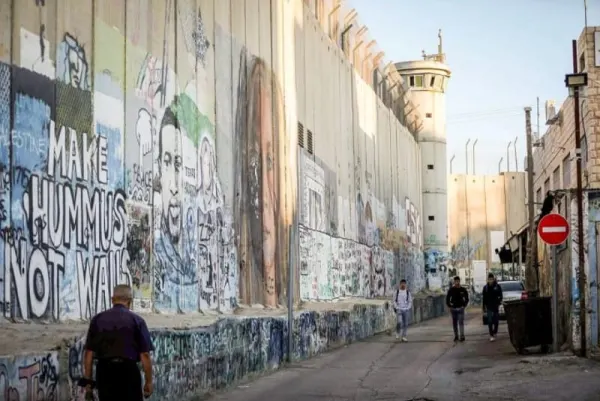
Israel quiere "borrar" a los palestinos de Palestina. Israel wants to "erase" the Palestinians from Palestine. ESP ENG
Israel busca crear un pueblo de muertos vivientes que emigren "voluntariamente". O una matanza brutal. Israel seeks to create a nation of the living dead who emigrate "voluntarily." Or a brutal massacre.
Publicado el 3 de septiembre.
USA support of Israel. The unmatched power of the Israel Lobby. El apoyo de Estados Unidos a Israel. El poder sin parangón del lobby israelí. ENG ESP
Israel has infected the United States through the Israeli lobby and turned it into a zombie that acts in Israel's own best interests. Israel ha infectado Estados Unidos a través del lobby israelí y lo ha convertido en un zombi que actúa en favor del propio Israel
Publicado el 29 de agosto.
Convocatoria en Rotterdam, 8-10 octubre 2026, campaña fondos: Asociación Médica Israelí (IMA) fuera de la Asociación Médica Mundial (WMA). Meeting in Rotterdam, October 8-10, 2026, fundraising campaign: Israeli Medical Association out of the World Medical Association. ESP ENG
Por ética y dignidad la IMA fuera de la WMA. Uphold medical ethics, IMA out of WMA
Publicado el 29 de agosto.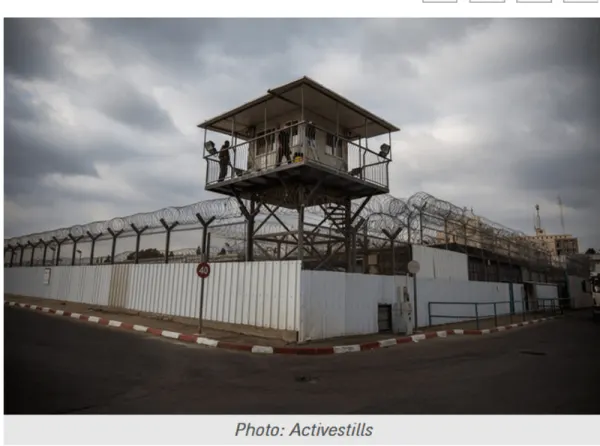
Israeli prisons as machines of Palestinian death. Las cárceles israelíes como máquinas de matar palestinos. ENG ESP
“The logic of the Israeli carceraly system is now one of starvation, beatings, killings” “La lógica del sistema carcelario israelí es ahora de hambrunas, palizas y asesinatos”
Publicado el 24 de agosto.
Teva feels the pressure against Israel and the Palestinian genocide on its neck. Teva siente en la nuca el aliento contra Israel y el genocidio palestino. ENG ESP
In a US trial, it is asking to conceal its Zionist nature. En un juicio en Estados Unidos pide ocultar su carácter sionista.
Publicado el 10 de agosto.Ver más / See more
